Rahul Somvanshi
A short video making the rounds recently carried a simple but striking claim: a narrator said her climate-sceptical father changed his mind after noticing that insurance companies were pricing climate risk into premiums and employing climate scientists. It’s a compelling anecdote, but it leans on two ideas that need separating. One is whether insurers are, in fact, treating climate-related risk as a serious financial factor. The other is whether that behaviour amounts to scientific proof of climate change. The answer to the first is increasingly yes. The answer to the second is no, and insurers have never claimed otherwise.
What insurers actually price
Insurance companies are not research institutions. Their core business is estimating the probability and cost of future losses, then setting premiums, underwriting terms and reinsurance arrangements accordingly. To do that, insurers draw on claims histories, catastrophe models, property exposure data and the cost of reinsurance they themselves must buy to cover large losses. When wildfires, floods or severe storms become more frequent or more damaging in a given region, insurers adjust accordingly because the underlying loss data tells them to. This is a financial response to observed and modeled risk, not an independent scientific judgment about the causes of a changing climate.
Climate science versus financial-risk assessment
It’s worth being precise about where the scientific case for climate change actually comes from. The IPCC’s Sixth Assessment Report synthesizes thousands of peer-reviewed studies and concludes that human activities have unequivocally caused global warming, and that climate change is already affecting weather and climate extremes in every region of the world. That is the scientific foundation. Insurers’ pricing decisions sit downstream of that evidence: they are a market reaction to the same physical-risk trends the IPCC documents, not a second, independent line of scientific proof. Not every insurer employs climate scientists, and not every premium increase in any given market is attributable to climate change specifically, since local building costs, litigation trends, regulatory caps and population growth in hazard-prone areas all factor into pricing too. The claim worth making is narrower and more defensible: insurers’ financial exposure now visibly tracks the same physical-risk evidence that climate science has been describing for years.
What the disaster record shows
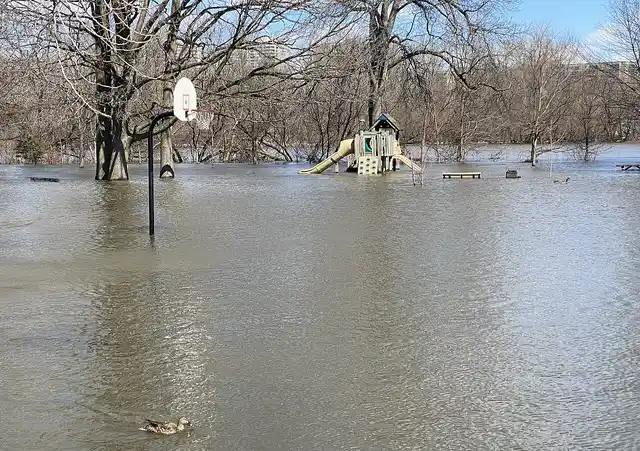
One way to see why insurers pay attention to this is to look at the loss data itself. The NOAA National Centers for Environmental Information maintains a running database of billion-dollar weather and climate disasters in the United States, tracking the frequency and cost of events such as hurricanes, severe storms, wildfires, drought and flooding. This dataset is widely used by insurers, regulators and researchers because it offers a consistent, long-running record of how often costly disasters occur and what they cost. It doesn’t, by itself, explain why any single event happened, but it is the kind of loss history that feeds directly into underwriting models. When premiums rise in disaster-prone regions, or when insurers pull back from writing new policies in certain areas, this is the type of data that is often part of the reasoning, even though other local factors are frequently involved as well.
Disclosure rules add another layer
Beyond individual pricing decisions, there is now a formal mechanism through which insurers report how they think about climate-related risk. The NAIC Climate Risk Disclosure Survey, run through the National Association of Insurance Commissioners, asks insurers operating in participating U.S. states to disclose their governance structures, strategy, risk management practices and metrics related to climate risk. This survey doesn’t mandate that insurers believe or state anything about the causes of climate change; it simply requires structured reporting on how climate-related risk is identified and managed as part of normal business oversight. The existence of a standing regulatory framework for this kind of disclosure is itself a signal that climate-related financial risk is now treated as a mainstream prudential concern by U.S. insurance regulators, not a fringe consideration.
What a sceptical reader can reasonably take from this
None of this requires anyone to take insurers’ word for climate science, and it shouldn’t be presented that way. The more defensible version of the argument is this: insurers have strong financial incentives to get risk assessment right, because mispricing it costs them money either way, since overpricing loses customers to competitors while underpricing leads to losses that can threaten solvency. When an industry with those incentives, operating under regulatory disclosure requirements and informed by long-running loss databases like NOAA’s, is adjusting premiums, underwriting standards and exposure in ways that track physical-risk trends, that is a useful independent data point. It tells a sceptical reader that the financial consequences of a changing climate are showing up in a market that has no ideological stake in the matter, only a stake in solvency. That is not the same claim as saying climate scientists at every insurer have proven climate change is real. It is the narrower, accurate claim that a market built around pricing physical risk accurately is pricing that risk as if it is real and material, because the underlying loss data gives it little choice.
If insurers cannot ignore the risk, why should we?
For homeowners and policyholders, the practical takeaway is to treat insurance pricing as one input, not the whole picture. Premium increases, coverage non-renewals or tightened underwriting in a particular area may reflect climate-related physical risk, but they may also reflect unrelated local factors such as construction costs, litigation patterns or state rate caps. Readers evaluating a sceptical relative’s new interest in this topic would do well to point to both strands of evidence separately: the IPCC’s synthesis of the physical science, and the NOAA and NAIC records showing how the insurance industry is responding to risk in financial terms.
That distinction does not weaken the point. If an industry built around measuring future losses is treating climate-related physical risk as material, it is a practical reason to take the issue seriously alongside the scientific evidence. Accepting climate reality is not an instruction to panic; it is the starting point for mitigation — cutting emissions, strengthening homes and infrastructure, supporting resilient communities, and making policy choices before losses become harder and more expensive to manage.