 Govind Tekale
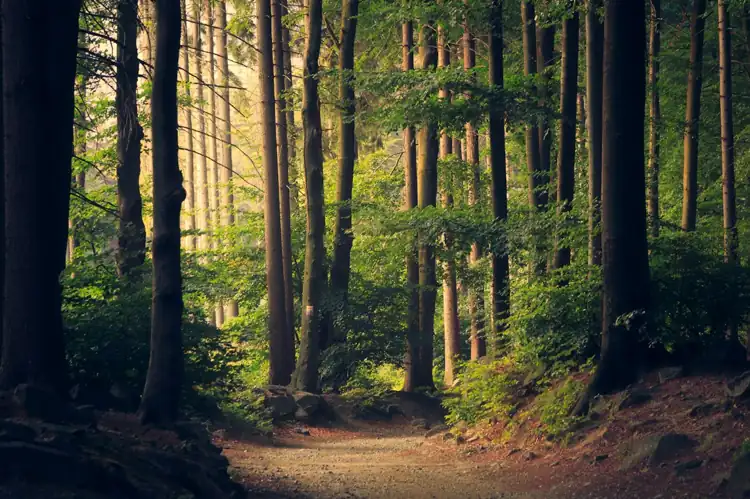
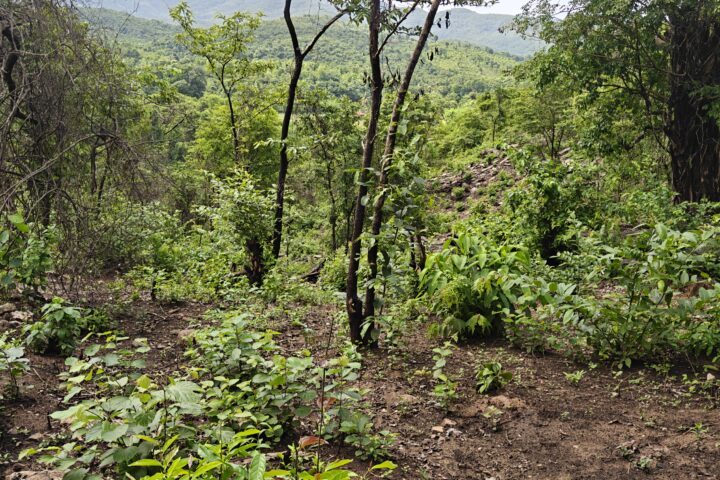
According to a field video by the Center for Biological Diversity‘s Oceans Program Director Yoko, she stands in the Tongass National Forest — the world’s largest temperate rainforest — pointing at a fresh clear-cut. Below the ridge, a log ship loads timber for export at a coastal terminal. In the channel, a humpback whale surfaces. The connection is not metaphorical. The same industry that fells ancient trees puts vessels in whale corridors and sediment in salmon rivers.
The Dual Mechanism: One Clear-Cut, Two Death Pathways
Old-growth logging in Southeast Alaska operates through two distinct mortality pathways for charismatic megafauna:
Pathway A — Vessel Strikes: Logs are hauled to tidewater terminals (Ketchikan, Wrangell, Petersburg), loaded onto bulk carriers and barges, and shipped through narrow inside passages that overlap with critical feeding grounds for humpback whales, fin whales, and the critically endangered North Pacific right whale. National Marine Fisheries Service (NMFS) records document large whale vessel strikes in Southeast Alaska waters annually.
Pathway B — Erosion and Salmon Collapse: Clear-cutting removes root stabilization on steep, rain-soaked slopes. Sediment washes into anadromous streams, smothering salmon eggs and alevins, altering stream temperature, and degrading rearing habitat. The Tongass produces roughly 30 percent of Alaska’s commercial salmon. Fewer salmon means less food for orcas, brown bears, bald eagles, and human communities.
The consequence is direct: if you eat wild Alaska salmon or watch whales in Southeast Alaska, Tongass logging affects your plate and your view. The Roadless Rule was reinstated in 2023 precisely to protect these watersheds. Yet environmental groups document that the U.S. Forest Service continues advancing old-growth sales under “young-growth transition” and other exceptions. Every sale means more ships, more silt, fewer fish, more dead whales. The policy exists — the enforcement does not.
The Vessel-Strike Pipeline: From Stump to Ship to Whale
The Tongass is not logged for local lumber. Ancient Sitka spruce and western hemlock — 500 to 800 years old — are cut, barged to deepwater ports, and exported as round logs, primarily to Asia. The Forest Service’s own timber sale notices list “tidewater” access as a selling point.
At terminals like Ketchikan’s, logs are loaded onto Panamax bulk carriers and tug-barge units. These vessels transit the Inside Passage — the same channels where humpbacks bubble-net feed, where fin whales forage, and where the remaining 30 or so North Pacific right whales are occasionally sighted.
NOAA’s 2017-2023 large whale vessel strike summary for Alaska records confirmed and probable strikes involving humpback and fin whales in Southeast waters. The agency notes that “vessel traffic associated with commercial activities” is a documented threat. The Center for Biological Diversity’s Oceans Program has documented this overlap in field surveys and litigation, arguing that timber sale Environmental Impact Statements systematically underestimate vessel-strike risk by treating log export as a separate action from the harvest itself.
Unlike California’s voluntary vessel speed reduction zones or the East Coast’s mandatory Seasonal Management Areas for right whales, Southeast Alaska has no designated whale-protection speed zones for log-export traffic. The Forest Service consults with NOAA Fisheries under the Endangered Species Act, but biological opinions have historically concluded that timber sales are “not likely to adversely affect” listed whales — a determination the CBD has challenged in court.
The Erosion-Salmon Cascade: From Ridge to River to Ocean
The Tongass receives 100 to 200 inches of rain annually. On steep, clear-cut slopes, that rain becomes runoff. Peer-reviewed studies (Hicks et al., Reeves et al.) document that sediment yields increase 10- to 100-fold after clear-cutting in Southeast Alaska watersheds. Fine sediment fills the interstitial spaces in spawning gravel where salmon eggs incubate, suffocating them. It reduces feeding efficiency for juvenile salmon and alters the invertebrate base.
The Alaska Department of Fish and Game identifies sediment from logging roads and harvest units as a primary threat to salmon habitat in multiple Tongass watersheds. Commercial salmon fisheries in Southeast Alaska generate hundreds of millions of dollars annually and support thousands of jobs. The Wild Salmon Center estimates that Tongass watersheds produce roughly one-third of the region’s commercial salmon catch.
The Forest Service’s “young-growth transition” — the stated policy of shifting from old-growth to second-growth harvest — has been the official direction since 2016. Yet old-growth sales continue. The 2023 Roadless Rule reinstatement protects 9.3 million acres, but allows exceptions for “community development,” “cultural use,” and projects that “further the transition.” Environmental groups argue these exceptions are being used to justify continued old-growth entry.
Policy and Accountability: The Roadless Rule’s Loopholes
The 2001 Roadless Rule barred road construction and timber harvest in 58.5 million acres of national forest, including 9.3 million in the Tongass. The Trump administration exempted the Tongass entirely in 2020. The Biden administration reinstated protections in January 2023, citing the forest’s carbon storage, salmon production, and cultural significance to Tlingit, Haida, and Tsimshian peoples.
But the reinstated rule retains the same exceptions the Forest Service has used for decades. The Big Thorne timber sale (approximately 6,000 acres of old growth) was justified under a “young-growth transition” framework. The POW Island sale, the Vallenar sale, and others have advanced post-reinstatement. The Center for Biological Diversity has filed multiple lawsuits challenging these sales under NEPA and the ESA, arguing that cumulative vessel traffic and erosion impacts are not adequately analyzed.
Congressional oversight has been limited. The Tongass Timber Reform Act (introduced repeatedly) would end old-growth logging entirely, but has not advanced. Meanwhile, the Forest Service’s budget still subsidizes Tongass timber sales — the Government Accountability Office has repeatedly found the program loses money.
The Observation That Changes the Frame
The tree that shaded the salmon stream becomes the ship that hits the whale. One industrial action — a clear-cut — creates two distinct mortality pathways for the species the public cares about most. The log on the barge and the silt in the river have the same origin.
Does Tongass Logging Affect Whales?
Yes. Log export requires vessel traffic through whale habitat. NMFS data confirm vessel strikes on humpback and fin whales in Southeast Alaska. The Center for Biological Diversity has documented this overlap and sued to force adequate analysis under the Endangered Species Act.
What You Can Do
- Ask your representative to support the Tongass Timber Reform Act
- Submit comments on proposed Tongass timber sales during NEPA scoping periods (published in the Federal Register)
- Choose salmon from watersheds with strong habitat protections — ask your supplier
- Support the Center for Biological Diversity’s Oceans Program litigation
The next Tongass timber sale notice is expected this fall. Check back for updates on the Roadless Rule’s enforcement and the CBD’s active litigation.