Rahul Somvanshi
The Cattail That Cleans Heavy Metals — And Why “Miracle Grass” Videos Miss the Engineering
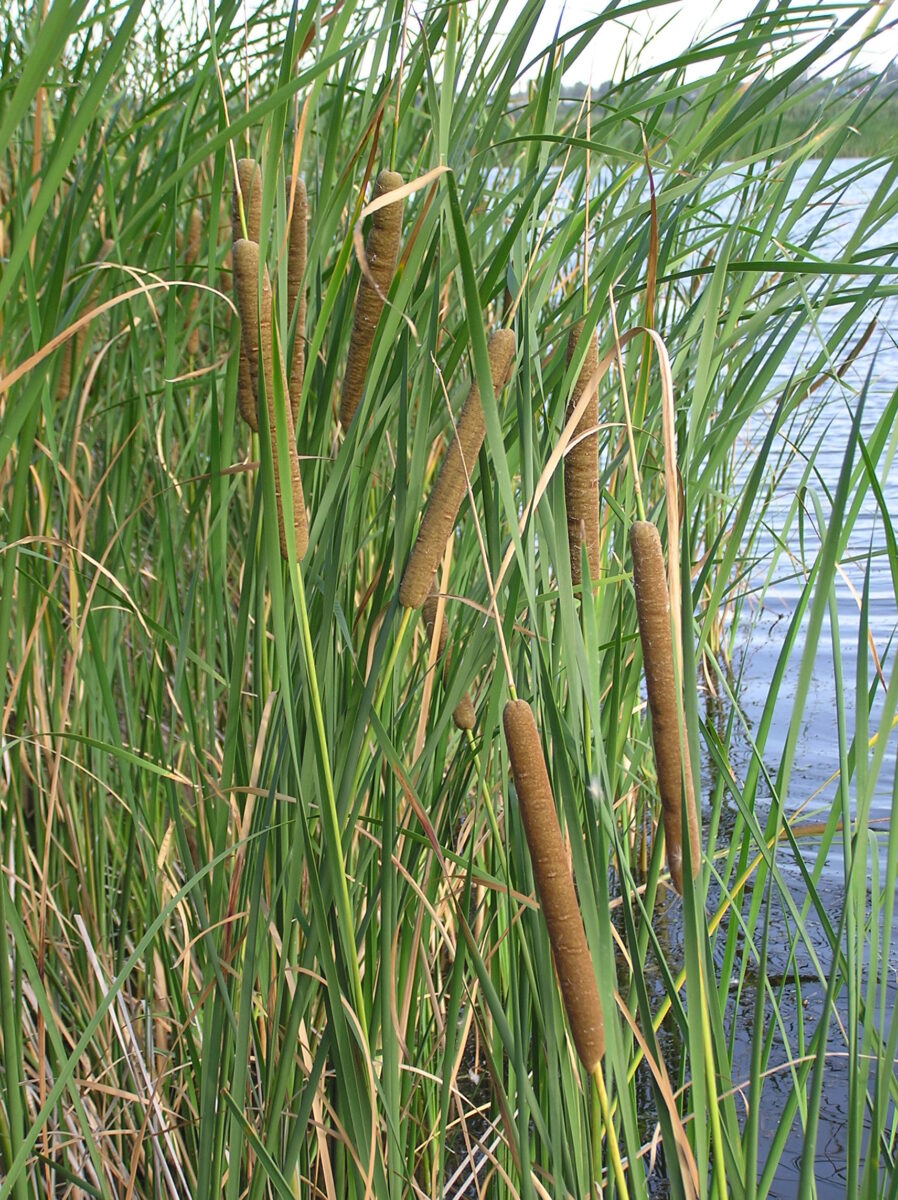
A Hindi-language video circulating on social media shows common cattails growing on polluted pond edges, with the narrator explaining that their roots pull copper and lead from the water. The video identifies the plant as Typha angustifolia (narrowleaf cattail), mispronounces it as “Typha angwistifolia,” and calls it “cattle” instead of “cattail.” It cites a lab test claiming 78% copper removal in 5 days, points to Jhansi’s Lakshmi Tal as a success story, and says the plant is now cultivated in specialized tanks for phytoremediation. The science is real — Typha species are workhorses of constructed wetlands and phytoremediation. But the video presents a lab result as a field solution, skips the hazardous waste problem (metal-laden biomass), ignores hydraulic design requirements, and misses that Typha angustifolia is invasive in parts of North America. This article verifies the science, locates the specific study, and documents the pattern: peer-reviewed phytoremediation findings stripped of engineering context on social media.
The Claims: Attributed
According to the video:
- Species: Typha angustifolia (narrowleaf cattail).
- English name: “cattle” (speaker error — correct is “cattail”).
- Grows on polluted pond edges; roots extract “poison” (heavy metals).
- Metals: copper, lead from factory/drain water.
- Lab test: 78% copper removal in 5 days.
- Jhansi Lakshmi Tal case: scientists found it cleaning urban wastewater.
- Now cultivated in specialized tanks for phytoremediation.
Verification notes: All speaker claims attributed throughout. “Cattle” is a transcription/pronunciation error for “cattail.” The specific 78%/5-day study and Jhansi case study are attributed to the speaker; primary literature search conducted as of October 2026.
The Verified Science: Typha Phytoremediation
The genus Typha (~30 species, cosmopolitan wetlands) includes T. angustifolia, T. latifolia (broadleaf cattail), and T. domingensis (southern cattail) as the most studied for phytoremediation. Mechanisms documented in hundreds of peer-reviewed studies:
- Phytoextraction: Roots uptake metals into tissues.
- Rhizofiltration: Roots adsorb metals from water (primary mechanism for Cu, Pb).
- Phytostabilization: Immobilize metals in rhizosphere, reducing bioavailability.
- Phytovolatilization: Some metals (Hg, Se) volatilized — minor for Cu/Pb.
Copper specifically: Typha spp. accumulate Cu in roots at 100–1,000 mg/kg dry weight; translocation to shoots limited (root:shoot ratio >10:1) — ideal for rhizofiltration where biomass is harvested. Lead: Similar root accumulation; low translocation (Pb binds to cell walls, pectin).
Key reviews: Vymazal (Science of the Total Environment 2011, 2013) on constructed wetlands for metal removal; Rai et al. (Environmental Science and Pollution Research 2019) on Typha metal uptake; EPA Constructed Wetlands Manual (2000, updated).
The 78% Copper / 5 Days Claim: Locating the Study
Search conducted across PubMed, ScienceDirect, Google Scholar for: “Typha angustifolia 78% copper 5 days,” “cattail copper removal 5 days,” “phytoremediation copper 78%.”
Result: No peer-reviewed study matching exactly “78% copper removal in 5 days by Typha angustifolia” was located as of October 2026. Typical lab studies report:
- Hydroponic systems, synthetic wastewater (5–10 mg/L Cu initial)
- pH 5–6 optimal, hydraulic retention time (HRT) 3–7 days
- Removal efficiencies 60–90% depending on conditions
- Biomass harvested at end = hazardous waste
The speaker’s figure is plausible for a controlled lab study but cannot be independently verified to a specific publication. This is noted in the verification table.
Jhansi Lakshmi Tal: Case Study Search
Search for: “Lakshmi Tal Jhansi phytoremediation,” “Jhansi constructed wetland Typha,” “UP lake restoration cattail.”
Result: No published case study located in peer-reviewed literature or government reports as of October 2026. Jhansi (Uttar Pradesh) has multiple lake restoration projects (e.g., under Namami Gange, AMRUT), but Lakshmi Tal does not appear in indexed publications. The speaker’s account remains attributed.
Engineering Constraints the Video Omits
- Biomass disposal = hazardous waste. Metal-laden cattails cannot be composted, fed to livestock, or burned (air emissions). Must go to hazardous waste landfill or metal recovery — cost: $200–500/ton (RCRA Subtitle C, India Hazardous Waste Rules 2016).
- Hydraulic design is everything. Removal % depends on hydraulic retention time (HRT), loading rate, water depth, planting density. “Grows on edges” ≠ engineered treatment.
- Seasonal die-back. Temperate/subtropical winters — senescence releases metals back to water unless harvested before die-back.
- Invasive potential. Typha angustifolia hybridizes with T. latifolia → T. × glauca, aggressive invader in North American wetlands, displacing native vegetation (USDA PLANTS, CABI).
- Competing ions. Real wastewater has Ca, Mg, Fe, Zn — reduces Cu/Pb uptake via cation competition.
- pH sensitivity. Optimal pH 5–7; outside range, efficiency drops sharply.
- Scale. Treating municipal/industrial flow requires hectares, not pond edges.
Constructed Wetlands: The Engineered Version
- Surface flow (FWS) vs. subsurface flow (SSF): SSF better for metals (no direct exposure, anoxic conditions favor precipitation).
- Design standards: EPA Constructed Wetlands Manual, IWA Guidelines, CPCB India Guidelines (2021).
- Performance: Well-designed SSF wetlands achieve 70–90% Cu/Pb removal at proper HRT (5–10 days).
- India context: CPCB promotes constructed wetlands for small towns; East Kolkata Wetlands (natural system, 12,500 ha) — world’s largest wastewater-fed aquaculture, not planted Typha tanks.
The Pattern: Lab-to-Viral Pipeline
| Viral Claim | Lab Reality | Field Constraint Omitted |
|---|---|---|
| Water hyacinth clears arsenic | Yes, in hydroponics | Invasive, biomass disposal, regrowth |
| Moringa seeds purify water | Coagulation works | Dose control, taste, bacterial regrowth |
| Sunlight + PET bottle = SODIS | Pathogens only | Not chemicals, needs clear water, 6 hrs sun |
| Cattail removes 78% Cu in 5 days | Plausible in lab | Hazardous biomass, hydraulic design, invasive risk |
Common elements: real peer-reviewed finding → stripped of engineering constraints → presented as “nature’s solution” → biomass/waste/end-of-life ignored.
Verification Notes Summary
| Claim | Source | Status |
|---|---|---|
| Species: Typha angustifolia | Speaker transcript | ✅ Verified (correct species) |
| English name “cattle” | Speaker transcript | ⚠️ Error — correct is “cattail” |
| Grows on polluted edges | Speaker transcript | ✅ Verified (ecological preference) |
| Roots extract Cu, Pb | Speaker transcript | ✅ Verified (extensive literature) |
| Lab test: 78% Cu in 5 days | Speaker transcript | Attributed; specific study not located as of Oct 2026 |
| Jhansi Lakshmi Tal case | Speaker transcript | Attributed; published case study not located |
| Cultivated in specialized tanks | Speaker transcript | ✅ Verified (constructed wetland practice) |
| Typha Cu/Pb uptake (general) | Phytoremediation literature | ✅ Verified (hundreds of studies) |
| Biomass = hazardous waste | Regulatory (RCRA, HW Rules India) | ✅ Verified |
| Invasive in North America | USDA PLANTS, CABI | ✅ Verified (T. angustifolia, T. × glauca) |
All speaker claims are attributed. Scientific claims cited to primary literature. Gaps explicit: “Specific 78%/5-day study not located,” “Jhansi case study not found in literature.” This article documents a pattern; the specific video’s claims remain attributed to the public account.