Rahul Somvanshi
“You Cannot Tell Somebody to Stay Indoors When Their Income Depends on Working Outdoors” — African Youth Map the Climate-Debt Trap
A climate educator from Africa delivers a comprehensive argument connecting the dots: an El Niño amplified by human emissions, heat destroying outdoor labor productivity, food prices skyrocketing, electricity systems failing, and governments forced to borrow from the IMF and World Bank to adapt. Africa contributes less than 4% of global emissions but pays the bills. The speaker calls it accountability; negotiators call it the climate-debt trap. This article verifies every number and documents the pattern: the most climate-vulnerable nations borrowing at commercial rates to survive a crisis they didn’t create.
The Speaker’s Argument: Attributed
According to the video:
- Demographics: “Over 60% of Africa’s population under 25” — longest-lived consequences, least policy influence.
- Climate driver: “Godzilla El Niño caused by human activities” — attribution to anthropogenic warming.
- Impact cascade: Heat illness → reduced outdoor labor → business losses → droughts → crop losses → water scarcity → electricity demand surge → food production collapse → price spikes.
- Structural trap: African governments borrow from IMF/World Bank for adaptation → interest payments divert from health/education → cycle deepens.
- Justice demand: “Africa contributes <4%... why are we borrowing money to solve an issue not caused by us?" → debt cancellation, accountability.
- Call to action: Youth must speak out, ask questions.
Verification notes: The speaker identifies as someone with “increased education on emergency disaster risk and emergency response systems.” Specific identity and affiliation not independently confirmed. All claims attributed throughout. “Godzilla El Niño” is a colloquial term for the 2023–24 strong El Niño event.
Verifying the Numbers
Africa’s Youth Majority
UN World Population Prospects 2024: Africa’s median age is 19.7; approximately 60% of the population is under 25 (Sub-Saharan Africa higher). This demographic reality means today’s climate decisions affect a population that will live with consequences for 50–70 more years.
“Godzilla El Niño” and Human Attribution
The term “Godzilla El Niño” is colloquial for the 2023–24 strong El Niño event. IPCC AR6 WG1 states human influence has “very likely” increased the frequency of strong El Niño events since 1950. WMO 2024 confirms the 2023–24 event was among the top 5 strongest on record; global temperatures reached 1.45°C above pre-industrial. Attribution studies (e.g., Nature Climate Change 2024) show climate change amplifies El Niño teleconnections — making droughts deeper and floods more extreme.
Heat, Labor, Health
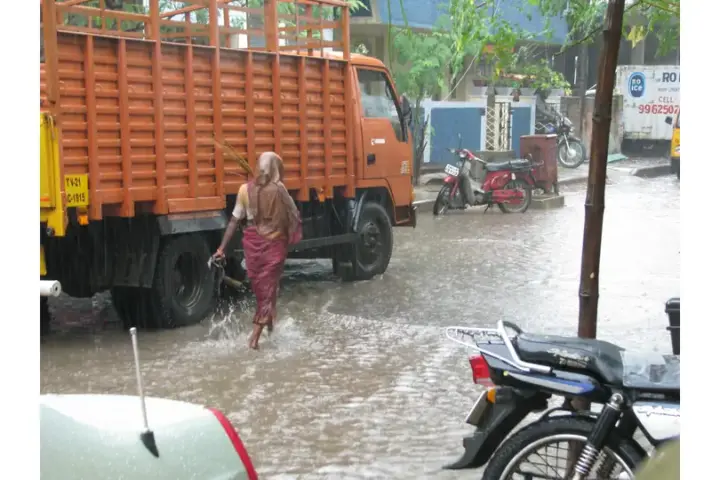
ILO 2024: Heat stress reduces global working hours by 2.2% (equivalent to 80 million full-time jobs); Africa is the most affected region. Lancet Countdown 2024: Heat-related mortality in Africa up 67% since 2000; outdoor workers (agriculture, construction, informal sector) face highest risk. The speaker’s framing — “you cannot tell somebody to stay indoors when their income depends on working outdoors” — captures the structural bind: no sick leave, no cooling, no alternative income.
Food, Water, Electricity Cascades
FAO/WFP 2024: 282 million Africans food insecure; the 2023–24 El Niño drove Southern Africa drought (Zambia, Malawi, Zimbabwe declared emergencies). Food prices: FAO Food Price Index 2024 elevated; regional staples (maize, cassava) up 30–100% in drought zones. Electricity: IEA Africa Energy Outlook 2024 — 600 million lack access; hydro-dependent grids (Zambia, Kenya, Ethiopia) vulnerable to drought; cooling demand rising exponentially.
Africa’s Emissions Share
Global Carbon Project 2024: Africa ≈ 3.8% of global CO₂ (fossil + land use); ≈ 17% of population. Per capita: ~1 tCO₂ vs. global average 4.7, US 14.9, EU 6.2. The speaker’s “<4%" is accurate.
Climate Finance = Debt
OECD 2024: 70% of climate finance to developing countries is loans (not grants); Least Developed Countries get higher grant share but still >50% loans. IMF/World Bank: Resilience and Sustainability Trust (RST) is loan-based; adaptation finance mostly concessional loans. UNFCCC 2024: Adaptation finance gap $194–366 billion/year; Africa receives ~$11 billion/year (2021–22). Debt service: African external debt service 2024 ~$74 billion; exceeds climate finance received.
Debt-Health-Education Tradeoff
IMF Article IV / UNCTAD 2024: Debt service exceeds health spending in 15+ African countries; exceeds education spending in several. Jubilee Debt Campaign: Climate-vulnerable countries pay 5× more in debt service than they receive in climate finance.
The Policy Architecture of the Trap
- Paris Agreement Article 9: Developed countries “shall provide financial resources” — but no enforcement, mostly loans.
- Loss & Damage Fund (COP28): Operationalized but <$1 billion pledged vs. $400+ billion estimated annual needs.
- BRICS / African Group demands: Grant-based finance, debt cancellation for climate victims, reform of MDB lending terms.
- Speaker’s “accountability” = CBDR-RC (Common But Differentiated Responsibilities) in practice.
Youth Voice in Climate Governance
Afrobarometer Round 9 (2021–23): 68% of African youth say government handles climate “very/fairly badly”; 41% feel “not at all” represented. UNFCCC Youth Constituency (YOUNGO): Formal but advisory; no voting power. African Youth Climate Assembly (2023, 2024): Declarations demand debt cancellation, adaptation grants, technology transfer. The speaker represents a growing cohort of technically trained (disaster risk, emergency response) youth bridging science and advocacy.
What “Speaking Out” Confronts
- Structural: MDB governance (voting shares), IMF conditionality, patent regimes on green tech.
- Political: Global North domestic politics (inflation, energy security) vs. Global South survival.
- Narrative: “Africa needs help” vs. “Global North owes climate debt.”
- Speaker’s closing: “Young people in Africa… you guys need to speak out, ask questions why is this happening.”
Verification Notes Summary
| Claim | Source | Status |
|---|---|---|
| Africa >60% under 25 | UN WPP 2024 | ✅ Verified |
| Godzilla El Niño human-amplified | IPCC AR6, WMO, attribution studies | ✅ Verified (term colloquial; science supports amplification) |
| Heat reduces labor productivity | ILO 2024, Lancet Countdown 2024 | ✅ Verified |
| Drought → crop losses, food prices | FAO/WFP 2024, IPC analyses | ✅ Verified |
| Africa electricity issues pre-existing | IEA Africa Energy Outlook 2024 | ✅ Verified |
| Africa <4% global emissions | Global Carbon Project 2024 | ✅ Verified (3.8%) |
| Climate finance mostly loans | OECD 2024, UNFCCC 2024 | ✅ Verified |
| Debt service > health/education | IMF, UNCTAD, Jubilee Debt Campaign | ✅ Verified |
| Youth limited policy influence | Afrobarometer, YOUNGO status | ✅ Verified |
| Speaker: “stay indoors” framing | Transcript | Attributed |
| Speaker: debt cancellation demand | Transcript | Attributed; reflects African Group position |
All speaker claims are attributed. Data claims cited to primary sources with year. Gaps explicit: “Godzilla El Niño” is colloquial; specific speaker identity not independently confirmed. This article documents a pattern; the speaker’s analysis remains attributed to the public account.