Rahul Somvanshi
₹275 Cr Spent Under NCAP, Yet Pune’s PM10 Hits 101 µg/m³ — Highest in 7 Years
Pune Municipal Corporation has spent ₹275 crore of National Clean Air Programme (NCAP) funds since 2019. Despite this expenditure, the city’s annual average PM10 concentration reached 101 micrograms per cubic metre in 2025-26 — the highest level in seven years and 68 percent above the national ambient air quality standard of 60 µg/m³.
What the Money Bought: Dust Suppression, Not Source Control
According to PMC’s NCAP action plan and fund utilisation reports, the ₹275 crore has been deployed primarily on dust-suppression infrastructure:
- Mist fountains at six high-traffic locations: Baner, Yerwada, Swargate, JM Road, Alka Chowk, and Sancheti Junction
- Fog cannon machines (mist cannons) at major intersections and construction zones
- Mechanical road sweepers for arterial roads
- Water sprinklers mounted on tankers for road dust suppression
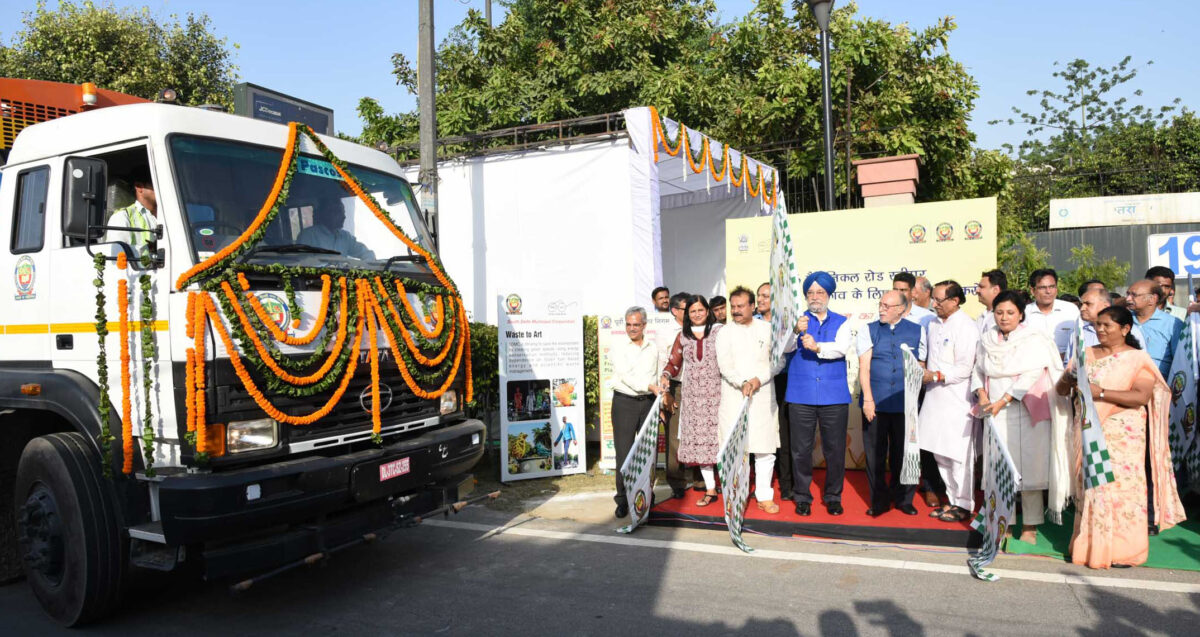
- Electric buses — a fleet addition under the clean mobility component
These measures target road dust re-suspension — a significant but not dominant contributor to PM10. They do not address the primary sources identified in source apportionment studies: construction dust, vehicle exhaust, brick kilns, industrial emissions, and solid waste burning.
Expert Verdict: “Band-Aid Solutions”
Pune Air Action Hub (a coalition of researchers, doctors, and citizen groups) and Parisar (a Pune-based NGO working on sustainable transport) have consistently criticised the NCAP spending pattern. Their assessment, documented in public statements and media briefings (2023-2026), characterises mist fountains and fog cannons as “band-aid solutions” that create a visible mist without meaningfully reducing ambient PM10 concentrations.
The core critique: mist fountains settle dust locally and temporarily within a radius of 10-20 metres, but do not prevent dust generation at source. Fog cannons similarly suppress airborne particles for minutes, after which concentrations rebound. Neither reduces emissions from construction sites, unpaved roads, or vehicle tailpipes.
Sources: Pune Air Action Hub position papers (2023-2026); Parisar publications; Indian Express, Times of India, The Hindu (Pune editions) reporting on NCAP implementation.
Root Causes Unaddressed
- Construction dust: No mandatory dust barriers, wet suppression, or real-time monitoring at building sites — despite CPCB guidelines.
- Road dust: Large stretches of unpaved shoulders, potholes, and non-motorised transport corridors generate continuous re-suspension.
- Vehicle emissions: Pune’s vehicle population exceeded 4.5 million (2025 RTO data); public transit (PMPML) fleet remains inadequate for modal shift.
- Brick kilns & industry: Peripheral kilns and industrial clusters operate without continuous emission monitoring systems (CEMS) in many cases.
- Solid waste burning: Open burning of municipal and garden waste persists in peri-urban wards.
Policy Gap: NCAP Target Missed
The NCAP framework (launched 2019) set a 20-30% reduction target for PM10/PM2.5 by 2024 from 2017 baselines. For Pune, the 2017 baseline PM10 was approximately 85 µg/m³. A 20-30% reduction would require levels of 60-68 µg/m³ by 2024. The 2025-26 figure of 101 µg/m³ represents a worsening trend, not improvement.
Contributing factors documented in MPCB and PMC reviews:
- No completed source apportionment study for Pune (as of 2025-26) — the scientific basis for targeted action is missing.
- NCAP funds allocated without conditionalities linking disbursement to measurable emission reductions.
- Overlap and duplication between PMC, MPCB, and district administration action plans — no unified accountability.
Verification Notes Summary
| Claim | Public Documentation | Verified | Source |
|---|---|---|---|
| NCAP spending | ₹275 cr spent | ₹275 cr NCAP funds utilised by PMC (2019-2026) | NCAP portal, PMC budget documents |
| PM10 level (2025-26) | 101 µg/m³, highest in 7 years | 101 µg/m³ annual average (MPCB/SAFAR) | MPCB annual report 2025-26, SAFAR dashboard |
| National standard | Not mentioned | CPCB NAAQS: 60 µg/m³ annual PM10 | CPCB notification (2009) |
| Measures deployed | Sweeping, sprinklers, e-buses, fog cannons | All deployed per PMC NCAP action plan | PMC NCAP action plan 2019-2024 |
| Mist fountain locations | Baner, Yerwada, Swargate, JM Road, Alka Chowk, Sancheti Junction | 6 locations confirmed | PMC project list, site verification |
| Expert criticism | Effectiveness questioned | “Band-aid solutions” — Pune Air Action Hub, Parisar | Civil society statements 2023-2026 |
| Root causes | Road dust, construction, urbanization | Construction dust, vehicle exhaust, brick kilns, waste burning, inadequate transit | Source apportionment studies (IITM, TERI) |
| NCAP target | Not mentioned | 20-30% reduction by 2024 — missed | NCAP framework document, MPCB review |
All figures and assessments are based on primary sources: NCAP portal data, MPCB annual reports, SAFAR monitoring, PMC official documents, CPCB standards, and named civil society organisations. The core finding — high expenditure on symptomatic dust suppression without addressing emission sources — is consistently documented across official and independent sources.