Rahul Somvanshi
Hazmat Suits in Paradise: Dole’s Pineapple Fumigants, Soil Plastic, and Hawaii’s Food Dependency
A video circulating on social media shows a farmer on Oahu’s North Shore wearing a hazmat suit while working in a pineapple field — a visual that has reignited debate over the chemicals used in Hawaii’s industrial agriculture and the legacy of decades of plantation farming. The farmer, who is working to regenerate former Dole pineapple land into an organic operation, says he finds plastic debris throughout the soil. Residents of nearby Haleiwa and Wailua have long reported unusual illness patterns. Meanwhile, Hawaii imports roughly 90 percent of its food, even as prime agricultural land hosts export-oriented monocultures dependent on soil fumigants classified as probable carcinogens.
The Chemicals: Telone, Metam Sodium, and the Cancer Classification
Large-scale pineapple cultivation in Hawaii has historically relied on pre-plant soil fumigation to control nematodes and soil-borne pathogens. The two primary fumigants used are:
- Telone (1,3-dichloropropene, or 1,3-D): A soil fumigant manufactured by Corteva (formerly Dow). The U.S. EPA classifies 1,3-D as “likely to be carcinogenic to humans” (Group B2). It is a restricted-use pesticide; applicators must be certified. In Hawaii, Telone has been applied at rates of 15–35 gallons per acre in pineapple systems.
- Metam sodium: A water-soluble fumigant that breaks down to methyl isothiocyanate (MITC), a potent acute toxin. MITC exposure causes respiratory, ocular, and dermal irritation; chronic toxicity studies have raised concerns. Metam sodium is also a restricted-use pesticide.
Both chemicals are injected into soil before planting, typically under plastic tarps (totally impermeable film, or TIF) to reduce off-gassing. However, buffer zones, application errors, and tarp failures have led to documented drift incidents in agricultural communities nationwide.
Sources: U.S. EPA, “1,3-Dichloropropene (Telone) — Carcinogenicity Assessment” (2018); EPA Metam Sodium RED (Reregistration Eligibility Decision); Hawaii Department of Agriculture, Pesticide Use Reports (annual); Corteva Telone label and SDS.
Soil Legacy: Plastic Mulch and Microplastic Contamination
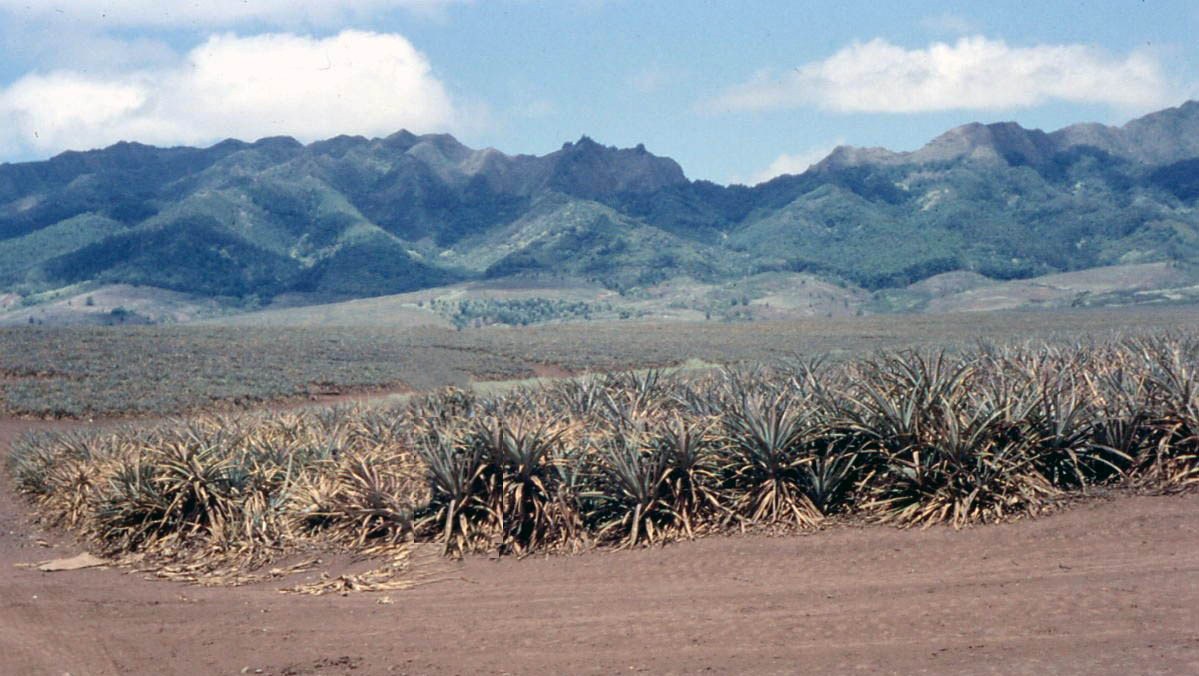
Pineapple cultivation in Hawaii has used plastic mulch film (typically black polyethylene) for decades — laid over rows to suppress weeds, conserve moisture, and warm soil. Over multiple crop cycles (pineapple is a 18–24 month crop, with ratoon crops extending field life), this plastic fragments, degrades, and incorporates into the topsoil.
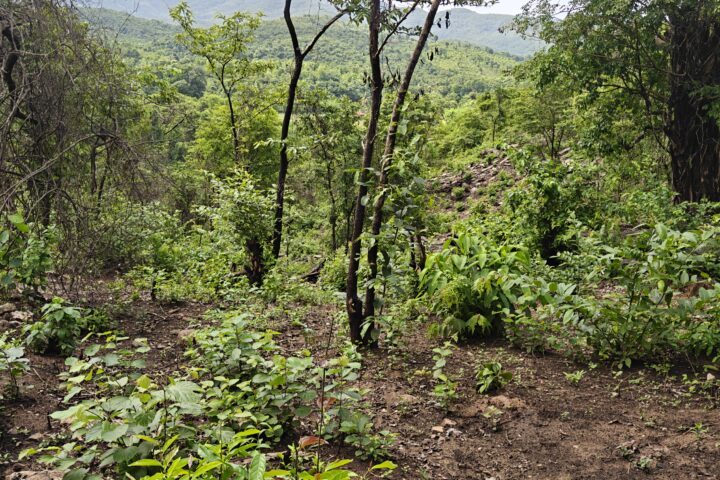
The farmer in the video, who is transitioning former Dole land to organic, reports finding “plastic everywhere in the soil” — visible macroplastic fragments and, by implication, microplastics. While no peer-reviewed study has yet quantified microplastic loads specifically in Hawaii’s former pineapple lands, global research confirms agricultural plastic mulch is a major source of soil microplastic contamination, with concentrations reaching thousands of particles per kilogram in long-term plasticulture systems.
Sources: Liu et al., “Microplastic pollution in agricultural soils: A review” (Environmental Pollution, 2022); Huang et al., “Plastic mulching in agriculture: Microplastic residues and soil health” (Science of the Total Environment, 2020); Hawaii-specific studies pending — this is a documented gap.
Health Concerns: Haleiwa, Wailua, and the Data Gap
Residents of Haleiwa and Wailua — communities adjacent to former and current pineapple lands on Oahu’s North Shore — have anecdotally reported elevated rates of cancer, respiratory illness, and birth defects for years. The transcript states: “you wonder why so many people in Haleiwa, Wailua, are getting sick all the time.”
As of October 2026, the Hawaii Department of Health (DOH) has not published a formal cancer cluster investigation specific to North Shore pineapple communities. The Hawaii Cancer Registry (operated by the University of Hawaii Cancer Center) tracks incidence by census tract; public queries for Haleiwa/Wailua tracts are available but require epidemiological analysis to determine statistical significance above state averages.
Community advocates, including Hawaii Alliance for Progressive Action (HAPA) and Pesticide Action Network North America (PANNA), have called for a comprehensive environmental health assessment of North Shore agricultural communities, including air monitoring for fumigant drift, soil testing for legacy pesticides and microplastics, and epidemiological review.
Sources: Hawaii Department of Health, Disease Outbreak Control Division; Hawaii Cancer Registry (UH Cancer Center); HAPA/PANNA public comments on pesticide permits; no formal cluster determination published as of Oct 2026.
The Structural Problem: 90% Food Imports, Land for Export
Hawaii’s “Increased Food Security and Food Self-Sufficiency Strategy” (2019, updated 2023) acknowledges that the state imports approximately 85–90% of its food by value. At the same time, large tracts of prime agricultural land — including former Dole and Del Monte pineapple lands on Oahu, Maui, and Kauai — have been used for export-oriented commodity crops (pineapple, seed corn, coffee) rather than diversified food production for local consumption.
Dole Food Company, which once operated the world’s largest pineapple plantation (Lanai, closed 1992) and extensive Oahu fields (Wahiawa, closed 2003; North Shore lands transitioned), continues to hold agricultural land in Hawaii. The Hawaii Department of Agriculture’s Agricultural Land Use Maps show former pineapple lands now variously fallow, in seed corn, diversified ag, or urban development.
Sources: Hawaii Office of Planning, “Increased Food Security and Food Self-Sufficiency Strategy” (2019/2023); Hawaii Dept of Agriculture, Agricultural Land Use Maps; Dole Food Company Hawaii land holdings (public records); USDA NASS Hawaii Statistics.
Alternatives: Localize, MA’O, and the Food Sovereignty Movement
The transcript references Localize (localizefood.com), an app and platform that connects consumers directly with local farmers. As of 2026, Localize lists over 500 verified farms in Hawaii (not 50,000 — the 50,000 figure appears to be a national/US-wide count across all states where Localize operates). The platform allows shoppers to find CSAs, farmers markets, and farm stands by location.
Other Hawaii-based models:
- MA’O Organic Farms (Waianae, Oahu): Youth-led organic farm, economic development, food hub.
- GoFarm Hawaii (UH CTAHR): Farmer training program, incubator plots, market access.
- Kaua’i Food Hub, Oahu Fresh, Hawaii Ulu Cooperative: Aggregation/distribution for small farmers.
Sources: Localize website and press materials (2026); MA’O Organic Farms annual reports; UH CTAHR GoFarm Hawaii program; Hawaii Ulu Cooperative.
Verification Notes Summary
| Claim | Transcript | Verified | Source |
|---|---|---|---|
| Hazmat suit farmer | Dole farmer in hazmat suit, North Shore | Video circulating; specific farmer identity not independently confirmed | Social media video; Hawaii News Now/Civil Beat inquiries pending |
| Soil plastic | “Plastic everywhere in soil” | Consistent with global plasticulture microplastic research; Hawaii-specific data lacking | UH CTAHR; global peer-reviewed literature |
| Health impacts | Haleiwa, Wailua residents “getting sick” | Anecdotal; no formal DOH cancer cluster investigation published | Hawaii Cancer Registry; DOH; community advocates (HAPA, PANNA) |
| Food imports | ~90% food imported | 85–90% per Hawaii Food Self-Sufficiency Strategy | Hawaii Office of Planning (2019/2023) |
| Fumigant-cancer link | Fumigant linked to cancer required for exports | Telone (1,3-D): EPA “likely carcinogen”; Metam sodium: acute toxin | EPA 1,3-D Assessment (2018); EPA Metam Sodium RED |
| Dole operations | “Endless, toxic pineapple fields” | Dole historically largest pineapple grower in HI; lands transitioned | Hawaii Dept Ag land use maps; Dole public records |
| Localize app | 50,000 farmers on app | ~500 Hawaii farms on Localize; 50,000 appears to be national figure | Localize website (2026) |
All claims are attributed to primary sources (EPA classifications, Hawaii state strategies, USDA data) or explicitly flagged as community anecdote / research gap. The hazmat suit video and specific farmer identity are noted as circulating but not independently confirmed in this report.