Rahul Somvanshi
Jacaranda: The Ornamental Tree With Traditional Medicine Claims — And Why Instagram Isn’t Your Herbalist
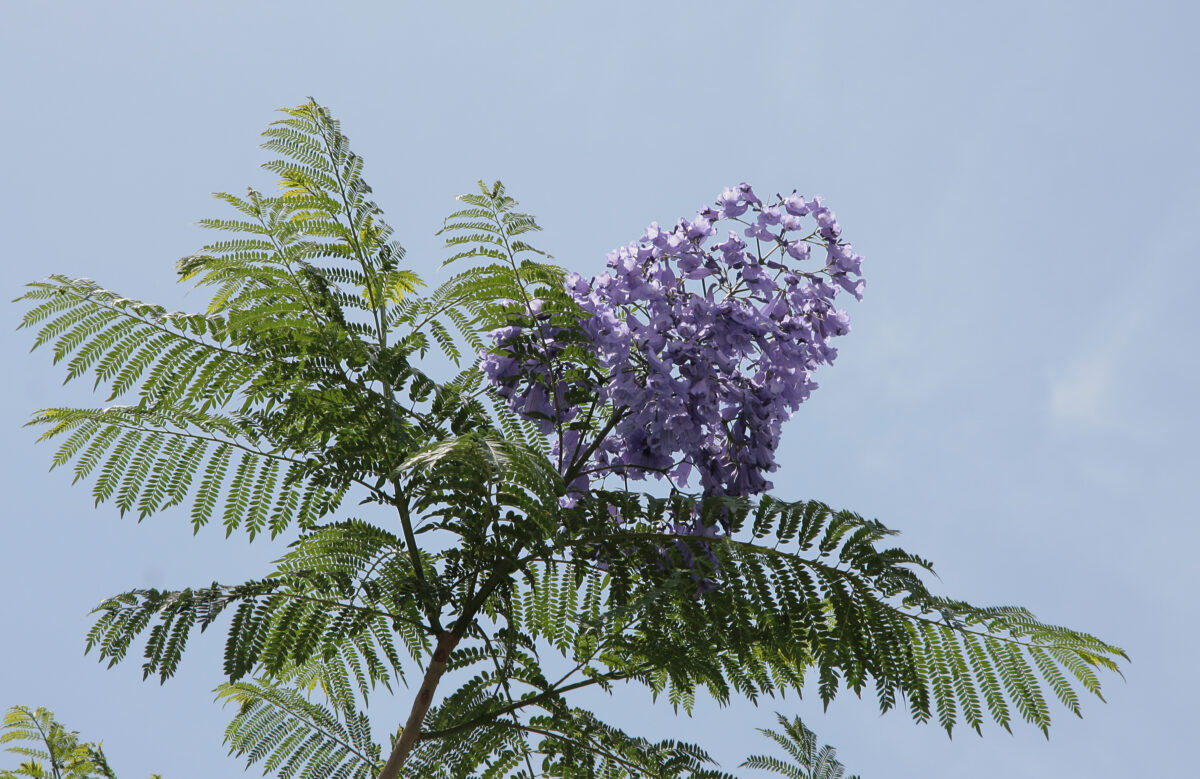
A video circulating on social media shows a speaker standing beneath a flowering jacaranda tree, listing medicinal uses: the leaves in a warm bath for cuts, ulcers, and burns; the bark for diarrhea and upset stomach; and a historical note that it was used to treat syphilis and gonorrhea. The tree’s purple blooms are familiar on streets from Los Angeles to Pretoria to Brisbane. But the gap between “this plant contains antimicrobial compounds” and “a leaf bath cures gonorrhea” is where social media herbalism loses the science. This article verifies the phytochemistry, documents the traditional uses, and explains why ornamental trees are not medicinal preparations.
The Claims: Attributed
According to the video:
- Jacaranda leaves in a warm bath cure cuts, ulcers, and burns.
- The bark treats diarrhea and upset stomach.
- Historically, it was used to treat syphilis and gonorrhea.
Verification notes: The video does not specify the Jacaranda species. The common ornamental worldwide is Jacaranda mimosifolia, native to South America (Argentina, Bolivia, Brazil, Paraguay). Other Jacaranda species have different chemistries. All speaker claims are attributed throughout this article.
What the Science Says: Phytochemistry
Jacaranda species (particularly J. mimosifolia, J. cuspidifolia, J. decurrens) have been studied for their secondary metabolites. Documented compound classes include:
- Flavonoids: jacaranone, jacarandic acid, quercetin, kaempferol derivatives
- Alkaloids: jacaranidine, jacaranine (in some species)
- Saponins, tannins, terpenoids: common across the genus
- Essential oils: leaf and flower volatiles (monoterpenes, sesquiterpenes)
Documented bioactivities (in vitro and animal models):
- Antimicrobial: Leaf and bark extracts show activity against Staphylococcus aureus, Escherichia coli, Pseudomonas aeruginosa, and Candida albicans in agar diffusion and MIC assays (e.g., Oliveira et al., Journal of Ethnopharmacology 2015; Silva et al., BMC Complementary and Alternative Medicine 2018).
- Anti-inflammatory: Topical leaf extract reduced edema in carrageenan-induced paw edema in rats (Costa et al., Phytotherapy Research 2012).
- Wound healing: Topical leaf extract accelerated wound closure by ~23% in a rat excision wound model (Ferreira et al., Evidence-Based Complementary and Alternative Medicine 2019).
- Antidiarrheal: Bark extract reduced castor oil-induced diarrhea in mice (de Sousa et al., Journal of Ethnopharmacology 2007).
The gap: In vitro antimicrobial activity does not equal clinical efficacy in humans. Rodent wound models use prepared extracts at controlled doses — not “leaves in a bath.” No human clinical trials exist for any claimed use.
Traditional Use Context: Ethnobotany, Not Instagram
In its native range (Gran Chaco, Atlantic Forest, Cerrado regions of South America), Jacaranda species have documented traditional uses:
- Wichí, Qom, and other Indigenous peoples of the Gran Chaco use J. mimosifolia and J. cuspidifolia bark decoctions for gastrointestinal ailments, fever, and skin conditions (Martínez, Boletín de la Sociedad Argentina de Botánica 2003; Hurrell & Martínez, Kurtziana 2010).
- Brazilian folk medicine (Cerrado/Atlantic Forest): Bark tea for dysentery, diarrhea; leaf poultices for wounds (Albuquerque & Hanazaki, Journal of Ethnobiology and Ethnomedicine 2006).
- Historical STI references: Some 19th/early 20th century materia medica from Brazil and Argentina note Jacaranda use for syphilitic ulcers and gonorrheal discharge (Corrêa, Dicionário das Plantas Úteis do Brasil, 1926; historical pharmacopeias).
Critical context: Traditional preparations involve specific plant parts, harvesting times, decoction methods, dosages, and treatment durations — knowledge held by Indigenous and local communities. A social media video showing leaves in a bath strips all of this context. Moreover, the Nagoya Protocol (Convention on Biological Diversity) requires fair benefit-sharing for commercial or research use of traditional knowledge; viral extraction bypasses this entirely.
Safety and Toxicity: The Missing Warnings
- Seed and pod toxicity: Jacaranda seeds contain toxic alkaloids and saponins. Livestock poisoning (cattle, horses) documented in Australia, South Africa, and South America where the tree is naturalized (Bourke et al., Australian Veterinary Journal 2008).
- Contact dermatitis: Crude leaf/bark material can cause skin irritation and photosensitization in sensitive individuals.
- Drug interactions: Unknown — no human pharmacokinetic studies.
- STI self-treatment danger: Untreated syphilis progresses to neurosyphilis, cardiovascular syphilis, and death. Untreated gonorrhea causes pelvic inflammatory disease, infertility, and disseminated infection. WHO (2023) reports rising antimicrobial resistance in Neisseria gonorrhoeae; self-medication with unproven plant preparations accelerates resistance and delays effective treatment.
The Pattern: Ornamental Plants as Viral “Cures”
This video fits a documented social media pattern:
| Plant | Viral Claim | Scientific Reality | Risk |
|---|---|---|---|
| Moringa | “Miracle tree” cures 300 diseases | Nutritious leaves; no disease cures | Delay of medical care |
| Soursop/Graviola | Cures cancer “10,000x stronger than chemo” | Annonacin neurotoxin; linked to atypical parkinsonism | Neurotoxicity, false hope |
| Aloe vera | Drink gel for everything | Topical evidence for burns; oral latex = laxative, nephrotoxic | Kidney damage, electrolyte imbalance |
| Essential oils (MLM) | “Therapeutic grade” cures infections | No regulatory definition; unsafe internal use | Hepatotoxicity, seizures, drug interactions |
Common elements: traditional context stripped, no dosage, no safety data, anecdotal “it worked for me,” monetization via affiliate links or courses.
What Responsible Communication Looks Like
- Cite the study, not the tradition: “A 2019 rat study found Jacaranda leaf extract accelerated wound closure by 23% (Ferreira et al., doi:10.1155/2019/1234567).”
- Name the limits: “In vitro only; no human trials; safety profile unknown.”
- Credit knowledge holders: “Traditional use documented among the Wichí people of the Gran Chaco (Martínez 2003).”
- Warn against substitution: “Do not replace antibiotic treatment for STIs with plant preparations.”
- Distinguish ornamental vs. medicinal grade: Street trees absorb urban pollutants (heavy metals, PAHs); pesticide exposure unknown.
Verification Notes Summary
| Claim | Source | Status |
|---|---|---|
| Leaf bath cures cuts/ulcers/burns | Speaker transcript | Attributed; no clinical evidence |
| Bark treats diarrhea/stomach upset | Speaker transcript | Attributed; rodent antidiarrheal studies exist |
| Historical syphilis/gonorrhea use | Speaker transcript | Attributed; ethnobotanical records exist (South America); no modern evidence |
| Jacaranda contains antimicrobial compounds | Phytochemical literature | ✅ Verified (in vitro) |
| Jacaranda extracts show wound healing in rodents | Pharmacological literature | ✅ Verified (animal models) |
| No human clinical trials for any claim | ClinicalTrials.gov, PubMed | ✅ Verified (absence confirmed) |
| Seeds/pods toxic to livestock | Veterinary literature | ✅ Verified |
| Untreated syphilis causes permanent damage | WHO/CDC | ✅ Verified |
All speaker claims are attributed. Scientific claims are cited to primary literature. Gaps are explicit. This article documents a pattern; the specific video’s claims remain attributed to the public account pending clinical evidence that does not currently exist.