 Govind Tekale
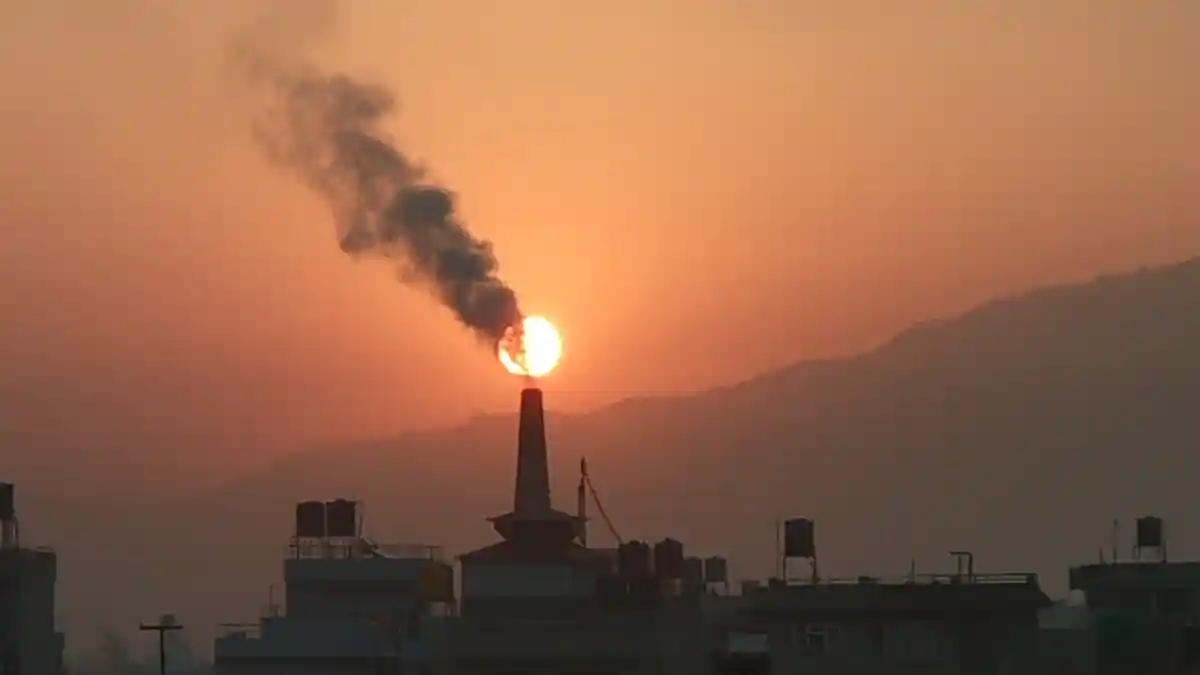
In 1980s Mexico City, the smog grew so thick that birds fell from the sky mid-flight. People couldn’t breathe. The crisis forced a revelation: air pollution has no single culprit — not just vehicles, not just factories, not just farmers. And it respects no city limits. Pollution moves across an entire geographic region, an “airshed,” the atmospheric equivalent of a watershed. That concept, born from Mexico City’s emergency, is now the World Bank’s prescribed fix for the world’s most polluted airshed: the Indo-Gangetic Plain.
The World Bank’s Bet on Integration
The World Bank’s research on South Asia’s air quality concludes that monitoring alone won’t clean the air. What’s needed is an integrated, data-driven, digitally coordinated approach across all pollution sources — transport, industry, agriculture, waste, dust — spanning the seven states of the Indo-Gangetic Plain: Punjab, Haryana, Uttar Pradesh, Bihar, Jharkhand, West Bengal, and Delhi. The Bank models that this coordinated airshed approach could cut PM2.5 levels by up to 50% by 2030 compared to business-as-usual — a modeled ceiling under full implementation, not a guarantee.
The consequence is direct. For the 400 million people living in this airshed — from Punjab to West Bengal — the airshed approach isn’t academic. It’s the difference between a plan that coordinates across state borders and the fragmented, city-by-city attempts that have failed for decades. The World Bank’s modeled ceiling — up to 50% PM2.5 reduction by 2030 — translates to millions of avoided asthma attacks, heart attacks, and premature deaths. But it requires seven state governments to share data, align standards, and act in sync — something they’ve rarely done. Mexico City did it for one city. India needs to do it for a subcontinent.
What an Airshed Actually Means
An airshed is a geographic area where air pollution circulates and mixes — like a watershed for air. Pollution emitted anywhere in the airshed affects the whole region. The Indo-Gangetic Plain airshed covers 7 states and 400+ million people. City-level action fails because pollution crosses borders: stubble smoke from Punjab drifts to Delhi; industrial emissions from Uttar Pradesh settle in Bihar; brick kiln smoke from West Bengal blows into Jharkhand.
The Mexico City parallel is instructive. The “birds falling from the sky” account is documented — 1980s studies recorded mass bird mortality during severe smog episodes. But Mexico City’s airshed was one metropolitan area of ~20 million. India’s Indo-Gangetic Plain is 20 times larger in population and spans multiple sovereign state governments. The science is the same; the governance challenge is exponentially harder.
The 50% Claim: What the Data Says
The World Bank’s “Striving for Clean Air” report (2023) models that integrated airshed management — coordinating across transport, industry, agriculture, and waste sectors — could achieve up to 50% PM2.5 reduction by 2030 compared to business-as-usual. But the report is clear: this requires full implementation of all sectoral measures simultaneously, with real-time data sharing across state boundaries. Current implementation rates for existing clean air measures (NCAP, state action plans) vary widely; many city action plans show below 30% completion. The gap between modeled potential and political reality is the story.
Seven States, One Airshed: The Coordination Gap
India’s National Clean Air Programme (NCAP) targets 131 cities but operates largely city-by-city. The airshed approach demands a supra-state authority — a mechanism for Punjab, Haryana, Delhi, UP, Bihar, Jharkhand, and West Bengal to share emissions data, harmonize standards, and enforce jointly. The World Bank proposes a digital coordination platform: real-time emissions monitoring, shared modeling, coordinated enforcement triggers. No such platform exists yet. The Commission for Air Quality Management (CAQM) covers only the NCR — a fraction of the airshed.
What the Digital Platform Must Deliver
“Digitally coordinated” in the World Bank framework means: continuous emissions monitoring systems (CEMS) on major sources feeding a central dashboard; satellite-validated PM2.5 mapping across the airshed; automated alerts when airshed-wide thresholds are breached; pre-agreed response protocols triggered across state lines simultaneously. This is technically feasible — China’s regional airshed platforms demonstrate it — but requires political commitment to data transparency that Indian states have historically resisted.
What “Airshed” Means for You
What is an airshed and how is it different from a city’s air quality?
An airshed is a geographic area where air pollution circulates and mixes — like a watershed for air. Pollution emitted anywhere in the airshed affects the whole region. The Indo-Gangetic Plain airshed covers 7 states (Punjab, Haryana, UP, Bihar, Jharkhand, West Bengal, Delhi) and 400+ million people. City-level action fails because pollution crosses borders. The airshed approach coordinates across the entire region.
Which 7 states are in the Indo-Gangetic Plain airshed?
Punjab, Haryana, Uttar Pradesh, Bihar, Jharkhand, West Bengal, and Delhi. Together they form a continuous atmospheric basin where pollution from any source affects the entire region.
Did Mexico City really have birds falling from the sky?
Yes. 1980s ecological studies documented mass bird mortality during severe smog episodes in Mexico City. The phenomenon helped establish the airshed concept — that pollution operates at regional scale, not city scale.
Can PM2.5 really be cut 50% by 2030?
World Bank modeling shows it’s technically possible if all sectoral measures are fully implemented simultaneously across the airshed with real-time coordination. Current implementation rates for existing measures are below 50%. The 50% figure is a modeled ceiling, not a guarantee.
The Watchpoint
The reel is today. The World Bank report is 2023. The 2030 target is seven years away. The next signal isn’t another report. It’s whether the seven states establish a joint airshed authority with binding powers, whether the digital platform goes live, and whether winter 2025 PM2.5 data shows the first coordinated dip. Mexico City took a decade to turn the corner. India’s airshed has 400 million reasons to move faster.