 Tejal Somvanshi

Sixty feet of tunnel. Multiple chambers. Multiple exits. A ventilation system engineered by instinct. This isn’t a subway — it’s the burrow of the Indian crested porcupine, an 18-kilogram rodent most farmers call a pest. But underground, it’s an architect whose work shelters snakes that eat rats, frogs that control mosquitoes, and invertebrates that fertilise soil. Ecologists warn that killing the porcupine collapses the whole micro-ecosystem.
India’s Largest Rodent, the World’s Third Largest
The Indian crested porcupine (Hystrix indica) is India’s largest rodent and the world’s third largest, after the capybara and the beaver. Adults weigh 11–18 kilograms. Their quills — modified hairs, not true spines — can reach 30 centimetres. They are nocturnal, herbivorous, and found across India, the Middle East, and Central Asia. The IUCN lists them as Least Concern globally, but that status masks a quieter crisis: local extinctions driven by habitat loss and retaliatory killing.
The Burrow City: An Ecosystem Engineer at Work
A porcupine burrow is not a hole — it’s a complex. WII researchers have documented tunnels extending 10–20 metres (30–65 feet) with a main chamber, multiple side chambers, and several entrances. These structures are multi-generational, expanded over years.
The burrows maintain stable temperature and humidity, creating refuge for:
- Snakes — including rat snakes and pythons that control rodent populations in nearby farms
- Amphibians — frogs and toads that need moist microclimates
- Small mammals — shrews, mice, and even other porcupines
- Invertebrates — beetles, spiders, and earthworms that cycle nutrients
Ecologists call this “ecosystem engineering“: one species modifying the physical environment in ways that create habitat for others. Ecologists describe the porcupine as a keystone architect of the Western Ghats‘ subterranean biodiversity.
The Conflict: Why They’re Called Pests
Porcupines eat roots, tubers, bark, and fallen fruit. In agricultural landscapes — especially near forest edges — they damage crops like sweet potato, tapioca, groundnut, and coconut seedlings. ICAR assessments indicate porcupine-related crop losses in the millions of rupees annually across affected states.
The response is often lethal. Farmers use traps, poison, and electrocution. Several states have historically listed the porcupine as “vermin” under the Wildlife Protection Act’s Schedule V, allowing unrestricted killing — though the 2022 amendment removed many species from this schedule, enforcement gaps remain.
The driver isn’t malice — it’s economics. But the root cause is habitat fragmentation. As Western Ghats forests shrink and fragment (highways, plantations, settlements), porcupines are pushed to forest edges where crops become the easiest food source. The conflict is a symptom of broken connectivity, not inherent “pest” behaviour.
The Solution: Habitat Protection Works
Field conservation group Mycelium, operating in the Western Ghats, shows the alternative. According to their public materials, their model: secure land parcels, restore native vegetation, maintain corridor connectivity, and engage local communities in monitoring. The logic is straightforward — when porcupines have intact forest habitat with sufficient natural forage, crop raids drop.
Evidence backs this. WII and National Tiger Conservation Authority (NTCA) studies indicate that habitat connectivity reduces human-wildlife conflict across species. Protected corridors allow animals to access natural food and water without entering farms. Mycelium’s work in the Western Ghats applies this principle at a replicable scale: community-managed buffers, native tree planting, and awareness programmes that reframe “problem animals” as ecosystem engineers.
Why This Matters Now
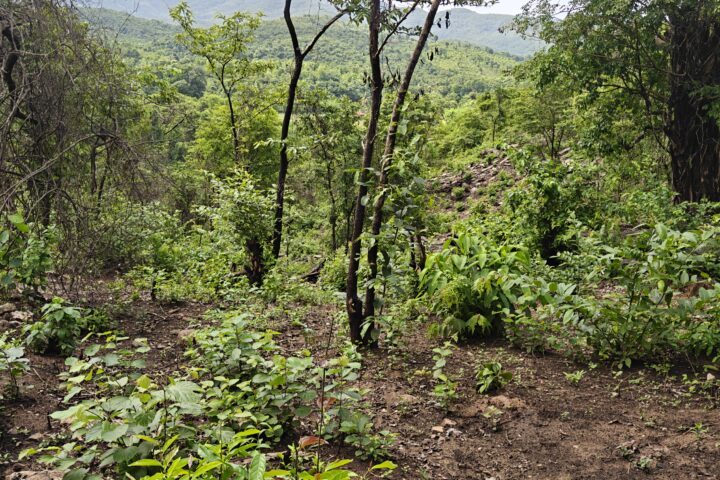
The Western Ghats — a UNESCO World Heritage Site and one of 36 global biodiversity hotspots — faces accelerating fragmentation. New highway projects, expanding monoculture plantations, and settlement growth cut through corridors daily. Some ecologists suggest the porcupine, widespread and visible, acts as an indicator species: where its burrows disappear, subterranean biodiversity has already collapsed.
India’s commitment to protect 30% of land and sea by 2030 (the “30×30” target under the Convention on Biological Diversity) creates a policy window. Eco-Sensitive Zone notifications around protected areas, if implemented with corridor integrity, could secure the habitat porcupines — and their burrow tenants — need.
The Observation That Changes the Frame
The porcupine isn’t a pest that destroys crops — it’s an architect that builds biodiversity. Its burrows are apartment complexes for the predators that protect farms. Protecting the porcupine isn’t charity; it’s pest control by design.
Is the Indian Crested Porcupine Endangered?
Globally: No. IUCN Red List status is Least Concern (2016 assessment). Locally: Yes. In fragmented Western Ghats landscapes, subpopulations are isolated, genetically vulnerable, and locally extinct in many former ranges. The threat isn’t global extinction — it’s ecological extinction from the landscapes where it does its engineering work.
What You Can Do
- If you farm near porcupine habitat: explore non-lethal deterrents (fencing, light/sound deterrents, crop rotation) before lethal control
- Support organisations like Mycelium that secure habitat corridors in the Western Ghats
- Report porcupine sightings to the Wildlife Institute of India or state forest departments — distribution data guides corridor planning
- Advocate for Eco-Sensitive Zone notifications that prioritise corridor connectivity, more than core-area boundaries
The porcupine has been digging its burrows for millions of years. It doesn’t need us to teach it engineering. It needs us to stop paving over the blueprints.