 Govind Tekale
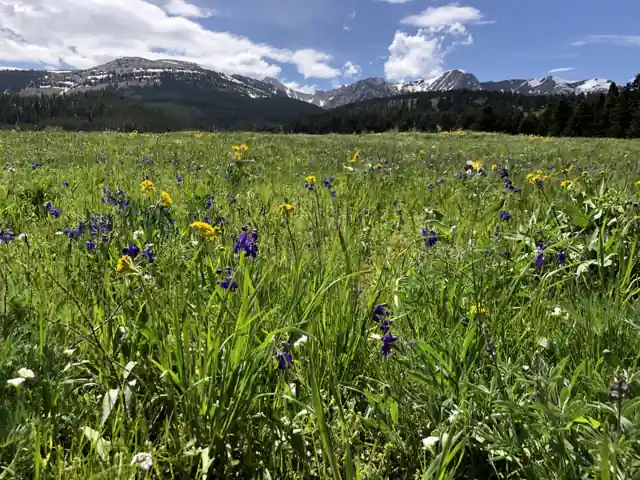
For years, public health messaging has treated “green space” as a single, interchangeable good — a park is a park, a tree is a tree. But a growing body of research suggests the picture is more specific than that. Several studies point to something closer to the variety of life within a green space — its biodiversity — as a factor worth distinguishing from mere greenery. The distinction matters for how cities plan parks, how restoration projects are designed, and how much weight any of this can bear as evidence. It’s worth saying plainly up front: every study below reports an association, not a demonstrated cause. None of them show that adding species to a place would, by itself, make the people there happier or healthier.
Context: time in nature and wellbeing, a related but separate question
One of the largest relevant data points comes from White et al. (2019), published in Scientific Reports, which drew on survey responses from 19,806 people in England. The study found that people who spent at least 120 minutes a week in natural environments reported better health and wellbeing than those who spent less time outdoors. This is a substantial sample, and it’s a useful backdrop for the biodiversity-specific research that follows. But it’s important to be precise about what it shows: the study measured time spent in nature broadly, not the species richness or biodiversity of the places visited. It is not, strictly speaking, evidence about biodiversity at all — it belongs in this discussion as context for the broader nature-wellbeing link, not as a data point about variety of life. Like the other studies here, it is observational and cross-sectional: it establishes a statistical association, not a causal pathway. People who spend more time outdoors may already differ from others in ways the survey can’t fully capture — income, baseline health, free time, or a prior disposition toward nature.
Psychological benefit tied to richness — but whose measurement of richness?
A more directly relevant study, Fuller et al. (2007) in Biology Letters, looked specifically at urban green spaces in Sheffield, UK. The researchers independently surveyed the plant species richness of each site and found that visitors’ self-reported psychological benefit increased with that surveyed plant richness — not simply with the size or greenness of the space. The study also asked visitors about the richness of birds and butterflies they perceived at each site. It was this perceived richness, rather than an independently measured count of birds and butterflies, that tracked with reported wellbeing. In other words, the plant-richness finding rests on an actual ecological survey, while the bird and butterfly findings rest on what visitors believed they saw, not on a parallel wildlife census. That distinction matters: the study is genuinely evidence that measured biodiversity (for plants) matters beyond greenness, but it is not evidence that measured bird or butterfly diversity does the same.
The nuance: perceived biodiversity is not the same as measured biodiversity
A more complicating result comes from Dallimer et al. (2012) in BioScience, which compared people’s perceptions of biodiversity at a site against actual, independently measured species counts of plants, birds, and butterflies. The two did not line up particularly well. People were often poor judges of how biodiverse a place actually was, yet their perception of biodiversity — rather than the measured reality — was what tracked more closely with their wellbeing. This finding is important because it complicates any simple “more species, more wellbeing” narrative, and it echoes the Fuller result above: visible or noticeable cues of nature — flowering plants, birdsong, visible movement — may matter more to how people feel than the technical species count an ecologist would record. The subjective experience of nature and the objective ecological inventory of a site are related, but not the same thing, and research has not cleanly separated which one is “doing the work.”
What this means for restoration: the native plant connection, and its limits
A separate line of evidence connects biodiversity itself to a concrete and testable mechanism: plant choice. Burghardt et al., in Conservation Biology, compared residential landscaping using native versus non-native plants and found that native plantings supported significantly greater biodiversity of birds and butterflies than conventional ornamental landscaping. This study does not speak to human wellbeing directly — it is an ecological comparison, not a psychological one. It offers a plausible, evidence-based lever for local restoration efforts: planting native species rather than ornamental non-native ones is a documented way to raise bird and butterfly diversity, at least in the suburban landscapes studied. But this result is also site-specific and shouldn’t be generalized without care. What counts as “native” and which plant-animal relationships exist vary by region, soil, and climate; the benefit depends on matching plant choices to local ecology, not just avoiding non-native species in general. Restoration projects also face practical limits — maintenance needs, water availability, existing habitat fragmentation, and how a planting connects (or doesn’t) to surrounding green space — that can blunt or even undercut the biodiversity gains seen in a controlled comparison.
Putting the pieces together, carefully
Taken together, these studies form a plausible but incomplete picture, not a causal chain. Time in nature generally is associated with better reported wellbeing (White et al.), surveyed plant richness specifically — not just green space — seems tied to psychological benefit, while perceived rather than measured bird and butterfly richness tracked with that benefit in the same study (Fuller et al.), what people perceive about biodiversity may matter as much or more than what is actually present (Dallimer et al.), and native plantings are a documented way to raise measured bird and butterfly biodiversity in the landscapes studied (Burghardt et al.). None of these studies, individually or together, demonstrates that increasing biodiversity in a given neighborhood would causally improve the wellbeing of the people living there — they are observational, and the people who seek out or notice biodiverse spaces may simply differ from those who don’t. What the evidence supports is more modest: that variety in nature, and perhaps especially the visible, perceptible kind, tends to show up alongside better reported wellbeing in the populations studied so far. For city planners, community gardeners, and anyone designing a local restoration project, that is a reasonable basis for favoring diverse, native plantings over sparse ornamental greenery — not because it is proven to make people happier, but because the association is real and the ecological benefits are documented, with the caveat that outcomes depend on site conditions, plant-species matching, and ongoing maintenance, and are not guaranteed to transfer from one location or climate to another.