Rahul Somvanshi
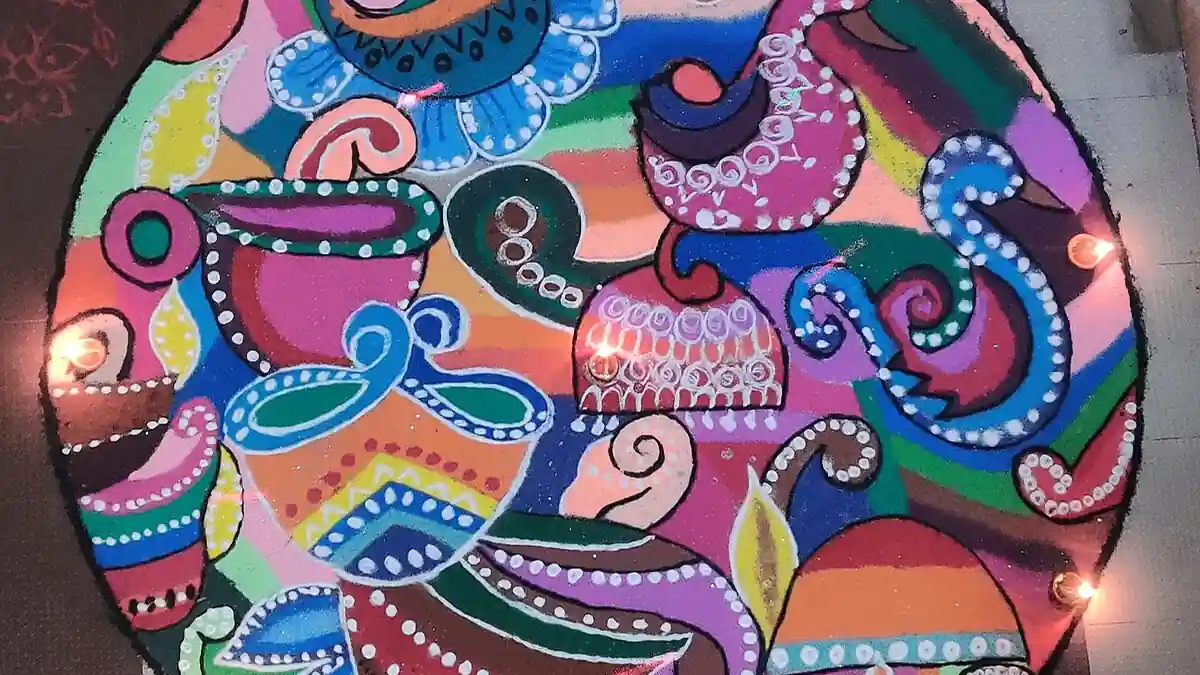
As millions across India mark Vijayadashami (Dussehra) 2026, households and community pandals are increasingly looking at what gets left behind once the celebrations end. Commercial rangoli products, synthetic decorations, and petroleum-based candles all create disposal challenges. There are traditional, low-cost alternatives for each of them.
Why festival material choices matter
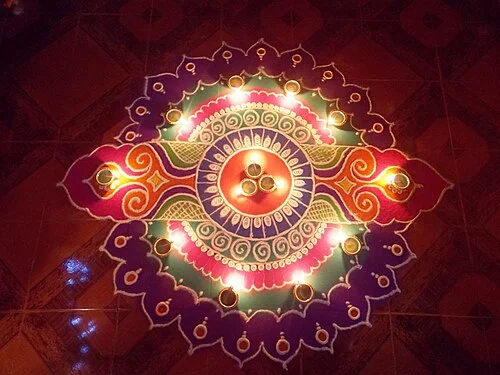
Many commercial rangoli powders use synthetic pigments and dyed industrial materials that do not break down easily in the environment. Unlike the traditional kolam and alpana materials they have largely replaced in urban markets, these products can wash into drains when swept off doorsteps and courtyards after the festival. Northern India enters its most challenging air-quality window in late October, when pre-winter atmospheric conditions can limit the dispersal of particulate matter — making lower-emission material choices more consequential during this period.
Karmactive has previously covered how Plaster of Paris idol immersions degrade urban waterways and how eco-friendly Ahoi Ashtami puja materials reduce festival waste. Dussehra presents similar choices, with a few specific to rangoli and effigy traditions.
Three practical swaps for Dussehra 2026
1. Rice flour and spice pigments
Coarse rice flour (chawal ka atta) forms the base. Haldi (turmeric) gives a yellow tone. Kumkum or dried beetroot powder provides red and crimson. Dried and ground neem or spinach powder works for green tones. These draw on the traditional kolam and alpana craft materials used across South and East India, where the practice of making floor designs with edible or biodegradable materials has deep cultural roots. Natural pigments like these break down more readily than synthetic dye compounds when they enter soil or water.
2. Flower-petal and leaf arrangements
Fresh marigold (genda) petals, rose petals, mango leaves, and ashoka foliage create high-contrast Dussehra motifs. Petal arrangements can be collected after the celebration for composting or green-waste disposal rather than sweeping into a drain. Fresh petals work best when laid the morning of the celebration rather than the evening before.
3. Unpainted earthen clay diyas with plant-based oil
Unglazed terracotta diyas with mustard or sesame oil are the traditional choice. Compared to paraffin wax tea-lights in single-use aluminum cups, they avoid petroleum-derived fuel. Paraffin is a petroleum product. Clay diyas can be broken down into soil if they crack or chip, unlike metal or plastic alternatives.
On effigy materials
This year, the Shri Keshav Ramlila Committee erected a 30-foot cockroach effigy at the Netaji Subhash Place grounds in Pitampura for burning on Dussehra alongside effigies of Ravana, Kumbhakarna, and Meghnad. Committee president and BJP MLA Ashok Goel said the effigy was about cleanliness and filth under the Swachh Bharat campaign. CJP founder Abhijeet Dipke responded on X: “Thank you for the free publicity.”
More broadly, the material composition of Dussehra effigies — and the smoke and ash they produce when burned in dense urban areas — is a legitimate question for community pandals and local residents as cities monitor late-October air quality. Asking what an effigy is made from, and whether lower-emission construction options are available, is a practical starting point for community-level conversations.