Rahul Somvanshi
—
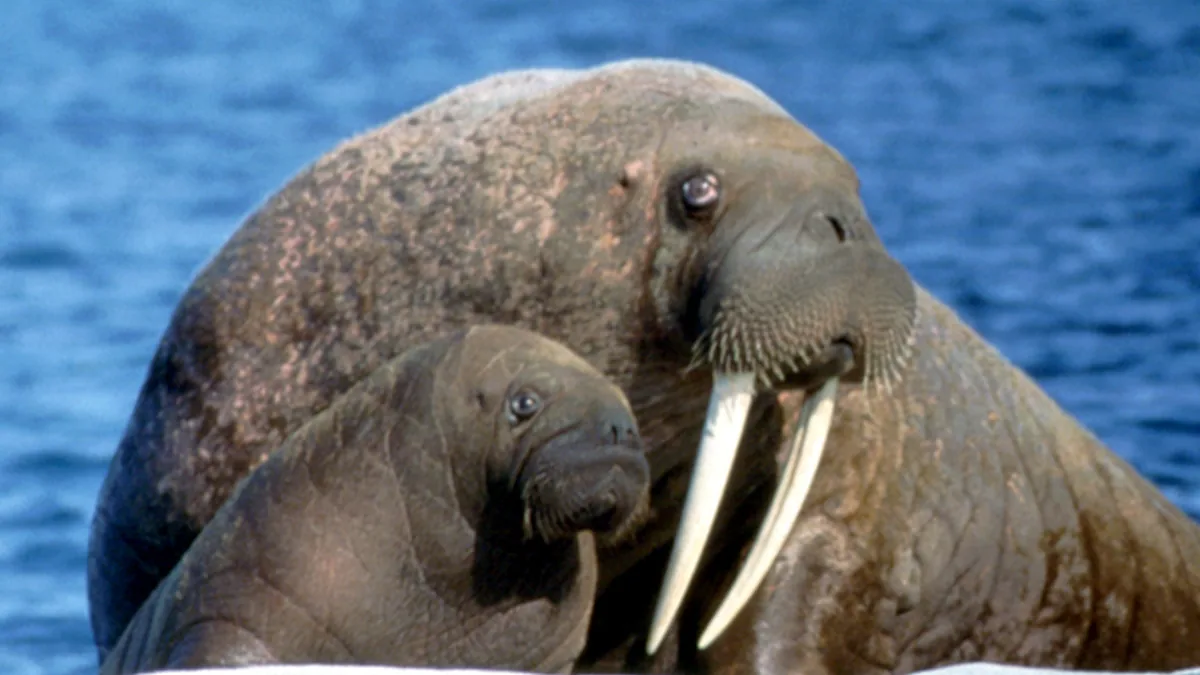
An orphaned Pacific walrus calf rescued near Point Lay, Alaska, in September has been transferred to a long-term home and will not return to the wild. Wildlife rescues do not always end in release—and for a walrus calf orphaned this young, the decision is now made.
The male calf—named Annautaq, after the late father of one of his rescuers—arrived at the Alaska SeaLife Center in Seward on September 14 after being found near Point Lay, a remote coastal community in northwest Alaska. USGS walrus biologist Tony Fischbach and Ilisagvik College student Violet Anniskett discovered the calf hidden between the remains of two adult walruses and sheltered him through a three-day storm before coordinating his transport. Federal wildlife officials at the U.S. Fish and Wildlife Service approved the rehabilitation, with support from Point Lay’s Native Village. Annautaq arrived at the Alaska SeaLife Center weighing about 200 pounds, approximately 5 months old, dehydrated and carrying superficial wounds. The Alaska SeaLife Center, which has rehabilitated 12 orphaned Pacific walruses since it opened in 1998, confirmed that Annautaq has since been transferred to a long-term home; the receiving facility had not been named at the time of the center’s announcement.
Wildlife readers may assume rehabilitation ends with release. For Annautaq, the close human contact required to keep him healthy during rehabilitation made him unsuitable for release back into the wild. The practical consequence is that survival means permanent human care rather than return to the ocean. That distinction matters: “rescue” and “release” are not interchangeable outcomes in marine mammal conservation.
Why Walrus Calves Are Difficult to Rehabilitate for Release
Walrus calves typically remain with their mothers for one to two years, during which they receive nursing, physical contact, and social interaction that cannot be replicated in a rehabilitation setting. When a calf is orphaned very young, care teams can provide substitute nutrition but cannot reproduce the full maternal and herd environment a walrus needs to survive in the wild. The Alaska SeaLife Center’s published account confirms that Annautaq’s habituation to human care made him unsuitable for release, and that the decision was made in coordination with the U.S. Fish and Wildlife Service, which oversees federal permits for marine mammal rehabilitation.
**Why can’t an orphaned walrus calf always be released?** A calf normally depends on its mother for nursing, physical contact, and the social environment of a herd. When orphaned very young, rehabilitation teams may determine it cannot safely return to the wild. In Annautaq’s case, the Alaska SeaLife Center confirmed the calf was not a candidate for release because of his habituation to human care. The decision was made in coordination with the U.S. Fish and Wildlife Service.
Point Lay, located above the Arctic Circle, played a central role in the rescue. The Native Village of Point Lay supported the effort, and local residents helped transport the calf across the lagoon. The community is among the Alaska Native communities for which Pacific walruses hold cultural and subsistence importance. Annautaq was sheltered by Fischbach and Anniskett for three days during severe weather before his transport of more than 800 miles to Seward.
The Alaska SeaLife Center said it would announce Annautaq’s new facility in the coming days. Check back for that update.