Rahul Somvanshi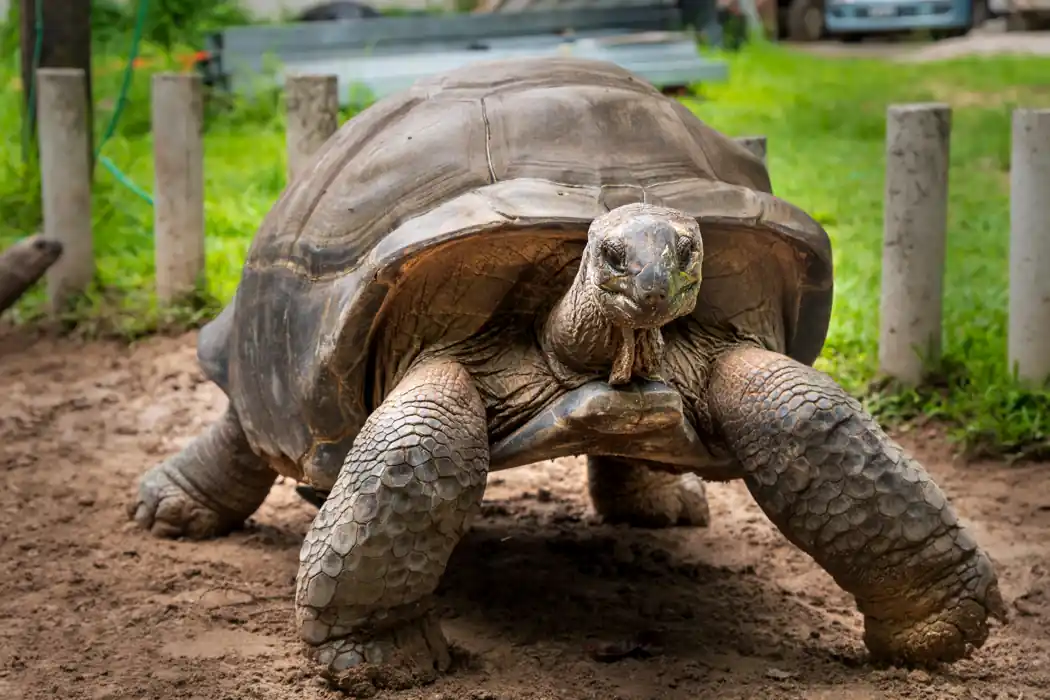
Could the world’s oldest known land animal help explain why some species age so slowly? A new genetic study of Jonathan, a 194-year-old Aldabra giant tortoise living on St Helena, has identified DNA variants and epigenetic patterns that researchers say may offer clues.
The research team sequenced Jonathan’s genome and methylome—the set of chemical marks on DNA that can affect how genes work. Their study, published in Science Advances, compared him with other giant tortoises. It found 287 gene variants unique to Jonathan across pathways connected with ageing, including DNA repair, inflammation, insulin regulation and cancer suppression.
That does not mean scientists have found a treatment that can make people live for two centuries. The study examined one extraordinary animal. It identifies leads for further research, rather than proving that any one variant caused Jonathan’s long life or that the findings can be transferred directly to humans.
What Jonathan’s DNA revealed
Jonathan is an Aldabra giant tortoise, Aldabrachelys gigantea. The researchers also examined DNA methylation, a process that can influence whether genes are more or less active. They reported that methylation patterns in genes involved in metabolism and DNA repair were more similar to those of younger giant tortoises than would be expected for an animal of Jonathan’s age.
The University of Cambridge, whose researchers were involved in the work, said the comparison identified variants associated with multiple biological processes that can change with age. Those findings matter for conservation as well as biomedicine: studying long-lived wildlife can help researchers understand how different species maintain health over long lifespans.
Jonathan’s age gives the result unusual scientific value, but it also limits what can be concluded. A single genome cannot separate the effects of inherited biology from diet, habitat, veterinary care and chance. The next step will be to test whether the same patterns appear in more animals and whether they have measurable effects in cells or living organisms.
Can Jonathan’s genes be used to create anti-ageing treatments for people? Not yet. The research provides possible targets for study, but it does not test a human treatment. Any medical use would require much more work to show that an approach is safe and effective in people.
Jonathan’s genome offers a rare look at extreme longevity in a vertebrate. It adds evidence that giant tortoises may have evolved multiple ways to protect cells over time. The study is a starting point for research, not a recipe for reversing human ageing.