 Sonali Tiwary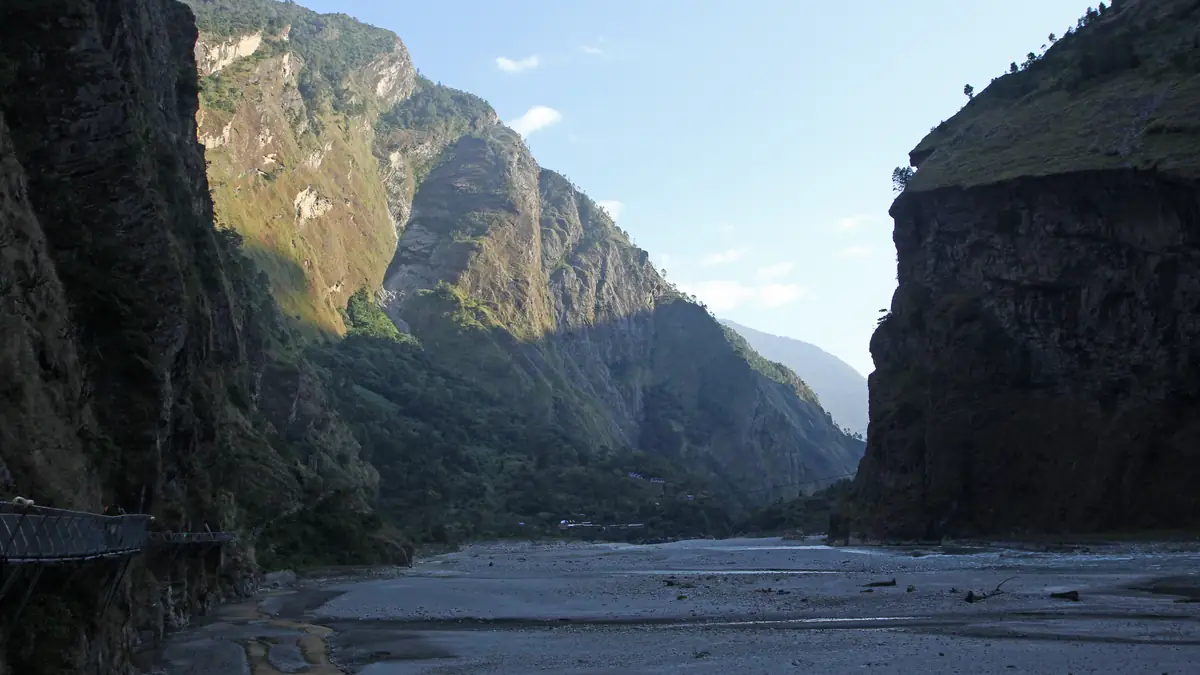
A flash flood struck the Budhi Gandaki River in Nepal’s Gorkha District on October 11, with residents alerted by the sounds of rushing streams but with little advance warning in the upper-valley areas. Five people are reported missing. More than 80 others, including foreign trekkers, have been evacuated. Preliminary assessments point to an upstream blockage as the cause, not rainfall at the impact site.
Preliminary assessments attribute the flood to a suspected landslide blockage in Chumnubri Rural Municipality in northern Gorkha — an area that temporarily dammed the Budhi Gandaki River and then failed, releasing a high-velocity surge of water and debris downstream. Chumchet is the area where some missing residents were last reported sheltering. The event destroyed more than 35 homes according to initial official figures, with later reports counting higher numbers, and multiple suspension bridges. Police and army sources report five people as missing, with rescue operations ongoing. Nepal Army and Armed Police Force helicopters evacuated more than 80 residents and trekkers from isolated communities. The UN Nepal office issued a statement on October 11 calling for coordination with the government and continued investment in early-warning systems and community resilience.
Suspension bridges connecting upper Gorkha villages to lowland bazaars were among the structures destroyed. With Himalayan winter approaching, those communities face acute food and medical supply shortages even though the initial confirmed death toll remains low. Helicopter access is currently the only viable means of evacuation and emergency provisioning until reconstruction begins. Families of trekkers in the northern Gorkha corridor should contact their registered trekking agency and their embassy’s consular desk in Kathmandu for missing-person assistance rather than relying on casualty numbers circulating on social media.
Why a Landslide-Dam Breach Differs From Ordinary Monsoon Flooding
This is the defining characteristic of a landslide-dam breach, as distinct from a standard monsoon cloudburst. A slope collapse blocks a river channel, stores water behind it, then releases it all at once when the natural dam gives way. Preliminary reports describe this mechanism as the likely cause; investigators are working to confirm it. Steep post-monsoon terrain, saturated by the preceding season’s rainfall, is a known contributing factor to such events in the Himalayan region.
The contrast matters for accountability, not just explanation. Reports indicate early alerts and resident evacuations took place before the full surge arrived — an observation consistent with the relatively low confirmed death count despite significant structural damage. Nepal’s disaster preparedness framework has demonstrated that warning capacity exists. The question now is whether it can extend to upstream breach events that originate beyond any local rainfall zone, in terrain that only satellite observation can monitor.
The Manaslu Circuit trekking route in northern Gorkha District should be treated as potentially impassable until Gorkha district authorities formally confirm conditions. Secondary slope failures remain a risk as terrain continues to settle post-breach.
Official missing-person totals and evacuation figures are updated through the District Administration Office, Gorkha, and the NDRRMA. UN Nepal’s full statement is at nepal.un.org. Check back for updated counts as helicopter search operations continue.