Rahul Somvanshi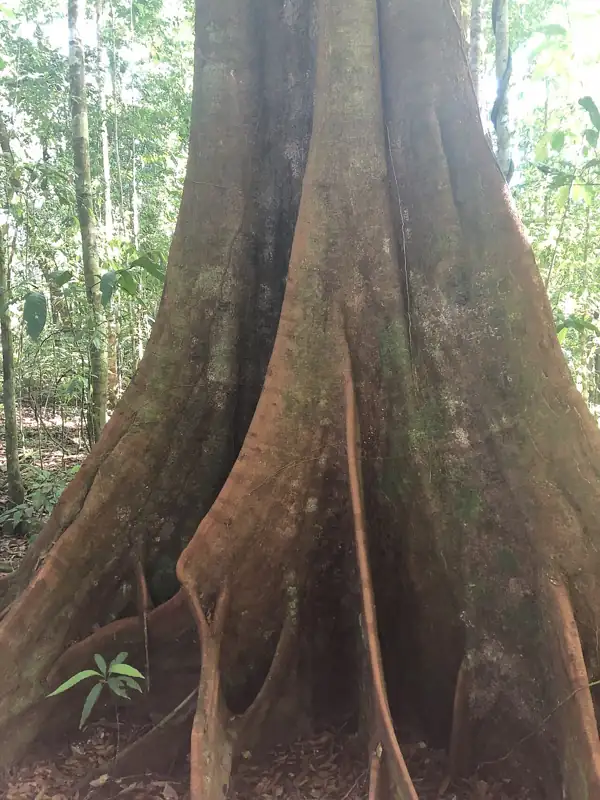
A tree described in a video from Costa Rica’s Osa Peninsula is commonly called the “suicide tree” because it flowers and fruits once, then dies. That life-history trait is real. But the claim that it exists nowhere else in the world except the Osa Peninsula is not.
The species is Tachigali versicolor, a tropical tree also known by the Spanish name “frijolillo.” It is monocarpic: it puts its reproductive effort into a single flowering and fruiting event before dying. Scientists use the related term semelparous for organisms that reproduce once rather than repeatedly.
Its final reproductive event can be visually striking. A mature tree produces a large display of flowers and seed pods, then declines. This is a biological strategy, not self-harm, so “suicide tree” is a memorable common name rather than a scientific description.
What the reel gets right—and wrong
The tree can occur in Costa Rica, including rainforest landscapes such as the Osa region. Its bark, buttressed roots and tall form can help distinguish it in the field, although reliable identification should use leaves, flowers or fruit as well as bark.
Is the suicide tree endemic to the Osa Peninsula? No. Tachigali versicolor is found from Costa Rica into western Colombia. The Osa Peninsula is an important habitat for tropical biodiversity, but it is not the species’ only range.
Does it flower and fruit only once? Yes. This one-time reproductive pattern is the basis for its common name. After reproducing, the individual tree dies, while its seeds may establish the next generation.
The correction matters because unusual trees are often used to tell a powerful conservation story. Osa’s forests merit protection for many reasons, but accurate range information is part of that protection: a species can be remarkable without being confined to one peninsula.
The name “suicide tree” can also cause confusion, because it is used for more than one plant. In South Asia, Cerbera odollam is given the same common name because it is poisonous. That is a different species with a different reason for the label.