Rahul Somvanshi
A pineapple top from the supermarket can become a houseplant—and, with the right warmth and patience, it can eventually produce fruit. A viral Instagram reel correctly shows that the leafy crown can be used to start a new plant. But the process is slower than the video suggests, and keeping the base too wet can cause rot.
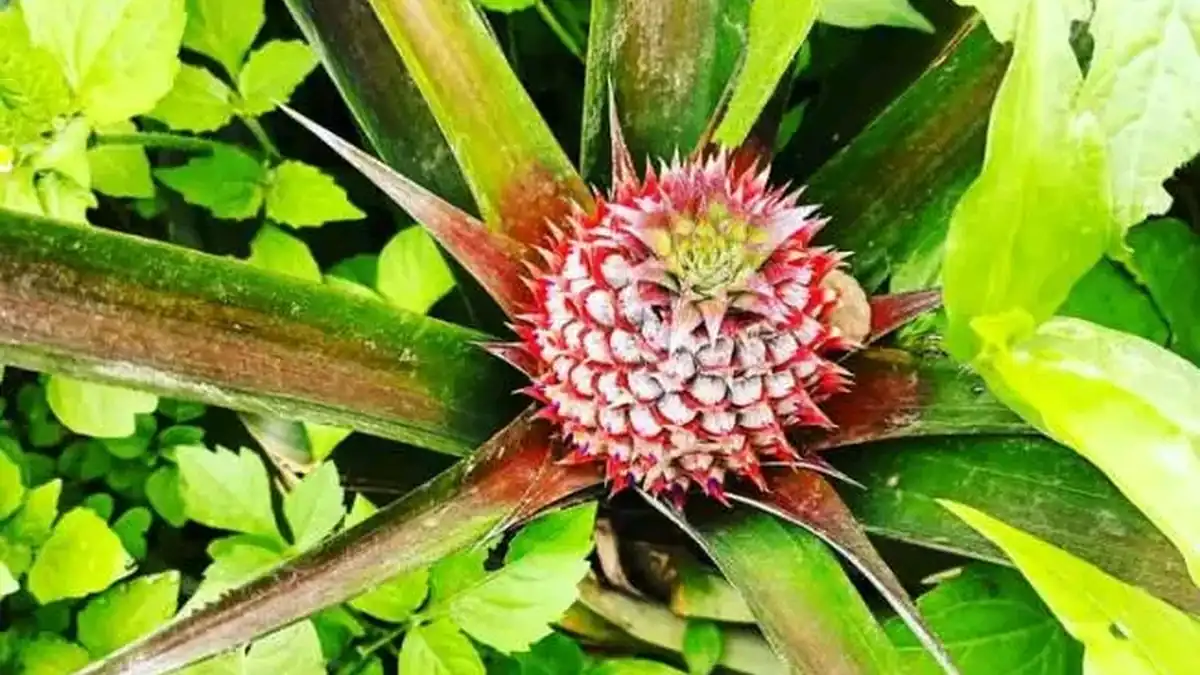
UF/IFAS Extension says the crown is a common way for home gardeners to propagate pineapple. Start with a firm, healthy crown. Remove the remaining fruit flesh and pull away a few lower leaves to expose the small, pre-formed roots at its base. Plant it 3 to 4 inches deep in a container with well-drained potting mix.
That matters for gardeners hoping for a quick kitchen-scrap project: a pineapple is a tropical perennial, not a fast-growing windowsill crop. It needs a warm, frost-free place and sun. In a suitable climate it can grow outside; elsewhere, a container makes it easier to protect from cold. Mature plants can become large, so the crown may need a bigger pot as it grows.
The reel shows rooting the crown in water before planting. That can work, but it is not required by the extension guidance. Soil drainage is the more important safeguard after planting. UF/IFAS advises avoiding prolonged high soil moisture because pineapples are vulnerable to root rot. Water during dry spells, rather than keeping the pot constantly saturated.
For readers trying the project with children, the useful lesson is patience. University of California Cooperative Extension says a planted top can root in about five to eight weeks under its recommended conditions. UF/IFAS says plants generally take about 14 to 18 months to reach mature size, followed by another five to seven months for the fruit to ripen. Conditions, variety and care affect that timetable.
The approach also offers a small way to make use of part of a fruit that would otherwise be discarded. It is not a replacement for buying fruit in the near term: each pineapple plant produces one fruit, though a plant may later produce a second ratoon crop.
Can a pineapple top from a supermarket really grow another pineapple? Yes, but only with time and suitable growing conditions. Plant the cleaned crown in a well-drained mix, give it warmth and sunlight, and avoid waterlogged soil. The first roots and new leaves are early signs of progress; a ripe pineapple can take roughly 18 to 32 months after planting, according to UF/IFAS.
Growing food plants at home can also help children see the link between produce and cultivation. Karmactive has reported on fresh-produce programmes that use food as part of wider health support. A supermarket crown is a modest experiment, but it is a practical introduction to plant growth—and a reason not to mistake an edited reel for a harvest timetable.