Sunita Somvanshi
A short stretch of working railway in western Switzerland is testing an unusual use for space between the rails: removable solar panels. The project is real, but several of the bigger figures circulating in a social-media reel need careful context.
A 100-metre pilot in Buttes
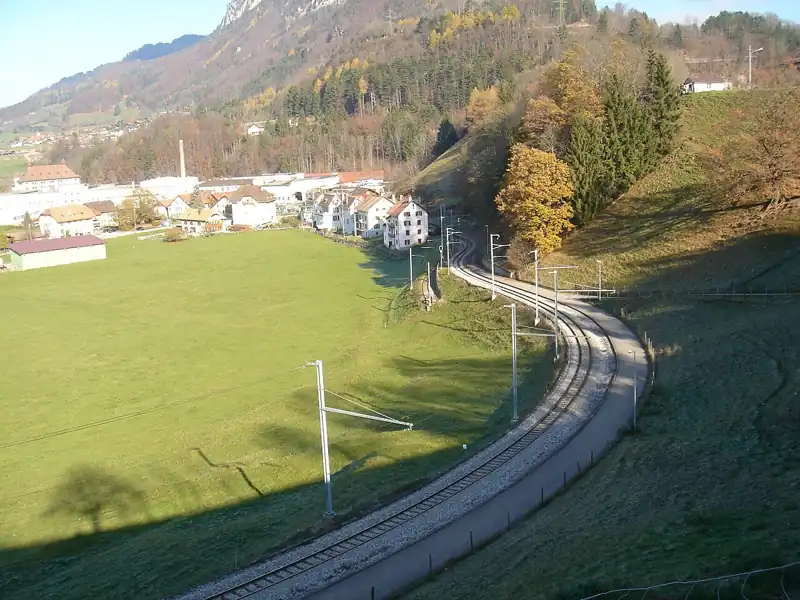
Swiss company Sun-Ways says its pilot photovoltaic installation was inaugurated on 24 April 2025 on an active rail line in Buttes, in the canton of Neuchâtel. The company describes it as a 100-metre installation. Greater Geneva Bern area (GGBa), the regional investment-promotion agency, says the initial deployment uses 48 panels on a transN-operated line in Val-de-Travers.
The panels are placed in the unused space between the rails rather than on land beside the railway. That does not mean trains run on the panels: the modules sit below the rolling stock’s path and have to coexist with railway operations, drainage, ballast and maintenance requirements.
Why removability matters
Sun-Ways’ central design claim is that its modules can be installed and removed with specialised equipment. This is important because railway infrastructure needs regular inspection and maintenance. The pilot is therefore a test of an operational system, not simply of solar output: it must show that panels can be deployed, accessed and maintained without compromising rail safety or availability.
Independent reporting by SWI swissinfo.ch describes the technology as being tested and notes interest from other countries. That is different from confirmation that those countries have adopted the system at scale.
What the numbers do—and do not—show
The reel says the pilot has generated 19 megawatt-hours and experienced no rail incidents. Karmactive could not independently verify those specific operational results from a public primary source. They are therefore not presented here as established facts.
Likewise, Sun-Ways’ estimate that Swiss rail corridors could produce up to 1 terawatt-hour of solar electricity a year, or about 30% of public transport’s electricity consumption, is a company projection—not output from the 100-metre demonstration. Whether a larger rollout is practical will depend on engineering, safety approvals, economics, local conditions and the performance of the pilot over time.
A useful test, not a proven national solution
The Buttes installation shows how existing transport infrastructure can be examined for renewable-energy potential without automatically converting new land. But it remains a small pilot. Its significance lies in the evidence it can generate about removability, maintenance and real-world output, rather than in an assumption that every railway can or should host solar modules.
Sources
- Sun-Ways: pilot installation information
- Sun-Ways: concept and national-output projection
- GGBa: launch details for the Neuchâtel pilot
- SWI swissinfo.ch: reporting on the railway solar-panel test
Source reel: https://www.instagram.com/reel/Dc_1_ZtRxyB/