 Govind Tekale
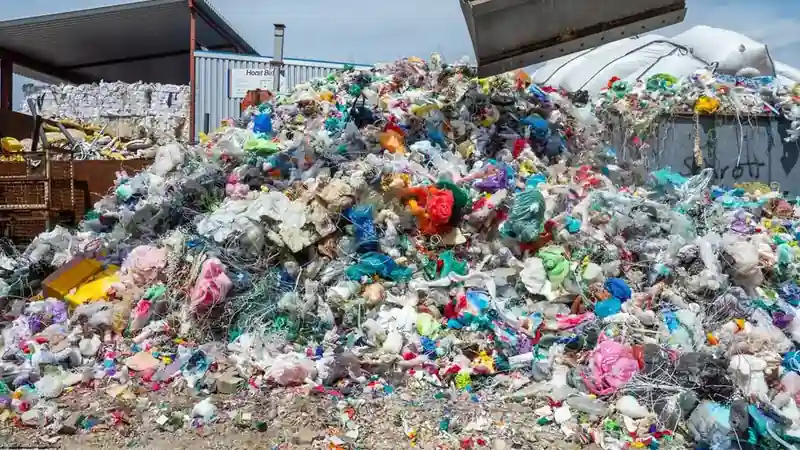
India’s plastic-packaging rules do make producers, importers and brand owners responsible for managing packaging waste. But a viral reel oversimplifies the framework when it says every manufacturer, importer and brand owner has a 100% collection target.
The Ministry of Environment, Forest and Climate Change notified the Extended Producer Responsibility (EPR) guidelines for plastic packaging in February 2022. The framework covers collection and end-of-life management obligations, as well as category-specific targets for recycling, reuse of rigid packaging and recycled content.
Not every target is 100%
In a 2022 parliamentary reply, the ministry said the minimum recycling targets across packaging categories were scheduled to rise from 30–50% in 2024–25 to 60–80% from 2027–28 onward. The exact obligation depends on the packaging category. The 100% EPR target cited in the official reply applies to plastic packaging made from compostable plastic from 2023–24; it is not a blanket target for all plastic packaging.
The Central Pollution Control Board (CPCB) operates a centralised EPR portal for the registration and compliance reporting of producers, importers, brand owners and plastic-waste processors. A portal and mandatory targets can improve traceability, but do not by themselves prove that every claimed tonne was collected or recycled in the physical world.
The figures behind the reel
The reel’s figures appear to draw on a Down To Earth report, which said CPCB data showed about 17 million tonnes of plastic-packaging waste had been recycled since 2022, and cited an estimated trade value of ₹2,500 crore. The publication compared that estimate with the cost of four Chandrayaan-3 missions.
Those figures should not be read as proof that India has recycled “four to five years of all plastic waste it has produced.” They concern plastic packaging reported through the EPR system over a limited period, rather than every type of plastic waste generated in India historically. The monetary comparison is also an estimate, not public revenue available to fund space missions.
Why plastic remains visible
Plastic waste can remain visible even where reported EPR compliance is rising. Packaging may escape collection, enter mixed municipal waste, be dumped or burned, or be handled outside the formal systems that issue EPR certificates. Data quality, auditing of processors, the role of informal waste workers, local collection infrastructure and enforcement all affect whether reported compliance corresponds to less litter and leakage.
Bottom line: India’s EPR rules are a significant attempt to shift responsibility for packaging waste towards businesses. They do not create a single 100% collection obligation for all plastic packaging, and headline recycling totals should be interpreted with the scope and verification limits of the reporting system in mind.
Sources: Ministry of Environment, Forest and Climate Change/PIB; CPCB EPR portal; Down To Earth reporting on CPCB data.