 Sonali Tiwary
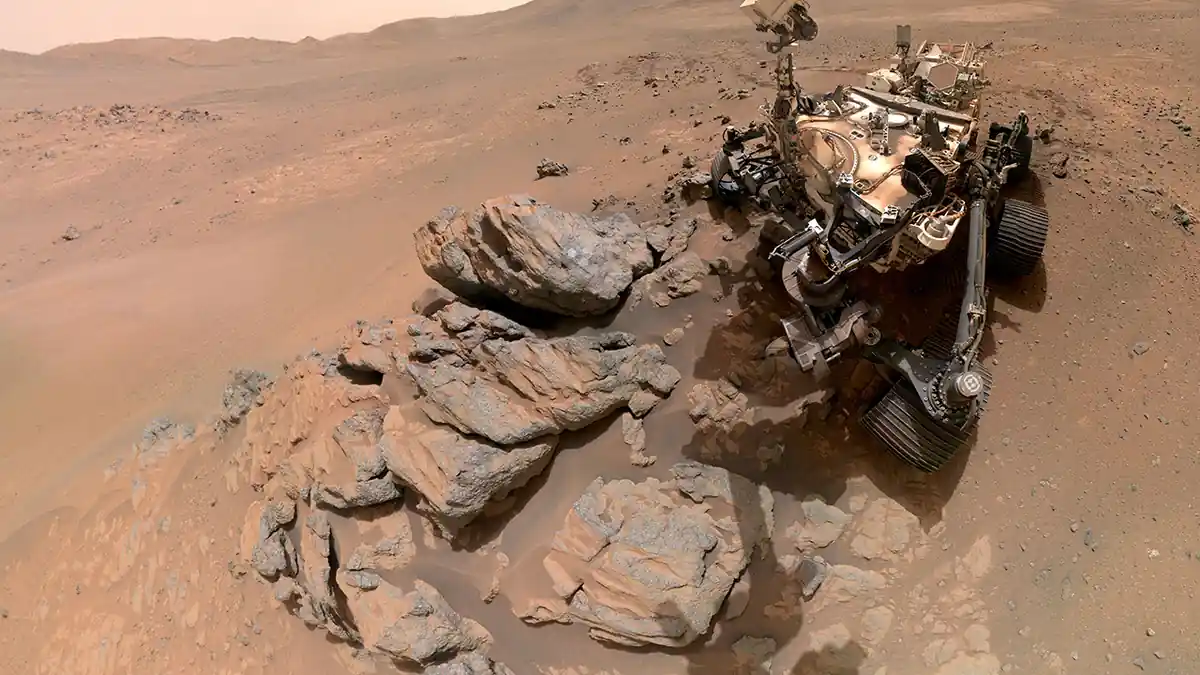
Astronauts on future Mars missions could breathe dust that clings to spacesuit material. Researchers on NASA’s Perseverance team say the smallest particles are the hardest to clear, and they can reach deep into the lungs. How much harm that could do depends on how much dust is breathed, and for how long.
NASA’s Perseverance rover tracked Martian dust over more than 1,645 Martian days in Jezero Crater, where it has operated since landing in 2021. The findings are published in the Proceedings of the National Academy of Sciences, and NASA’s Jet Propulsion Laboratory announced them on 26 October 2026 (NASA). Some particles measured around 100 nanometres. A human hair is about 70 micrometres wide, so 100 nanometres is roughly 700 times thinner, NASA says. Particle sizes on the samples ranged from about 100 to 300 nanometres. The study used five spacesuit material samples, including Teflon and Vectran swatches. Lead author Scott VanBommel, of Washington University in St. Louis, is part of the Perseverance team. Martian dust also contains perchlorates, which NASA says can disrupt thyroid function.
For mission planners, the practical problem is keeping dust out of living space. NASA says suitports, which let astronauts enter a suit attached to the outside of a habitat, and dual-chamber airlocks could reduce how much dust reaches living quarters. NASA has also tested a dust-removal device on the Moon. Its Electrodynamic Dust Shield flew on Firefly Aerospace’s Blue Ghost Mission 1 in March 2025, and it cleared lunar dust from glass and thermal radiator surfaces. That test used lunar dust, not Martian dust.
Why the Finest Dust Stays on Suits
Lead author Scott VanBommel said: “The larger clumps, the Martian dust bunnies, get shaken off over time. But the smallest particles stay behind, and those are the ones that pose the greatest challenge for human support systems.”
NASA notes that on Earth, ultrafine particles — of the kind covered in our piece on invisible PM2.5 pollution — are linked to health effects because they can penetrate deep into the lungs and enter the bloodstream. The release also cites studies showing that particles this small can travel from the nasal cavity to the brain along the olfactory nerve. The Mars study measured dust on material samples, not health effects in people.
NASA says the dust carries reactive compounds. Perchlorates can disrupt thyroid function, and reactive iron can damage cells. A 2025 review in the journal GeoHealth, cited by NASA, describes many of the substances involved as carcinogenic, but it does not estimate a cancer risk.
Larger clumps come off a suit over time, but the finest particles stay. That is the detail that matters most for mission design.
Why is Mars dust dangerous to astronauts’ lungs?
Martian dust contains very fine particles that can penetrate the lungs and enter the bloodstream, according to NASA. The dust also contains perchlorates, which can disrupt thyroid function. Scientists believe the health risk depends on how much dust is breathed and for how long.
NASA’s Perseverance data, building on our earlier coverage of the rover, show how fine Martian dust sticks to spacesuit material. The findings could guide future spacesuit materials, protective coatings and habitat designs, and could help refine indoor dust-exposure limits for astronauts. The actual health risk still depends on dose and duration.