Rahul Somvanshi
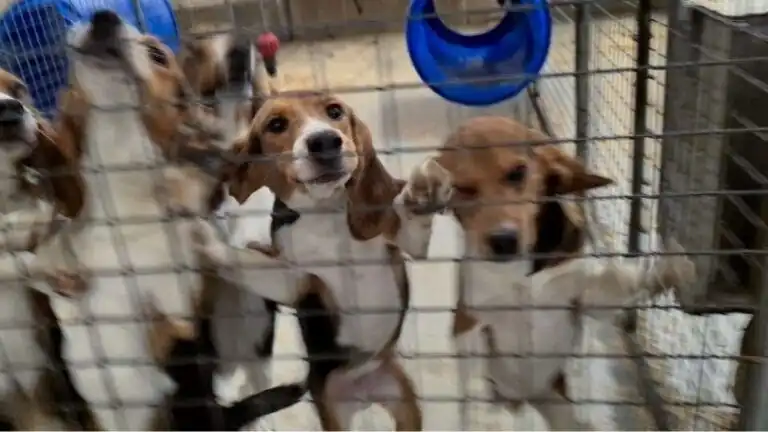
A video circulating online shows a protester standing outside a facility in North Rose, New York, reading from a sign and describing what they say happens inside. The footage has drawn attention to Marshall BioResources (MBR), a breeding operation that supplies animals used in research. What the video shows is a protester at a perimeter and a claim read aloud. What it does not show is the inside of the facility, verified animal counts, or evidence of specific research procedures. Separating what is visible from what is alleged is the starting point for understanding this story.
What Marshall BioResources says it is
According to the company’s own facility profile, Marshall BioResources was founded in 1939 and operates in North Rose, New York, with more than 200 employees. The company says it raises Marshall Beagles, along with cats, ferrets and Göttingen minipigs, at its upstate New York sites. These are species commonly used across biomedical, veterinary and animal-health research, and MBR describes itself as a supplier of these animals rather than an institution that designs or runs studies on them directly. Marshall BioResources’ official North Rose profile is the source for the history, location, employee count and species list described here.
Breeding and supply versus conducting research
A central distinction in this story is the line between raising animals and conducting research on them. MBR’s own materials describe its role as breeding and supplying animals that customers then use in their own scientific, medical and veterinary research. The company states that it does not itself carry out pharmaceutical or medical-device discovery or safety studies. That framing matters because allegations aimed at research practices — including specific testing procedures — describe what customers are said to do with animals after acquisition, not activity MBR says it performs in-house. Karmactive has not independently verified what happens at customer sites after animals leave MBR’s facilities, and this article does not make that claim either way.
The company’s animal-care and oversight claims
MBR states that its upstate New York facilities are licensed by the USDA, and the company says it holds AAALAC International accreditation and ISO 9001 certification. It also describes routine husbandry practices, including daily handling, spot cleaning, biweekly kennel sanitation, and on-site veterinary availability every day. These are claims made by the company about its own operations, drawn from its public profile and FAQ, and they should be read as the company’s stated position rather than as independently confirmed facts. No inspection report or third-party audit was reviewed in preparing this article.
What protesters allege, and how MBR responds
Footage and activist commentary associated with the protest have cited figures suggesting the facility houses tens of thousands of animals, including specific counts for beagle puppies. Those numbers originate from activist sources and were not independently confirmed through the material reviewed for this article; they are reported here only as claims, not as established fact. Separately, activists have alleged that animals at the facility are subjected to toxic-gas inhalation testing. On this specific point, MBR’s own FAQ directly disputes the claim. The company says it does not conduct medical-device or pharmaceutical testing involving dogs, and states that any prior screening work tied to client inhaled-medication studies has ended at its facility. In other words, MBR’s public answer to the inhalation-testing allegation is a denial, not a confirmation, and readers should not take the allegation as settled fact. The company’s published FAQ is the source for this response, as well as for its licensing and accreditation statements described above.
What the federal statute actually covers
Discussion of the protest has referenced federal law, often in connection with the Animal Enterprise Terrorism Act. The specific provision at issue is 18 U.S.C. §43, titled “Force, violence, and threats involving animal enterprises.” Read on its own terms, the statute addresses conduct involving force, violence, threats, intentional physical damage or loss, and related intent requirements connected to an animal enterprise. It is not a blanket prohibition on peaceful protest, and standing outside a facility’s gate holding a sign is not, by itself, the kind of conduct the statute is written to reach. No court filing, charge, or prosecution tied to this specific protest was reviewed in preparing this article, so no legal outcome — for this sign, this protester, or this facility — can be reported here. The statute’s text is cited only to describe what the law covers, not to predict how it might apply to any individual.
Where the evidence boundary sits
What can be verified from the material reviewed: Marshall BioResources is a real, long-operating facility in North Rose, New York, with a published profile describing its species, staffing and stated certifications; the company has a public FAQ that directly addresses and disputes the toxic-gas inhalation allegation; and a federal statute exists that governs force, violence and threats against animal enterprises, with specific and limited terms. What cannot be verified from this material: the exact number of animals currently housed at the facility, the specifics of what happens at customer research sites after animals are supplied, and any legal determination connected to this particular protest. Readers who want to examine the primary record directly can consult MBR’s own facility profile and FAQ, alongside the statutory text itself, each linked above, rather than relying solely on secondhand summaries of the protest footage.