 Govind Tekale
The Hook
The US Fish and Wildlife Service has quietly redefined what “take” means under the Endangered Species Act — and the new interpretation means developers, loggers, and landowners can now accidentally kill endangered animals without facing federal penalties, as long as they were not specifically trying to target them.
Core Facts
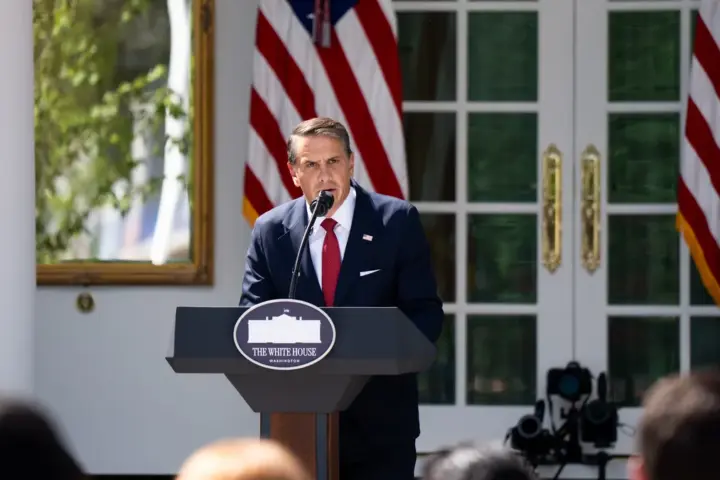
On September 14, 2026, FWS Director Brian Nesvik issued an internal memo instructing agency staff across all field offices to adopt a narrower reading of the ESA’s prohibition on “take.” The ESA defines take as “to harass, harm, pursue, hunt, shoot, wound, kill, trap, capture, or collect.” Under the new interpretation, only actions intentionally directed at a particular animal count as a prohibited take. “A vessel that inadvertently strikes a whale has not taken it because the vessel’s course was not set against the whale,” the memo states. “Felling a tree is not a take of the bats roosting in it unless the tree is felled for the purpose of killing or capturing them.” The memo takes effect immediately, with no public comment period or rulemaking process.
Consequence
For the average landowner, this means clearing vegetation on your property could now result in the accidental death of an endangered species — bats, owls, snakes — with no federal consequence, so long as you were not specifically trying to kill them. For conservation groups, the practical effect is the same as gutting the law. “Unless you are wearing a T-shirt that says ‘I am here to draw the blood of endangered species,’ you are basically off the hook,” said Brett Hartl of the Center for Biological Diversity.
Depth Block
The legal basis for the memo is striking. Director Nesvik explicitly cited Justice Antonin Scalia’s dissenting opinion in the 1995 Supreme Court case Babbitt v. Sweet Home Chapter of Communities for a Great Oregon — not the 6-3 majority opinion that upheld the broad definition of “harm” to include habitat modification. Scalia’s dissent argued the ESA’s “take” provision should apply only to actions done “directly and intentionally” to particular animals. The majority rejected that view, but the Nesvik memo resurrected it as binding agency policy.
This move follows a series of ESA rollbacks in Trump’s second term. On July 10, 2026, the administration finalized a rule removing habitat destruction from the regulatory definition of “harm.” On March 31, 2026, the Endangered Species Committee exempted Gulf of Mexico oil and gas operations from ESA requirements for the first time in over 30 years. On September 4, Trump signed an executive order directing Interior to determine whether gray wolves and Mexican wolves should be delisted or downlisted. On September 9, twenty states and Washington, D.C., sued the administration challenging the revised definition of “harm” and other ESA rule changes.
Jane Davenport, senior attorney at Defenders of Wildlife, noted that both the harm rule and the Nesvik memo “draw heavily from the late Supreme Court Justice Antonin Scalia’s dissent.” She called it “reducing the scope of endangered species protections to an absurdly narrow interpretation that is inconsistent with what Congress intended.”
Chris Servheen, who served as grizzly bear recovery coordinator for FWS for 35 years, said the approach is “ridiculously extreme” and “essentially going to be a meaningless law.”
The administration defends the changes. A spokesperson for the Interior Department told the New York Times the ESA “continues to prohibit take of endangered wildlife, including actions that harass, pursue, hunt, shoot, wound, kill, trap, capture or collect listed wildlife, or attempts to do so.” An FWS spokesperson told Ars Technica that “these lawsuits seek to preserve a decades-old regulatory overreach that expanded the Endangered Species Act beyond the authority granted by Congress.”
The legal landscape shifted in 2024 when the Supreme Court overturned Chevron deference in Loper Bright v. Raimondo. Under the old Chevron framework, courts deferred to federal agencies’ reasonable interpretations of ambiguous statutes. Without Chevron, courts must now use independent judgment when interpreting federal law — which the administration says supports a narrower reading of the ESA.
Irreplicable Observation
The Nesvik memo takes effect immediately via internal agency instruction — not through the formal rulemaking process that normally allows public comment and judicial review. This means the practical change is already in force before any court has reviewed it, and before the 20 states that filed suit on September 9 can obtain an injunction. The timeline is deliberate: by the time a court rules, the damage to enforcement is done.
Priority PAA
Can developers now kill endangered species legally? Under the new FWS interpretation, yes — if the killing was not intentional. Habitat modification that accidentally kills listed animals is no longer prohibited. Developers, loggers, and landowners do not need permits for incidental takings as long as they were not “specifically intending” to target a protected species. The prior framework required environmental reviews and permits for any project that might harm endangered species or their habitat.
Closure
The ESA has been the cornerstone of US wildlife conservation for over 50 years, saving species from the bald eagle to the gray wolf. The Nesvik memo and the accompanying policy changes represent the most significant narrowing of the law’s scope in its history. Conservation groups have already filed lawsuits. The legal battle will determine whether the ESA remains a meaningful shield for endangered species or becomes, in one expert’s words, “a meaningless law.”