 Govind Tekale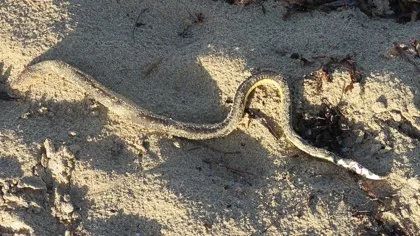
A yellow-bellied sea snake turned up at Crystal Cove State Beach in Orange County this week — the first confirmed sighting of the species on a California beach since 2018. Experts told the Los Angeles Times the animal poses no danger to people who don’t handle it.
The yellow-bellied sea snake (*Hydrophis platurus*) is a highly venomous tropical marine species found widely across the Pacific and Indian Oceans. It is the only sea snake with a confirmed range that occasionally reaches the Eastern Pacific coast of the Americas. In California, sightings are rare and there is no evidence of an established breeding population here. Sightings are clustered almost entirely around years when Pacific water temperatures run unusually warm.
If you see one on a beach, do not approach or pick it up. Yellow-bellied sea snakes carry potent venom used to immobilize fish prey. They are not aggressive toward humans, but bites can occur if a person handles or steps on one. Alert park rangers or wildlife officials if you encounter one that appears stranded or distressed.
The current sighting at Crystal Cove follows a period of elevated Pacific sea surface temperatures associated with developing El Niño conditions. Warmer surface water off the Southern California coast has also brought other warm-water marine species — including certain fish and jellyfish — into ranges where they are rarely seen. Researchers caution that one sighting of one animal cannot establish a directional range shift. A genuine northward expansion of the species’ breeding or foraging range would require multiple years of observations and population data, none of which currently exists for California.
The last confirmed California sighting before this week’s was in 2018. For more on how ocean temperature changes affect which marine species appear along the California coast, see our Pacific Ocean conditions explainer. For a guide to venomous marine animals that appear in Southern California waters, see our coastal wildlife safety guide.
Crystal Cove State Beach remains open. Report unusual animal sightings to park rangers on site.