Rahul Somvanshi
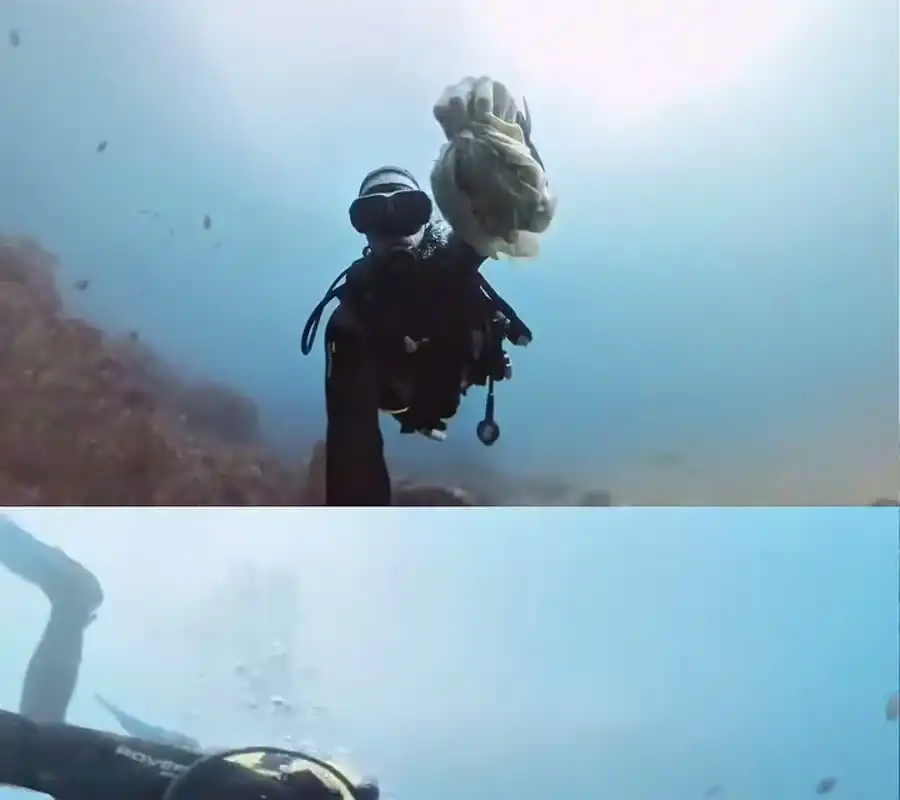
A social-media post says divers found wet wipes on the seabed off Madeira after a storm and suggests a wastewater release was involved. Those local claims have not been independently verified. This report has not reviewed location data, water samples, an official incident notice, or evidence establishing the source, volume or timing of any discharge. The footage is therefore a lead for scrutiny, not confirmation of a specific event.
It does, however, point to a practical question with an answer that does not depend on that unverified incident: what should people do with used wet wipes, and why does it matter?
Wet wipes are covered by EU plastic rules
Wet wipes are included in the European Union’s Single-Use Plastics Directive. The law’s measures for this category include product marking, awareness-raising and extended-producer-responsibility requirements. The European Commission’s single-use plastics overview identifies wet wipes among the products covered by that framework.
That matters because a wipe is a product designed to be used and discarded. A toilet is not a rubbish bin. Sending an item down it hands the item to a wastewater network built to manage toilet waste and water, not to serve as a general household-disposal route. Responsible disposal starts before a system has to deal with the item at all.
The simple rule: do not flush
After use, put a wet wipe in the suitable residual-waste or general-waste bin, following the instructions on the package and the rules issued by the local waste authority. Do not flush it. Local collection systems differ, so the exact bin can vary; the point is to use the route intended for household waste rather than the toilet.
This is not a demand that people memorise a complex technical system. It is a small separation decision: a wipe belongs with household waste unless local guidance says it can be collected another way. Following the label and municipal guidance gives waste services a defined collection path and avoids treating a toilet as a disposal shortcut.
Why this is a wastewater issue as well as a litter issue
Urban wastewater systems must cope with ordinary daily use as well as periods of heavy rain. The European Commission says the recast Urban Wastewater Treatment Directive entered into force on 1 January 2025 and includes measures related to adapting wastewater systems to heavy rainfall. The details of particular networks and their performance belong to local operators and regulators; they cannot be inferred from a video alone.
But the consumer decision still matters. Waste that is placed in a bin enters a collection stream designed for discarded household items. Waste that is flushed enters a different route, one that households cannot inspect or control once the flush is pulled. Keeping those routes distinct is a basic form of prevention.
That is also why the European approach does not place the entire burden on households. The Single-Use Plastics Directive pairs consumer-facing measures with producer responsibilities. In other words, clear information, product design and waste-management responsibility all have a role. The policy framework recognises that disposal is a shared system: producers, public authorities, waste services and users each affect what happens after a product is used.
What the Madeira post can and cannot show
The images are a reminder that litter seen in water can prompt valid questions. They cannot, by themselves, identify a source, establish a wastewater-system failure or show how material reached a location. Those conclusions need verifiable evidence such as an official notice, monitoring data, a documented investigation or source tracing.
That distinction is important. It protects the public from unsupported accusations while still allowing a useful conversation about disposal. A person does not need to know the cause of every item seen in the sea to make a better household choice: use a bin for used wipes, check local guidance, and keep non-toilet waste out of the toilet.
Responsible disposal is a practical prevention step
Responsible disposal will not solve every wastewater or marine-litter problem. It is one part of a wider system that also needs clear product labelling, effective collection, resilient wastewater infrastructure and accountable local enforcement. But it is an immediate action available to every household.
The verified lesson is straightforward: wet wipes are a regulated single-use plastic product in the EU, and their disposal is not an afterthought. Put used wipes in the appropriate waste bin rather than flushing them. For any video alleging a particular release or pollution event, ask for the evidence before treating it as established fact.