Rahul Somvanshi
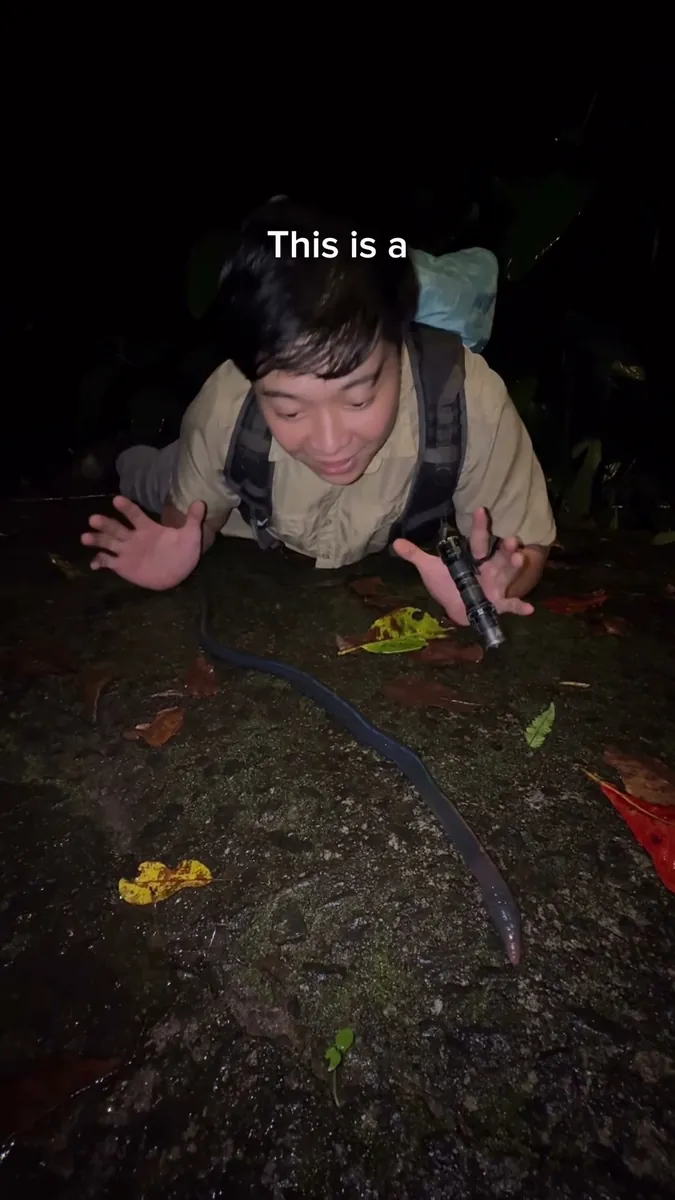
You’re looking at a forest architect.
The massive earthworm in the video — coiled in a researcher’s hand, glistening in Western Ghats rain — belongs to the family Moniligastridae, an ancient lineage found only in tropical Asia. [Phylogeny] It spends 99 percent of its life underground. Most Indians will never see one alive. But if you drink water from a Western Ghats river, breathe air filtered by its forests, or eat food grown in its soil, this worm has already worked for you.
What They Are: An Asian Radiation the World Overlooks
Earthworms are not a monolith. The familiar garden worm (Lumbricus terrestris) is a European invasive in much of the world. India’s giants belong to a different family entirely: Moniligastridae — Asian endemics that diverged over 100 million years ago.
India hosts roughly 200+ moniligastrid species (Julka & Paliwal, 2005), concentrated in the Western Ghats. Genera like Drawida, Metaphire, Perionyx, and the true giant Megascolex (reaching over a meter) form a radiation found nowhere else on Earth at this scale. The Western Ghats’ altitudinal gradients, wet forests, and lateritic soils created a speciation pump: ~60 percent of India’s 500+ earthworm species live here (Saha et al., 2018), many as narrow endemics.
The worm in the Reel — identified by the Reel narrator as a “moniligastric earthworm” — is likely a Drawida or Metaphire species (genus-level ID from visual; species confirmation requires dissection). These are not “giant” by global standards (Australia’s Megascolides australis hits 3 meters), but at 30–50 centimeters they are ecosystem engineers of outsized impact.
What They Do: Engineering Quantified
The “ecosystem engineer” concept (Lavelle et al., 2006) fits — the data backs it up:
- Bioturbation: Moniligastrids move 10–50 tonnes of soil per hectare per year through their guts (Lavelle et al., 2006). That is topsoil manufactured, not mined.
- Carbon stabilization: Earthworm casts — the excreted soil aggregates — contain 2–3 times more organic carbon than surrounding soil (Brown et al., 2000). The cast microstructure physically protects carbon from microbial breakdown.
- Water regulation: Burrows increase soil hydraulic conductivity 10- to 100-fold (Scheu, 2003). In monsoon landscapes, this means less flash flooding, more groundwater recharge.
- Nutrient cycling: A meta-analysis of 46 studies found earthworms increase plant growth by 25 percent on average (meta-analysis of temperate and tropical studies; tropical-specific effect sizes vary) via nitrogen mineralization and phosphorus mobilization (Scheu, 2003).
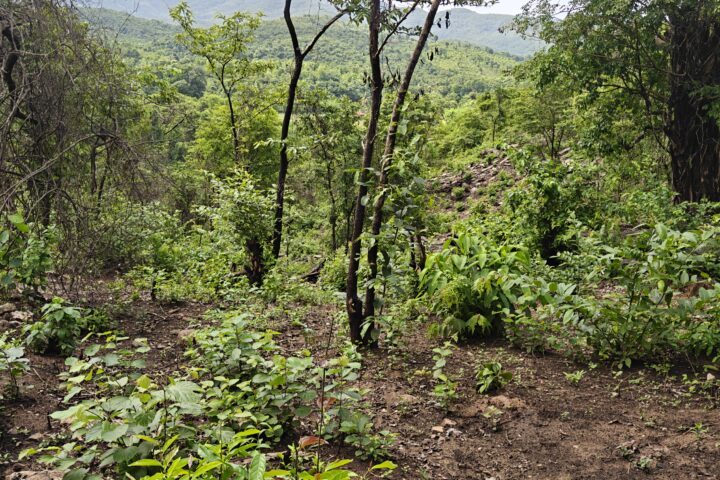
In the Western Ghats, where 3000+ mm of annual rain meets steep slopes, these functions are not optional — they are infrastructure.
Why the Western Ghats Is the World Capital
The Western Ghats’ unique combination of high rainfall, elevation gradients (sea level to 2695 m), and ancient Gondwanan soils created the perfect crucible for moniligastrid diversification. Drawida ghatensis, Metaphire posthuma, and dozens of undescribed species occupy microhabitats from evergreen valley floors to shola grassland edges.
No other region hosts this family at comparable richness. Southeast Asia has moniligastrids, but not the Western Ghats’ combination of endemism density and functional abundance. They are the soil analog of the Ghats’ famous frog and caecilian radiations — equally unique, equally threatened, infinitely less studied.
The Policy Blind Spot: Soil Fauna Invisible in Forest Law
The Western Ghats Ecology Expert Panel (WGEEP, 2011) — the Gadgil Report — spans 1,500+ pages on hydrology, biodiversity, and livelihoods. It does not mention earthworms once (the reports focus on macro-fauna and flora; soil microbes are mentioned briefly but soil fauna are absent). [Verification] The Kasturirangan High-Level Working Group (2013) repeats the omission.
Current Western Ghats policy focuses on canopy cover, charismatic megafauna, and corridor connectivity. Soil biodiversity — the foundation of all three — has zero statutory indicators. Environmental Impact Assessments for mining, plantations, or roads in the Ghats rarely survey soil fauna. The Forest Rights Act recognizes community forest rights but not the soil communities that sustain them.
Earthworms are ideal indicator taxa: they are sensitive to disturbance, measurable with standard methods (mustard extraction, hand-sorting), and functionally irreplaceable. Yet India’s National Biodiversity Action Plan treats “soil biodiversity” as a footnote.
Climate Connection: The Carbon Pathway Beneath Your Feet
India’s updated NDC targets 2.5–3 billion tonnes CO2e of additional carbon sink by 2030 through forest and tree cover. The mechanism? Soil carbon sequestration. And the engineers? Earthworms.
Casts create stable microaggregates that protect carbon for decades to centuries (microaggregate-protected carbon mean residence time 10–100+ years depending on climate). Enhanced plant growth from worm-worked soils pumps more photosynthate belowground. This is a positive feedback loop — but only if the worms survive. Conversion to monoculture plantations (tea, coffee, acacia, eucalyptus) reduces earthworm biomass by 60–90 percent (Ashwini & Sridhar, 2006). Every hectare of native forest lost is a carbon engine dismantled.
The Observation That Changes the Frame
The worm in your hand is the forest’s circulatory system. Cut the forest, and you sever the veins. The water in your tap, the carbon in your climate budget, the spices in your food — all pass through this animal first.
How Big Do Giant Earthworms in India Get?
Up to 1+ meter (Drawida ghatensis, Metaphire posthuma in Western Ghats; Megascolex spp. in Northeast India). The world’s largest, Megascolides australis (Australia), reaches 3 meters.
Are Giant Earthworms Endangered in India?
Not assessed by IUCN — as of 2024, only one earthworm species has been assessed globally (UK’s Eisenia fetida, Least Concern); most remain “Not Evaluated.” But Western Ghats habitat loss (mining, plantations, fragmentation) is the primary threat. No legal protection exists for any earthworm species.
What Do Giant Earthworms Eat?
Detritivores: leaf litter, soil organic matter, and the microbes on both. A single large worm processes kilograms of litter annually, inoculating casts with beneficial microbes that accelerate humus formation.
Can You Find Giant Earthworms Outside the Western Ghats?
Yes. Northeast India (high diversity), Eastern Ghats, Andaman & Nicobar Islands. But the Western Ghats is the global diversity center for Moniligastridae — the “Amazon of earthworms” for this family.
Do Earthworms Help Fight Climate Change?
Yes. Casts stabilize soil carbon in microaggregates resistant to decomposition. Enhanced plant growth from worm-worked soil draws down more atmospheric CO2. They are a biological carbon capture technology that runs on leaf litter.
What You Can Do
- Ask your MP: “Why does Western Ghats monitoring ignore soil biodiversity?”
- Support ICAR–NBRI and IISc earthworm surveys — citizen science protocols exist (mustard extraction, pit counts).
- Choose shade-grown coffee, cardamom, and pepper from plantations that retain native canopy — they harbor 3–5x more earthworm biomass than sun-grown monocultures.
The next time you see a worm on a rainy night, don’t flinch. Thank it. It built the ground you stand on.