 Rahul Somvanshi
Every year, the same question comes up before winter arrives: is it going to be cold and snowy? This year, two very different sources are offering forecasts — and understanding what each one actually is matters before you plan around them.
The Old Farmer’s Almanac has published its winter 2026-27 outlook. The 235th annual edition, with Editor-in-Chief Carol Connare, describes a mostly mild winter overall, but with colder and snowier conditions expected in certain regions, including parts of the Northeast and Appalachians. Connare characterised it as a split season — mild and wetter in parts of the interior Midwest, with heavier snow events in northern and eastern corridors.
Before treating that as settled, it’s worth understanding what the Almanac is and isn’t. It is a private, long-range forecasting publication with a formula that considers solar activity, weather patterns, and historical data. It is not a government meteorological agency, and its long-range accuracy has not been independently verified at the same level as official agency forecasts. It’s a useful read, but it’s not an official weather service product.
NOAA’s Climate Prediction Center — the official US government forecasting body — publishes its own seasonal outlooks through winter 2026-27. These are based on ensemble models: multiple computer simulations run simultaneously to calculate a range of probable outcomes. They express results as probabilities, not predictions. A NOAA outlook might say there’s a higher probability of above-average temperatures in a given region — not that it will definitely be warm.
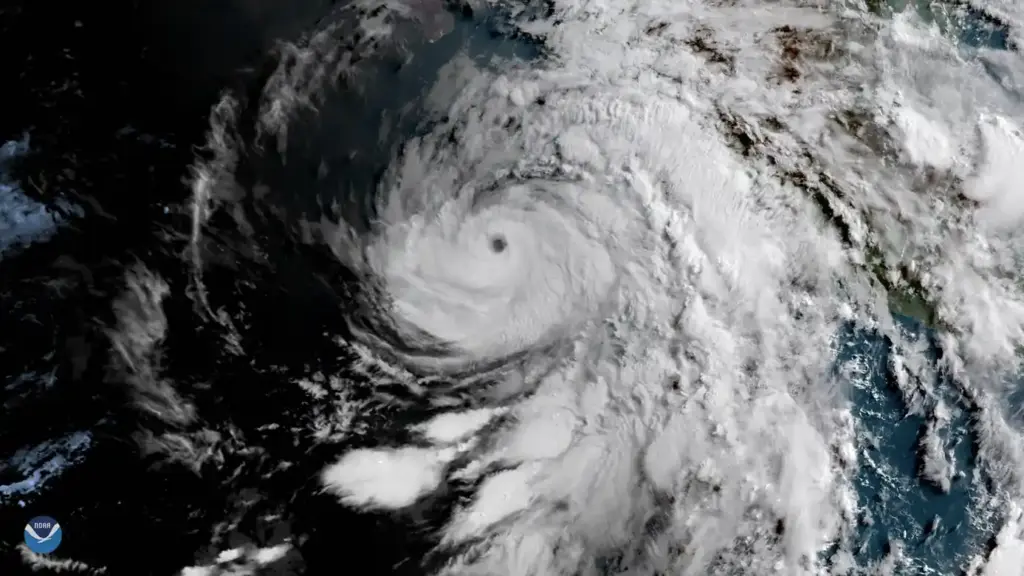
This year, there is also an important climate background signal. NOAA reported in August that El Niño is strengthening, with a greater than 90% chance of a very strong El Niño developing during Northern Hemisphere fall and winter 2026-27.
El Niño is a natural warming of the central and eastern tropical Pacific Ocean that shifts weather patterns across the globe. In the United States, a strong El Niño typically brings warmer-than-average conditions to the northern states and cooler, wetter conditions to parts of the South. But the effects vary significantly by region, and a strong El Niño does not guarantee a specific outcome in any particular city.
The honest answer to “will it be cold and snowy?” is regional and probabilistic. Some areas have a higher probability of milder conditions this winter based on the El Niño signal. Others may still see cold outbreaks and significant snowfall. Neither the Almanac nor NOAA is promising a specific winter — they’re offering different kinds of information about what’s more or less likely.
The practical use of both: check NOAA’s seasonal outlook for your region as an official probability-based forecast. Read the Almanac’s outlook with the understanding that it’s a private product with a different methodology.