Rahul Somvanshi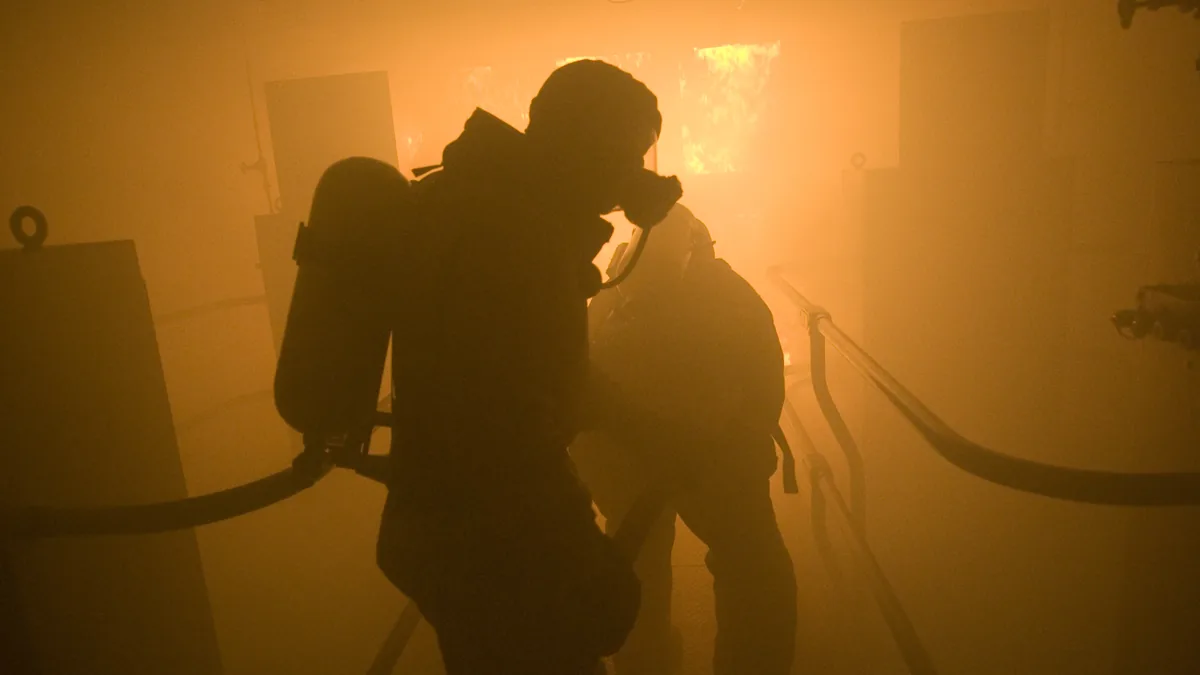
If your tap water comes from a utility near a military base, airport or refinery, it may have tested positive for PFAS already. Chemical makers 3M, DuPont and Chemours are now paying out more than 12 billion dollars combined to water systems across the country. The legal fight over who pays for decades of contamination is nowhere near finished.
The money traces back to aqueous film-forming foam, or AFFF, a firefighting agent sprayed for decades to smother fuel fires. It was used at military bases, airports and industrial sites. The foam contained PFOA and PFOS, two per- and polyfluoroalkyl substances that do not break down in the environment. More than 10,000 cases are now consolidated before the U.S. District Court for the District of South Carolina as multidistrict litigation 2873. The case was brought by water utilities, states, firefighters, veterans and residents who say the chemicals contaminated their groundwater and, in some cases, their bodies. In June 2023, 3M agreed to pay a pre-tax present value of 10.3 billion dollars, capped at 12.5 billion dollars. That money resolves claims from public water suppliers. DuPont, Chemours and Corteva separately settled for roughly 1.19 billion dollars.
The fallout reaches beyond a single court settlement. Utilities that never sued still have to test, treat and, often, rebuild pipelines and filtration systems once PFAS turns up in their supply. Under the Safe Drinking Water Act, the Environmental Protection Agency has set enforceable limits of 4 parts per trillion for PFOA and PFOS. These are among the strictest drinking water standards the agency has ever issued, pushing more systems toward costly upgrades regardless of how any lawsuit ends. Contamination is not limited to foam-related sites either. PFAS has turned up in sources as varied as tap water supplies tested overseas.
How the 3M water-system payout actually works
Judge Richard M. Gergel granted final approval of the 3M water-system settlement on March 29, 2024, calling it the largest drinking water settlement in American history. Phase One of that deal allocates 6.875 billion dollars to systems that had already detected PFAS contamination by June 2023. Phase Two sets aside an additional 3.625 to 5.625 billion dollars for systems required to test under new federal rules. Those claims are accepted through July 2026. A court-appointed special master uses EPA-derived formulas weighing contamination levels, water volume and treatment costs. Systems must complete baseline testing to qualify for any payout.
Personal injury claims still unresolved
Separate from the water-system payouts, more than 15,000 personal injury cases remain pending in the same South Carolina court. They were filed by firefighters, veterans and residents who say PFAS exposure caused kidney cancer, testicular cancer, thyroid disease or ulcerative colitis. A bellwether trial originally set for October 2025 was postponed after the court moved to standardize evidence requirements across the backlog. No global settlement covering personal injury claims has been reached. Legal filings describe internal company records in which 3M described PFOS as “insidiously toxic” as early as the 1970s, long before public regulatory action began.
States pursuing their own settlements
States have pursued their own cases outside the big settlements. Minnesota accused 3M of contaminating a groundwater plume covering more than 150 square miles around its Cottage Grove facility. The state settled in 2018 for 850 million dollars. By mid-2025 the state had spent roughly 238 million dollars of those funds on new wells and treatment plants. Household filtration systems were also funded, with the pool projected to run out around 2027. New Jersey’s environmental regulator and then-attorney general announced a proposed settlement of up to 450 million dollars over 25 years. That deal is tied largely to the Chemours-owned Chambers Works site in Salem County, where 3M had historically supplied PFAS feedstock. Alabama’s Decatur community reached a 98.4 million dollar deal in 2021 after 3M admitted violating a federal order by discharging PFAS into the Tennessee River.
The government contractor defense fight
A recurring legal argument could reshape who ultimately pays. 3M has invoked the government contractor defense, arguing it should be shielded from liability because it manufactured AFFF to military specifications. A federal judge rejected that defense in 2022, finding the military’s performance specification let manufacturers choose their own formulations. Less toxic six-carbon chemicals could have replaced the more harmful eight-carbon compounds the company used. Appeals courts have since split on a related question: whether non-military contamination can still be traced to AFFF production. That conflict may eventually land before the Supreme Court.
3M’s exit from PFAS manufacturing
3M announced in December 2022 that it would stop making all PFAS by the end of 2025. The company reported completing that exit on schedule, absorbing an estimated 1.3 to 2.3 billion dollars in pre-tax charges. It says it has removed PFAS from roughly 7,000 products. About 139 types of PFAS remain in its supply chain through third-party materials used in batteries, circuit boards and seals. 3M continues operating water treatment systems at former manufacturing sites. For firefighters and veterans, exposure risk has not stopped at the factory gate. Aqueous film-forming foam has for decades been the required Department of Defense standard at hundreds of installations. The Pentagon had targeted October 2025 to phase it out of active use. PFAS contamination research keeps expanding beyond foam too, including university studies tracking the chemicals in lakes and beaches.
What happens to water bills near contaminated sites? Utilities that detected PFAS before mid-2023 can claim settlement funds toward testing and treatment. Money typically arrives years after a utility first discovers contamination. Some systems still pass upgrade costs on to ratepayers while litigation and claims processing continue.
The scale of this litigation is unusual because it spans two distinct harms at once. Chemical companies face liability for selling a product, while also defending decisions made decades ago under government specification. Few mass tort cases carry both a corporate class settlement and an open personal injury docket running in parallel through the same courtroom.
3M’s PFAS exit, the EPA’s drinking water limits and the sprawling South Carolina litigation together mark the practical end of an era. AFFF’s chemistry went largely unquestioned for decades. Billions have already changed hands and personal injury trials remain unscheduled. Water utilities are still testing taps to find out whether their town is next on the claims list.