 Govind Tekale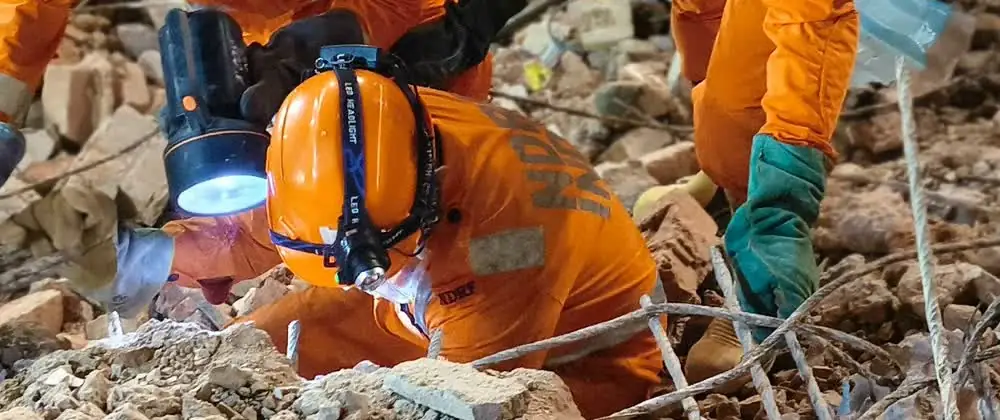
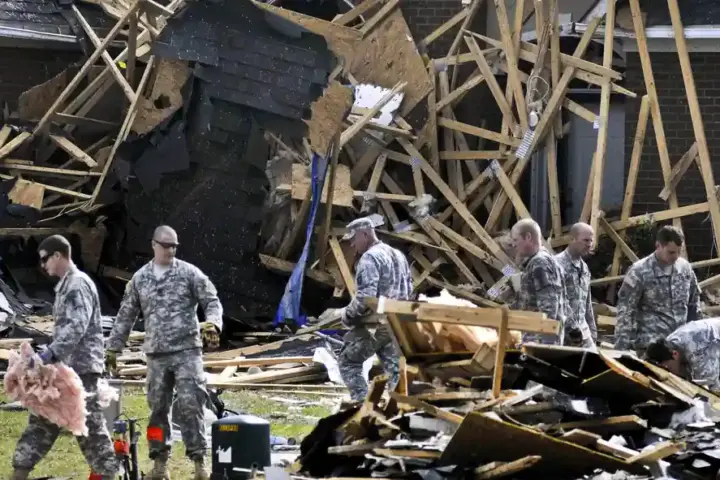
On Sunday, September 6, 2026, at around 1:30 in the afternoon, a five-storey building in Satya Niketan, South Delhi, came down.
The building was called Hostel Daze. It was located at 186 Satya Niketan, in a neighbourhood that functions as the primary housing market for tens of thousands of students enrolled in Delhi University’s South Campus. The building housed a boys’ paying guest accommodation. When it collapsed, an estimated 40 to 50 people were inside — students from Bihar, UP, and states across India, along with renovation workers who had been doing repair work in the basement.
By September 7, six people were confirmed dead. Five more were critical. Dozens had been pulled from the rubble. Rescue operations continued through the night.
This is what people on the ground said happened. And what the official version leaves out.
The Most Expensive Lane in Satya Niketan
To understand what happened here, you have to understand where it happened.
Satya Niketan is not just a neighbourhood. It is an ecosystem built entirely around the failure of Delhi University to house its own students. South Campus colleges — Venkateshwara, Dyal Singh, Gargi, Kamala Nehru, Sri Venkateswara — attract students from across the country. The university’s hostel capacity does not come close to meeting demand. The gap is filled by private PG accommodations, and Satya Niketan is the epicentre.
In a single lane, you will find bars, clubs, and entire buildings operating as student hostels — some licensed, many not. One person we spoke to at the scene framed it simply:
“We are president of Delhi University and we will talk about the PG. PG is the biggest thing. When students get admission, they have to get a hostel. There is a strength of 50,000 students. But when the accountability comes — when the MCDs have given these buildings, what have they done? If you can see, there are many bars and clubs. You can get a whole lane, everything. They also have the money to do this.”
Hostel Daze was, by the accounts of those who lived in and around it, one of the better-looking PGs in the area. Students chose it partly because of that appearance — a well-maintained building felt like a guarantee that things were in order.
The rent was ₹16,000 to ₹17,000 per month for double sharing, according to students and locals we spoke to at the site. (A TOI report quoted one resident at approximately ₹12,000 per bed; premium PGs in the neighbourhood can exceed ₹22,000. Rates varied by room and floor.) For a building with no food provided and, by student accounts, minimal facilities, it was steep by any measure.
One person outside the building — who had grown up near Satya Niketan and knew the PG market well — said something that stayed with us:
“If I had the money, I would also have been in that PG.”
He was not inside when it collapsed.
A Building That Had Raised Red Flags Before
The most important question about Hostel Daze is not what happened on Sunday. It is what happened before Sunday.
According to sources and residents in the area, the building had reportedly been vacated approximately a year earlier over safety concerns. It was subsequently brought back into use as a PG accommodation. On-ground sources described it more bluntly — and this is a pattern seen in infrastructure failures where warning signs were ignored prior to disaster until the moment of collapse:
“This building was banned. But it was a good-looking thing and so students all of this were looking at it as a trust that everything will be good.”
Whether that constitutes a formal legal prohibition or an informal safety evacuation is precisely what the magisterial inquiry — ordered by Chief Minister Rekha Gupta — should establish. What is not in dispute is that the building was being operated as a PG at the time of its collapse, that renovation and basement repair work was underway, and that nobody had stopped it.
Investigators are examining: additional floors potentially built without permission, basement repair work that may have compromised the foundation, no secondary emergency exit, and structural vulnerabilities that residents say were visible for some time.
“The walls had started developing cracks,” one survivor told reporters.
Nobody acted on those cracks.
The Owners. The MLA. The Allegations.
Delhi Police registered an FIR under charges of culpable homicide and criminal negligence. The FIR names Hari Ram Bansal as the registered building owner — part of a family of Gurgaon-based brothers, including Anand Bansal and Azad Bansal, who reportedly owned the property. A lookout circular has been issued; at the time of writing, the owner had fled.
NSUI, the student organisation first on the ground, named two individuals — Sudhanshu and Yash — as operationally linked to the building. Those names do not appear in the police FIR. We are reporting what NSUI stated publicly; the allegation has not been independently established.
NSUI also publicly named BJP MLA Anil Kumar Sharma as having political links to the establishment. His constituency covers the RK Puram area, which includes Satya Niketan. Delhi’s history of civic governance lapses — where regulatory oversight and political accountability have repeatedly failed residents — makes the question of who permitted this building to keep operating a legitimate one.
To be accurate: Anil Sharma did arrive at the site on Sunday afternoon. He spoke to media. He said:
“We are even getting calls from those who are trapped inside. Teams are continuously in touch with those who are trapped inside; we pray to God that all people are safe.”
Congress MP Deepender Singh Hooda was also reported at the site.
What neither their presence nor their statements answer is the question NSUI is actually asking: why did a building flagged for safety concerns continue to operate? Who renewed its permissions? Who looked the other way when additional floors went up without authorisation? Who collected rent from 40 to 50 students in a structure that was known to be unsound?
Those questions do not go away because the MLA showed up.
Residents in the area have been reluctant to speak on record about the owners or local political connections. Several people we approached declined to give formal statements. Whether that reflects fear or simply uncertainty is for them to say — but the silence is notable in a neighbourhood where everyone knows everyone.
The Prime Minister Was Next Door
Here is a detail that did not make it into most coverage.
In the days surrounding this incident, the BJP was actively campaigning for the Delhi University Students’ Union (DUSU) elections. According to on-ground sources — and widely shared accounts — a sitting prime minister reportedly campaigned at Delhi University. DU’s South Campus is, effectively, blocks away from Satya Niketan.
“Do not even get me started on BJP because probably for the first time in history a sitting prime minister went to campaign for DU elections. But they could not reach the site.”
The Prime Minister’s Office did issue a formal condolence statement acknowledging the collapse. But the proximity — a sitting PM at the adjoining university while students were buried in rubble nearby, while the official rescue response was still mobilising — is a contrast that deserves to be named.
Political mobilisation at DU was apparently urgent enough to warrant a Prime Minister’s visit. The emergency unfolding at Satya Niketan, it seems, was not.
“NDRF Reached There One Hour After”
The collapse happened at approximately 1:30 PM. Delhi Fire Services received the emergency call at around 1:33–1:34 PM. Initial emergency responders reached the vicinity around 1:50 PM.
And yet, this is what a source at the scene told us — and it reflects what many people present were saying:
“NDRF reached there one hour after the incident happened. It was hours after the incident.”
The gap between what official timelines show and what people on the ground experienced matters. Heavy rescue equipment and disaster-response teams take time to mobilise and deploy. In that interval, students were calling their professors. They were sending videos from under the rubble to their friends, asking to be saved. They were waiting.
Indian Express confirmed that trapped students called DU faculty directly for help.
The ones who got to work first were locals. Students and neighbours began pulling rubble with their hands. NSUI volunteers joined them.
“While NSUI team was there on the spot breaking the rubble and then afterwards also distributing food, ABVP was still doing petty politics while enjoying dinners at fancy restaurants,” said one person whose statement was recorded at the scene.
This characterisation is contested. The Tribune reports that both NSUI and ABVP volunteers joined rescue and relief efforts, and ABVP subsequently staged a protest at the MCD headquarters demanding the resignation of the MCD chief. First-hand student community accounts from those living in and around Satya Niketan document the chaos of those first hours. We are including both versions of the rescue narrative.
What is not contested: the people who mattered most in the first hour were not wearing official uniforms.
Blinkit’s Ambulance, and What It Actually Means
In the hours after the collapse, video circulated of a Blinkit ambulance service vehicle at the scene. It was praised widely on social media. People commended the company for its speed.
One person whose words were captured on video near the site said what many were thinking but not saying:
“There are some people who are praising Blinkit that their ambulance reached first without realising that the privatisation of ambulance has already happened in front of their eyes. Are you mad not to see what is happening?”
Blinkit does operate ambulances in parts of Delhi-NCR. Whether its vehicle arrived before or after government CATS ambulances at this specific site is not established in the reporting we reviewed. But that is somewhat beside the point.
The debate over exactly who arrived at what minute misses the argument being made: that a grocery delivery company operating ambulances as a premium service is being celebrated as a public good — and that this celebration is itself evidence of something having gone very wrong with how we think about emergency infrastructure.
The Numbers They Wouldn’t Give
In the immediate hours after the collapse, on-ground sources were clear about one thing: they could not get a straight answer on how many people had been inside.
“Some people are standing here and they are not telling us — how many people have gone from the building, or how many people have died. What are the consequences? The government and the department can’t answer how many dead bodies are and how many casualties there are.”
Casualty figures changed rapidly — from 1, to 3, to 5, to 6 — as rescue operations continued through Sunday night. That is normal in an active rescue situation.
What is also true is that every number carries political weight. The gap between official figures and what people on the ground believed to be happening was wide enough that people noticed. That gap deserves scrutiny, even if it does not automatically prove deliberate concealment.
Who Is Delhi University’s South Campus For?
Step back from the rubble and there is a structural question that does not get asked enough.
Delhi University’s South Campus draws students from every state in India. Its official hostel capacity falls far short of what it needs. The shortfall is filled by a private PG market that operates under minimal and inconsistent oversight, where buildings are routinely used beyond their structural capacity, where unauthorised floors appear without consequence. The vulnerability of students navigating systems with inadequate institutional protection is not unique to this tragedy — it is baked into how student life in India is structured.
“Digital India, a new trend of the time. But today, it has become so big and so bad. There has been 30–40 people in this building, and now it has been closed.”
A building reportedly vacated over safety concerns was brought back into service. It charged thousands of rupees a month per student. It had no food, minimal facilities, and walls developing visible cracks. A basement renovation was underway when it came down.
An FIR has been filed. A magisterial inquiry has been ordered. The owner has fled.
The students are in hospitals or in the ground.
What Accountability Actually Requires
Here is what is established as of September 7, 2026:
- Hostel Daze, 186 Satya Niketan, a five-storey boys’ PG, collapsed at approximately 1:30 PM on September 6
- Six people are confirmed dead. Five more are critical. Dozens were trapped
- The building had reportedly been vacated earlier over safety concerns before being brought back into operation
- Basement repair work and possible unauthorised additional floors are under investigation
- The FIR names Hari Ram Bansal as owner; he has fled; a lookout circular is in effect
- NSUI has publicly alleged political links between the building and BJP MLA Anil Sharma; those allegations are unproven and should form part of the probe
- CM Rekha Gupta has ordered a magisterial inquiry
- MCD has sealed an adjoining PG building, with the Delhi Mayor on-site announcing punitive action against unauthorised multi-storey construction
- A Public Interest Litigation has been filed in the Delhi High Court seeking ₹1 crore compensation and structural safety audits across all private PG accommodations in the city
What accountability requires is not a magisterial inquiry that files a report and disappears. It requires answers to the questions no official has yet answered:
Who approved the renovation work underway in the basement? Who was aware that this building had previously been flagged? Who authorised its continued operation as a residential PG? Who was collecting rent from the students inside?
The building fell. The students paid for it. Someone made sure those two facts could coexist for as long as they did.
That someone needs to be named.
This article draws on on-ground interviews conducted at Satya Niketan and outside AIIMS Trauma Centre on September 6–7, 2026, statements by NSUI leadership, and cross-referenced reporting from Times of India, Indian Express, The Hindu, The Tribune, Hindustan Times, India Today, New Indian Express, NDTV, and Business Today. Where on-ground testimony differs from official accounts, both versions are included and attributed. Allegations made by student organisations are identified as allegations.