 Sonali Tiwary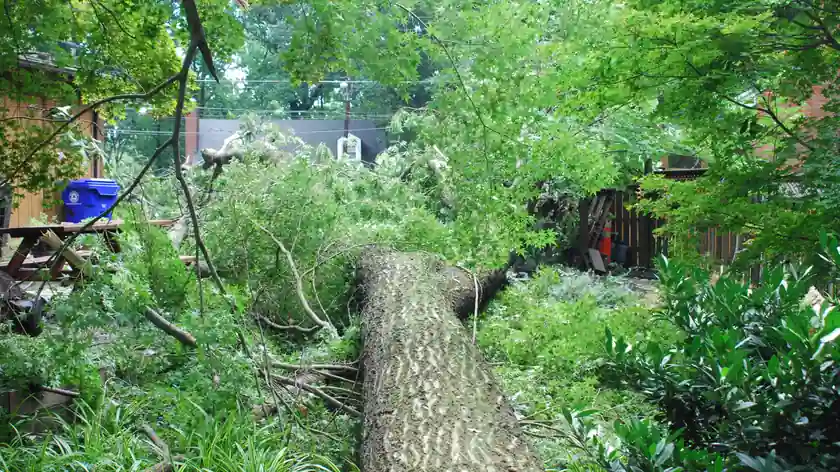
Severe thunderstorms hit the Kansas City metro Tuesday evening with straight-line wind gusts topping 80 mph — strong enough to shear full-size trees at the trunk, push vehicles off roads, and rip utility service connections off residential walls. As of Wednesday, over 44,000 Evergy customers remain without electricity across Jackson, Clay, and Johnson counties, with full restoration expected to take multiple days for the hardest-hit neighborhoods.
The National Weather Service Kansas City confirmed the storm line produced straight-line winds rather than tornadoes based on damage survey patterns, with gusts measured at 80 mph across the metro area Tuesday evening, October 13, 2026. Evergy outage map showed more than 44,000 customers lost service after fallen trees crushed distribution lines and damaged neighborhood transformers. Local news teams from KMBC 9 documented downed trees on rooftops and vehicles across Jackson, Clay, and Johnson counties. A cold front followed the storm line through the region overnight.
Kansas City homeowners, commercial property operators, and utility customers face dangerous cleanup conditions, widespread structural damage, and multi-day electrical outages following severe thunderstorm winds topping eighty miles per hour. Property owners must document fallen tree limbs and roof impacts thoroughly for insurance claims before attempting removal. Residents must strictly avoid downed power lines hidden under storm debris and refrain from personal chainsaw operations until Evergy crews secure energized utility equipment.
Dense tree canopy across older Kansas City neighborhoods creates a specific hazard after this kind of storm: live distribution wires can sit under a carpet of leaves and branches, invisible to anyone walking a yard or driveway. After an 80 mph wind event, assume any downed line is energized until Evergy crews tag it. Do not approach within 30 feet.
There's a second reason some homes will stay dark longer than neighbors with similar damage. Evergy repairs feeder lines and neighborhood transformers on its own authority and cost. But if the storm tore the electric meter box, weatherhead pipe, or service drop connection off the side of a house, that section is classified as customer-owned equipment. The homeowner must hire a licensed electrician, pull a permit with the city, and pass inspection before Evergy can legally restore service to that address — a process that typically takes two to four days minimum. Midwest derecho and power-outage coverage.
This distinction affects hundreds of homes after a storm of this magnitude. Residents who see their meter box dangling or their weatherhead pipe pulled away from the wall should call an electrician immediately rather than wait for Evergy crews to explain the situation. Read how Evergy prioritizes severe-thunderstorm outage safety coverage after severe storms.
NWS Prairie Hill will complete formal storm damage surveys through the week; additional wind gust data from Wednesday's field teams may revise reported peak speeds. Watch Evergy's outage map for restoration progress by ZIP code.