 Tejal Somvanshi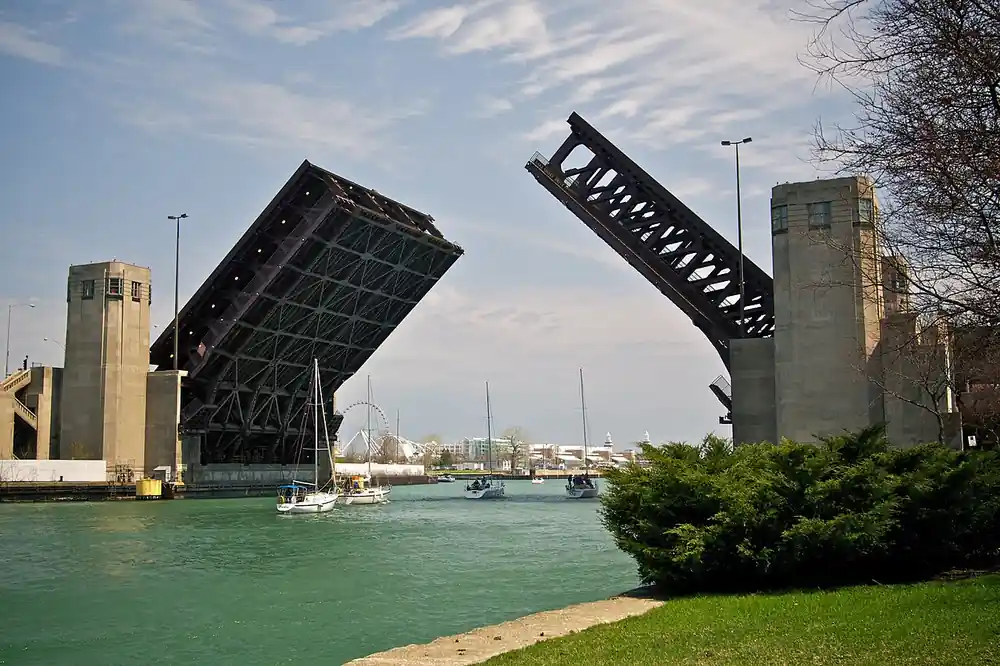
On September 2, a major Chicago roadway came to a standstill because the bridge wouldn’t close.
The DuSable Lake Shore Drive bridge over the Chicago River was lifted for a routine pass-through around 10 a.m. When operators tried to bring it back down, it wouldn’t fully close. The bridge stayed open — and traffic stayed blocked — until shortly after 2:30 p.m., a disruption of more than four hours.
The cause, according to city officials, was heat. Extreme temperatures can cause steel components to expand, and engineering experts said the expansion interfered with the bridge’s ability to close properly.
Crews from the Chicago Fire Department cooled the steel structure with water and made adjustments that allowed the bridge to close.
What made this story more than a heat-related traffic inconvenience is what a 2024 inspection had found. City and state inspection records classified the DuSable Lake Shore Drive bridge as both structurally deficient and functionally obsolete.
That terminology is worth understanding carefully. Structurally deficient does not mean a bridge is about to fall down. Under federal inspection standards, the designation means that certain structural elements have deteriorated to a condition where they need additional monitoring, maintenance, or eventual rehabilitation. It indicates that elements need to be watched and maintained, but not that structural collapse is imminent.
Chicago has a large and aging bridge network crossing the Chicago River, and maintenance on urban infrastructure is a common challenge across American cities.
No injuries were reported.
Infrastructure at Risk: The DuSable Lake Shore Drive bridge, a critical link carrying 90,000 vehicles daily, was flagged in the 2024 audit as structurally deficient with expansion joint issues. City engineers noted that thermal expansion — normally measured in inches — became unpredictable as temperatures soared past 100°F, warping steel girders beyond design tolerances.
Climate Connection: Chicago’s extreme heat events have intensified since 2020, with the National Weather Service reporting a 40% increase in days exceeding 100°F. The bridge shutdown highlights how aging infrastructure, built for a cooler climate, struggles under new temperature regimes. Similar heat-related closures hit bridges in Philadelphia (2025) and Boston (2024), suggesting a nationwide pattern.
Broader Implications: The incident underscores growing tensions between climate adaptation and infrastructure maintenance. While the city allocated $12 million for bridge repairs in 2025, experts argue that routine maintenance budgets must account for more frequent extreme weather events — a cost often omitted from traditional planning models.