 Sunita Somvanshi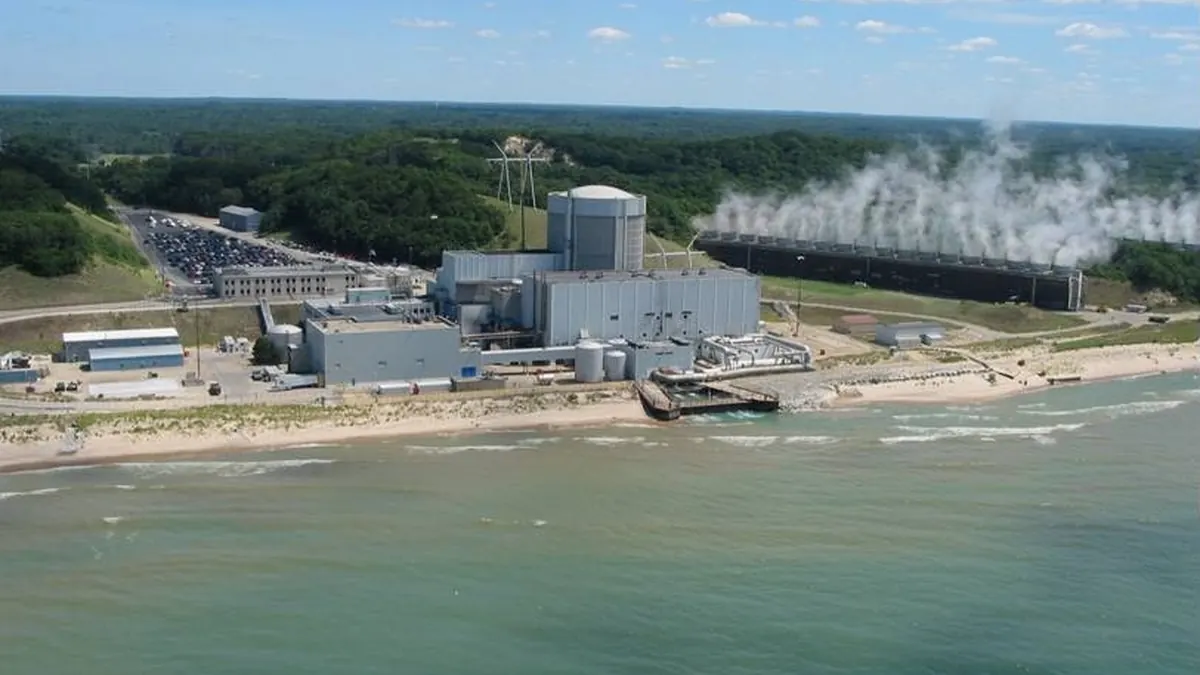
Electricity customers in Michigan, Iowa, and Pennsylvania will not pay for reviving three retired nuclear reactors. The Department of Energy’s Office of Energy Dominance Financing loan package backing this nuclear restart effort shifts financial risk away from local utility rates and onto federal credit lines and corporate buyers racing to secure power for AI data centers.
The office issued three loans under the Title 17 loan program. Together they total up to $4.42 billion to restart three shuttered reactors. Holtec received $1.52 billion in September 2024 for the 800 MW Palisades plant in Covert Township, Michigan. Constellation received $1.0 billion in November 2025 for the 835 MW Crane Clean Energy Center at Three Mile Island in Londonderry Township, Pennsylvania. NextEra Energy received $1.9 billion in September 2026 for the 615 MW Duane Arnold Energy Center in Linn County, Iowa. Combined, the three plants add 2.25 gigawatts of capacity, enough electricity for roughly 2 million homes. The restart wave follows a broader pattern Karmactive has tracked in its coverage of AI data centers set to consume 20% of the US power grid by 2035.
If you pay electricity bills in Michigan, Iowa, or Pennsylvania, these loans matter directly. They shift the financial risk of restarting aging reactors off local utility ratepayers and onto federal credit lines and Big Tech buyers. Because hyperscale AI data centers are contracting directly for this 2.25 GW of baseload power, regional grids gain stability. Residential customers avoid funding multi-billion-dollar nuclear refurbishments through monthly bill surcharges, a concern raised in Karmactive’s earlier report on data center electricity bills and AI grid costs before the Senate.
Comparing the three nuclear restart loans
Media coverage treats the $4.4 billion as one lump sum issued at once. DOE project sheets show it built up in stages across two years, and the per-megawatt cost varies sharply between plants.
| Plant | State | Capacity | Loan amount | Closed | Permanent jobs |
|---|---|---|---|---|---|
| Palisades | Michigan | 800 MW | $1.52 billion | September 2024 | 600 |
| Crane Clean Energy Center | Pennsylvania | 835 MW | $1.0 billion | November 2025 | 627 |
| Duane Arnold | Iowa | 615 MW | $1.9 billion | September 2026 | 462 |
Duane Arnold’s $1.9 billion works out to about $3.08 million per megawatt, versus $1.19 million per megawatt at Three Mile Island. That gap exists because Duane Arnold was not retired for economic reasons alone. An August 2020 derecho windstorm wrecked its cooling towers, so rebuilding them from scratch costs far more than restarting equipment that was simply mothballed.
The Department of Energy is restarting three shuttered reactors with this $4.42 billion in loans. They are Michigan’s Palisades plant, Pennsylvania’s Crane Clean Energy Center at Three Mile Island, and Iowa’s Duane Arnold Energy Center. Each plant closed for different reasons, and each now restarts on its own timeline backed by a separate federal loan. The Cheyenne region has already seen similar tension between infrastructure growth and local costs, detailed in Karmactive’s report on Cheyenne’s data center boom and who really pays the price.
Across Michigan, Iowa, and Pennsylvania, three shuttered reactors are returning to the grid on $4.42 billion in federal loans, not ratepayer funds. Palisades, Crane Clean Energy Center, and Duane Arnold together restore 2.25 gigawatts of nuclear capacity. The timing matches surging demand from AI data centers, not residential growth.