Karmactive Team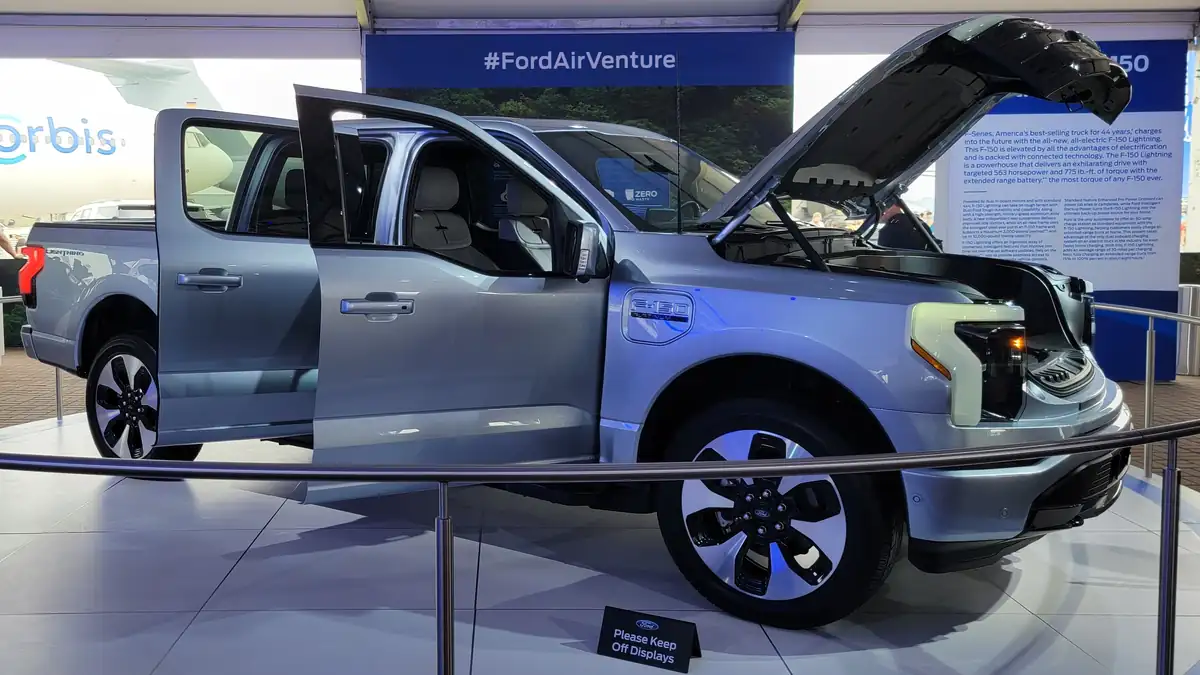
The Ford F-150 Lightning is now one of the fastest-selling used vehicles in the United States — not because the truck improved, but because its price dropped by half. Pre-owned Lightnings are turning in roughly 20 days on dealer lots, less than half the 44-day national average for used vehicles, as secondary market prices settle near $40,000 to $50,000 following Ford's December 2025 production shutdown.
Ford ceased F-150 Lightning assembly in December 2025 after per-unit losses on high-trim models exceeded $100,000, according to automotive reporting citing Ford Motor Company internal figures. The truck launched with a base price near $39,974 before trim escalation pushed transaction prices past $60,000. Edmunds.com transaction data shows pre-owned Lightnings now trading between $40,000 and $50,000 — a 50% to 60% decline from original sticker prices. The 20-day average days-to-turn is tracked by the Plug and EV Group. Ford Fathom announcement is in development with a target price under $30,000.
Prospective electric vehicle buyers, fleet managers, and current F-150 Lightning owners face immediate financial shifts as steep initial depreciation makes pre-owned models accessible while eroding trade-in equity. Secondary buyers can acquire well-equipped electric pickups near forty thousand dollars, cutting ownership costs without waiting for upcoming entry-level launches. Existing owners considering a sale should act quickly before new low-cost platforms like the Fathom arrive, while prospective purchasers must verify remaining battery warranty coverage before completing any transaction.
What the Used Lightning Market Gets Right That New Production Never Did
Ford's production math never worked at the truck's original price — consumers weren't willing to pay $60,000-plus for an electric pickup when comparable gasoline F-150s sold for less with more dealer availability. The secondary market has effectively done what the factory couldn't: priced a full-size electric pickup at a level where natural demand absorbs available supply in 20 days. That's not a distressed market — that's a functional one.
One thing prospective buyers need to confirm before purchase: Ford's original 8-year/100,000-mile battery warranty is transferable to subsequent owners, but the transfer must be documented at the time of sale. Buyers should request written confirmation from the selling dealer or private party that the warranty registration has been transferred rather than assuming it carries automatically. The battery warranty is a significant portion of the Lightning's value proposition at the used price point. Federal EV tax-credit changes.
There's also a federal tax credit consideration. Qualifying used clean vehicles under $25,000 are eligible for a $4,000 Used Clean Vehicle Credit under IRC Section 25E. Because most Lightning transactions are occurring between $38,000 and $48,000, secondary buyers currently cannot claim this credit — the full purchase price must be financed without that federal offset. electric-truck smart charging.
Non-Ford dealerships are retailing Lightnings directly rather than wholesaling them at auction because the 20-day turn rate makes retail margins more attractive than wholesale pricing — a sign the used market has found its clearing price organically.
Why are used Ford F-150 Lightnings selling so quickly?
Used Ford F-150 Lightnings sell in roughly 20 days, less than half the national used vehicle average of 44 days, according to Edmunds.com data. Steep initial depreciation of 50% to 60% dropped secondary market prices near $40,000 to $50,000, creating strong demand among budget-conscious truck buyers seeking instant torque and lower commuting fuel costs.
Ford has not announced a Fathom launch date. Check back for updates on the new platform reveal and its impact on used Lightning pricing.