Tesla Supercharger Virtual Queue & AI Wait-Time System Explained | KarmActive
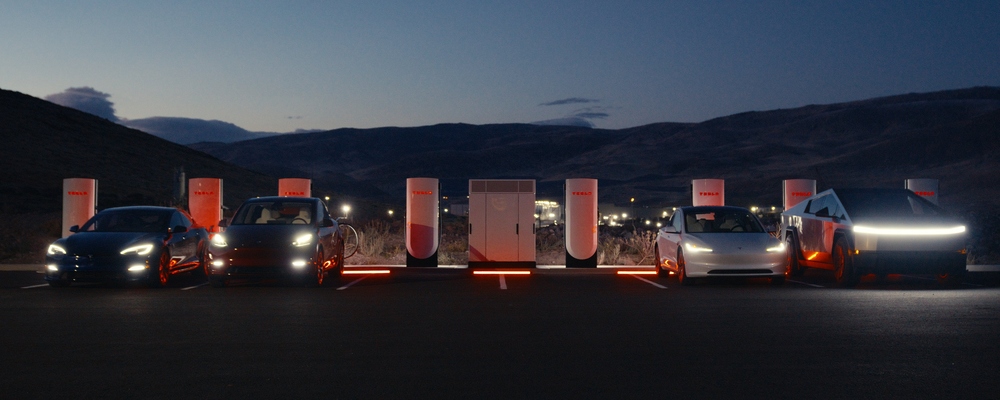
Tesla Cybertruck charging at a V4 Supercharger station
EV & Clean Tech

Tesla’s AI Queue System Is Changing How Drivers Wait at Superchargers

A new machine learning model — trained on 9 million miles of data — and a virtual queue pilot are taking the guesswork out of congested charging stops.

📅 April 2026 ⏱️ 4 min read
Long waits at busy Tesla Superchargers have occasionally turned tense — there have been documented altercations at congested sites in California and Florida over who arrived first. Tesla is now addressing this directly with a virtual queue pilot and a new AI-powered forecasting model, both designed to make the charging experience more predictable. For context on how EV infrastructure is expanding across the world, see KarmActive’s coverage on EV charging at America’s iconic destinations and the broader push to cut charge times even further.

By the Numbers

What Tesla’s Data Actually Shows

9M
Miles of anonymised vehicle trajectory data used to train the new ML model
~20%
Reduced queue-length estimation error at co-located, mixed-use Supercharger sites
1–2
Car margin of error even when more than 10 vehicles are waiting
~80K
Global Supercharger stalls as of Q1 2026, per Tesla’s official figures

Step by Step

How the Virtual Queue & AI Forecasting Work Together

Tap each step to expand.

1
Trip Planner Routes You In
Tesla’s Trip Planner selects the best Supercharger sites along your route to minimise total travel time. It routes you to the physical property entrance — not just a map pin — and can display the predicted number of available stalls on arrival, flag high-volume sites, and surface nearby amenities such as restrooms, restaurants, lodging, and Wi-Fi.
2
ML Model Detects Charging Intent
Many Superchargers sit next to malls or restaurants, so older systems could not distinguish between a driver actually queuing to charge and one simply parking nearby. Tesla’s new model — trained on 9 million miles of anonymised, aggregated vehicle trajectory data within Supercharger geofences globally — identifies vehicles with genuine charging intent, bringing queue-length estimation errors down to around 20%.
3
Virtual Queue Prompt Appears on App
When you arrive at a full site, the Tesla app uses your location to determine queue eligibility. One message reads: “While the app is closed, Tesla uses your location to notify you of accurate wait times at Superchargers when you arrive.” The app displays your queue position and how many vehicles are ahead of you.
4
App Prompts You to Plug In
When a stall becomes available for you, the app prompts: “There is a waitlist to charge. Are you sure you want to start a charging session now?” The system relies on drivers responding to the prompt — stalls do not yet have physical barriers preventing queue-jumping. This feature is currently in a pilot phase and is not yet universally deployed.
5
Congestion Fees Manage Dwell Time
Once charging begins, Tesla’s congestion fee system applies charges to vehicles occupying stalls at busy sites — this fee can apply even when some stalls remain open if the overall site is under load. The mechanism encourages drivers to move on promptly, freeing stalls for those in the queue.
🔌 Supercharger Wait Estimator
Drag the sliders to see how queue size and stall count affect estimated wait time. Based on Tesla’s published average session duration of approximately 27–30 minutes at V3/V4 sites.
4 cars
8 stalls
~15
Est. Wait (mins)
~3
Stalls Freeing Soon
Low
Site Pressure

Estimate only. Actual wait depends on vehicle model, battery state, and real-time site conditions.

What’s in the Update

Everything the New System Brings

🗺️
Supercharger Site Maps
New Site Maps display the physical layout of each station, helping drivers identify open stalls and navigate the property upon arrival.
📍
Geofenced Intent Detection
The model monitors trajectories within Supercharger geofences to separate drivers heading in to charge from those parking for nearby amenities — the core “mixed-purpose traffic” problem.
🔔
Live App Notifications
The Tesla app sends real-time queue position updates, stall availability alerts, and charge-status notifications — including when the app is running in the background.
NACS & Non-Tesla EVs
Tesla’s network now supports compatible non-Tesla EVs via NACS-enabled access, the Tesla app, and compatible adapters — meaning congestion is no longer a Tesla-only issue at many sites.

💰 How Congestion Fees Keep Stalls Moving

Tesla manages dwell time through a congestion fee applied at busy Supercharger sites. The fee applies to vehicles occupying stalls at high-demand locations — and can kick in even when some stalls are still available, if the overall site is under load. This pushes drivers to unplug and move on once charging is done, keeping throughput high for those waiting in the virtual queue.

Applies at high-demand sites Can apply with stalls still open Moves cars out of stalls faster Works alongside virtual queue Visible in Tesla app Part of vertical integration

Q1 2026 Network Snapshot

Where the Network Stands Today

79,918
Supercharger stalls globally (Q1 2026 report)
8,463
Charging stations worldwide (19% YoY growth)
53M
Charging sessions in Q1 2026 (26% YoY growth)
1.8 TWh
Energy delivered in Q1 2026

Context

A Network Built Around the Charging Experience

Tesla’s early 2013 annual filing described Superchargers as capable of replenishing 50% of a Model S battery pack in as little as 30 minutes. Today, the network’s V4 stations can add up to 275 km of range in 15 minutes, with a maximum charging rate of 250 kW. According to Tesla Charging’s official communications, the goal is a network where waiting is nearly non-existent — and where, in the rare cases queues do form, drivers have precise data to plan around them. For more on what’s driving battery and EV innovation alongside this infrastructure growth, see KarmActive’s coverage on Tesla’s battery technology choices and next-generation EV range research.

The virtual queue feature remains a current pilot. The broader update — combining trajectory data analysis, geofenced intent detection, Trip Planner routing, live site information, and congestion fee management — was documented across Tesla’s Supercharger for Business pages and official charging support resources. Tesla says it is already working on further iterations to refine wait-time estimates. For broader context on EV safety and infrastructure considerations, see KarmActive’s look at EV weight and car park stability.

Karmactive Whatsapp group - https://www.whatsapp.com/channel/0029Vb2BWGn77qVMKpqBxg3D

Leave a Reply

Your email address will not be published.

President Donald Trump seated at the podium in the U.S. Capitol chamber with two lawmakers standing behind him applauding, American flag displayed in the background during a joint session of Congress.
Previous Story

Tesla Says Waiting Is “Almost Non-Existent” but It Trained an AI on 9 Million Miles to Prove It

Latest from Electric

Don't Miss

President Donald Trump seated at the podium in the U.S. Capitol chamber with two lawmakers standing behind him applauding, American flag displayed in the background during a joint session of Congress.

Tesla Says Waiting Is “Almost Non-Existent” but It Trained an AI on 9 Million Miles to Prove It

TrumpIRA.gov: Executive Order Expands Retirement Access | Karmactive