Dippy the Axolotl: UK’s First Documented Wild Discovery | KarmActive
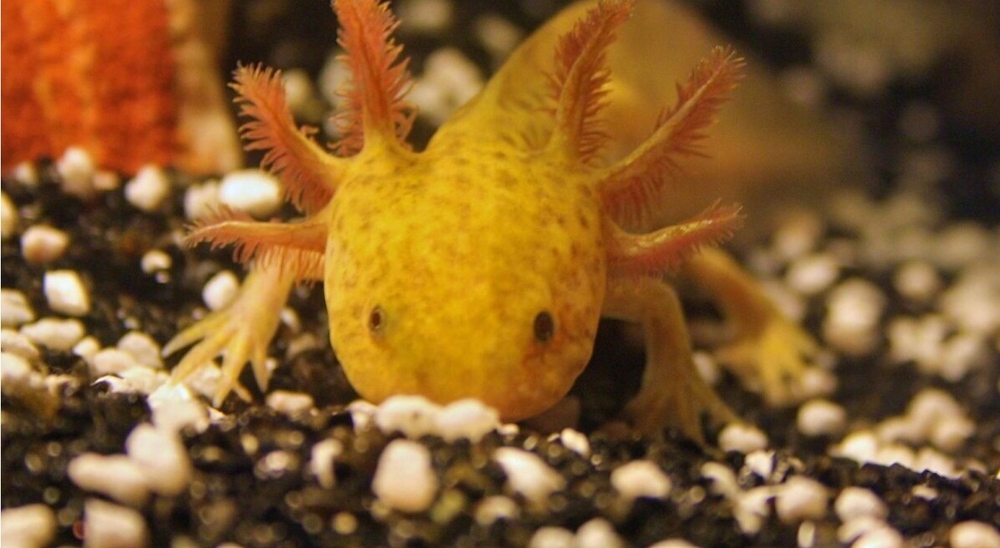
Mexican axolotl — critically endangered amphibian native to Lake Xochimilco, Mexico
Wildlife · UK

A 10-Year-Old Found a Critically Endangered Axolotl in a Welsh River

Believed to be the first documented wild discovery of a Mexican axolotl in the UK — and what it tells us about conservation, the law, and exotic pet ownership.

📅 April 2026 🐾 Wildlife ⏱ 4 min read

On a family holiday in Wales, 10-year-old Evie Hill waded into the shallows of the River Ogmore near Bridgend and lifted a discarded mat from the rocks — finding a 9-inch (22 cm) axolotl nestled underneath. The injured creature, now named Dippy, is believed to be the first documented discovery of a Mexican axolotl in the wild in the UK. Wild populations of this species — the Ambystoma mexicanum — are Critically Endangered, with only 50 to 1,000 individuals estimated to remain in the wild in Mexico, according to the IUCN Red List.

How Dippy Was Found & What Happened Next

A step-by-step account of the discovery

April 2026 · Bridgend, Wales

The Discovery at the “Dipping Bridge”

Evie was playing near the Dipping Bridge at the entrance to Merthyr Mawr village on the River Ogmore when she spotted the pale, speckled creature with distinctive feathery gills after lifting a discarded mat in the shallows. “I went down to the bank and there was this thing with gills on its head. I was like: ‘That’s an axolotl.’ I caught it and brought it back,” she told BBC News.

Immediate Response

Injuries Noted — Expert Advice Sought

The axolotl had visible injuries to its tail and stomach, believed to have been caused by a predator. The Hill family cut their holiday short and brought the creature to their home in Leicester. After consulting wildlife experts, the family was confirmed they could keep Dippy.

Recovery

Dippy in Rehab — Documented on TikTok

The family set up a temperature-controlled fish tank and have been sharing Dippy’s recovery on TikTok. Evie’s mother, Melanie Hill, said they “spent hours” researching proper axolotl care and have since planned a larger tank transfer. “Everybody at school is fascinated about the story of Dippy,” said Evie.

Expert Commentary

Wildlife Authority Weighs In

Chris Newman, director of the National Centre for Reptile Welfare (NCRW), said the manner of discovery suggested the axolotl had been abandoned by its owner due to a “change in circumstances.” He noted that releasing a non-native species into the wild is illegal under UK law, and that without Evie’s intervention, the axolotl had little chance of surviving long.

50–1,000 individuals
Estimated wild axolotls remaining in Mexico
9 in 22 cm
Length of Dippy when found
16–18°C ideal range
Optimal water temperature for axolotl health
10+ years
Lifespan in proper captive care

The “Peter Pan” of Amphibians

Six key facts about the axolotl — tap each card to reveal

👆 Tap a card to flip it

🔬

Never Grows Up

What makes the axolotl biologically unique?
Axolotls are neotenic — they permanently retain their larval, aquatic form. Unlike most salamanders, they never develop lungs or lose their external gills. According to the Natural History Museum, they remain fully aquatic for their entire lifecycle.
🦾

Regeneration

What can an axolotl regrow?
Axolotls can regenerate entire limbs, eyes, spinal cords, and even parts of their brains — without scarring. This ability makes them one of the most studied animals in biological and medical research.
🌍

Native Habitat

Where do wild axolotls live?
Wild axolotls are found in Lake Xochimilco near Mexico City, and historically also in Lake Chalco (now largely drained). Xochimilco is a UNESCO World Heritage site. Urban expansion and invasive fish like tilapia and carp have drastically reduced their habitat.
🎮

Pop Culture Effect

Why did axolotl pet demand surge?
Axolotls appeared in Minecraft, Roblox, and Fortnite, driving a surge in pet trade demand. The RSPCA warns that this led to impulse purchases by owners unprepared for their specialist care needs. Abandonment — like Dippy’s case — is a growing welfare concern.
🧬

Massive Genome

How large is an axolotl’s genetic code?
The axolotl genome contains approximately 32 billion base pairs — around ten times that of a human. Scientists study it to understand tissue regeneration, with implications for human medical research.
⚖️

UK Legal Status

Is it legal to own or release one in the UK?
Releasing an axolotl into UK waterways is a criminal offence under Section 14 of the Wildlife and Countryside Act 1981. Captive ownership is currently permitted after expert consultation. Sightings should be reported to relevant authorities.

Where Dippy Was Found

River Ogmore, near Bridgend, South Wales

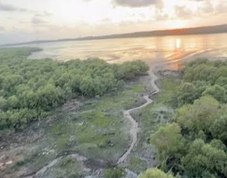
Dipping Bridge, Merthyr Mawr — discovery site on the River Ogmore, Bridgend
Lake Xochimilco, Mexico City — axolotl’s only remaining native wild habitat

The Legal & Reporting Framework

What the law says — and what to do if you find one

Under Section 14 of the Wildlife and Countryside Act 1981, it is illegal to release any animal that is not “ordinarily resident” or a regular visitor to Great Britain in a wild state. This applies directly to axolotls, which are native only to Mexico. Violating this law can result in criminal prosecution.
According to the SoNaRR 2025 report by Natural Resources Wales, invasive non-native species cost the Welsh economy approximately £343 million annually, affecting sectors including forestry and agriculture — with establishment rates accelerating over the past 50 years. Keeping, breeding, transporting, or releasing listed species without a licence is a criminal offence under UK invasive species rules.
Do not return it to any body of water. Contact the National Centre for Reptile Welfare (NCRW) immediately. Sightings should be reported to Natural Resources Wales and relevant UK authorities, as records help identify trends and track the spread of non-native species. Keep the animal in a cool, sheltered environment while awaiting expert guidance.
A 2025 study published in PLOS One tracked 18 captive-bred axolotls released into restored and artificial wetlands near Mexico City. The study recorded survival and foraging behaviour during the monitoring period, with movement data indicating a narrow thermal preference of approximately 15.5–17°C — consistent with established expert care guidelines for captive animals.

Axolotl Care: The Essentials

Why these animals require specialist conditions — not impulse ownership

🌡 Safe Water Temperature Range

Based on Royal Veterinary College guidance and the PLOS One field study (2025)

0°C — too cold 16–18°C ✓ Safe Zone Above 24°C — risk zone
  • Maintain water at 16–18°C at all times. Temperatures above 24°C can cause severe stress and serious health risks.
  • Use a fully cycled aquarium filter — axolotls are highly sensitive to ammonia and nitrite.
  • Fine sand substrate or bare-bottom tank — gravel ingestion can cause fatal intestinal blockage.
  • Low-flow filtration with hiding spots to reduce stress on the immune system.
  • Secure tank lid — axolotls are capable of climbing out of open tanks.
  • Never release into rivers, ponds, or any UK waterway — it is a criminal offence under the Wildlife and Countryside Act 1981.
  • The RSPCA warns against impulse purchases — owners consistently underestimate the specialist care these animals require.

“First of all, it’s illegal to release a non-native species into the wild — and it’s not good from a welfare point of view either. This is quite a unique situation, and I think the young female has a keen eye to actually spot it. That itself is no mean feat. They’re quite slippery, so I think she did really well.”

— Chris Newman, Director, National Centre for Reptile Welfare (NCRW)

What Was Covered in This Report

This report covered the rescue of an injured Critically Endangered Mexican axolotl (Ambystoma mexicanum) from the River Ogmore in Bridgend, Wales by 10-year-old Evie Hill in April 2026. The discovery was identified by experts as believed to be the first documented wild sighting of the species in the UK. The animal, named Dippy, was placed into private care in Leicester following consultation with wildlife welfare experts. The report also covered the species’ wild population status in Mexico, the Wildlife and Countryside Act 1981, UK invasive species rules, axolotl biology, specialist captive care requirements, and the findings of a 2025 PLOS One reintroduction study conducted in Mexico.


Karmactive Whatsapp group - https://www.whatsapp.com/channel/0029Vb2BWGn77qVMKpqBxg3D

Leave a Reply

Your email address will not be published.

Microscopic image of Vibrio cholerae bacteria with flagella stain showing curved rod-shaped microbes associated with waterborne infections
Previous Story

“Very Serious Infection”: Flesh-Eating Bacteria Confirmed in Long Island Bays, 1 in 5 Infected Die

Latest from Conservation

Don't Miss