 Rahul Somvanshi
73% of Wildlife Populations Have Declined Since 1970 — and Fixing One Problem at a Time Won’t Work
A 70-year analysis of 3,129 vertebrate populations reveals why single-issue conservation is failing, and what the science says needs to change.
In 1970, for every four animal populations being monitored worldwide, three of those populations are now smaller. That is the finding at the centre of the WWF Living Planet Report 2024, which tracked 34,836 populations across 5,495 vertebrate species over five decades — recording a 73% average decline between 1970 and 2020.
A study published in Science Advances in February 2026 added a harder layer: wildlife populations exposed to multiple threats simultaneously — habitat loss combined with invasive species, climate change, and pollution at once — decline measurably faster than those facing a single pressure. Each additional threat compounds the others, not in ways that multiply, but in ways that reliably add. The implication is direct. Conservation strategies that tackle one problem at a time are structurally limited.
The IUCN Red List currently lists 48,646 species as threatened with extinction out of 172,620 assessed. The IPBES Global Assessment estimates approximately one million species face extinction risk across all of Earth’s known biodiversity.
The Numbers at a Glance
All figures verified from primary scientific and institutional sources
Decline by Region
Average proportional change in monitored vertebrate populations per region — WWF Living Planet Report 2024
Where the Losses Are Deepest
Average population decline by ecosystem type, 1970–2020
Freshwater is where the crisis is most acute. Sturgeons — which survived the age of dinosaurs — have seen monitored populations fall 91% between 1970 and 2016. One-quarter of all known freshwater fauna are now threatened with extinction. These are not abstract ecological statistics: freshwater species regulate the river and wetland systems that billions of people depend on for drinking water and food. Ocean systems face simultaneous pressure, with 61% of bird species now showing declining populations according to the IUCN October 2025 Red List update — up from 44% in 2016.
Wild pollinators support roughly one-third of global food production. Biodiversity loss is estimated to cost the global economy around $10 trillion annually in agriculture, healthcare, and ecosystem service losses. A new paper published in Frontiers in Science in April 2026 stresses that halting biodiversity loss by 2030 is not aspirational — it is the threshold before cascading Earth system failures begin. The Kunming-Montreal Global Biodiversity Framework, adopted in 2022, commits nations to protecting 30% of land and ocean by 2030. As of 2026, progress toward that commitment remains limited.
Asia-Pacific, which has seen a 60% average decline, faces a particular combination of threats: invasive species and disease are frequently cited for populations across the region, with reptiles most affected by invasive species pressure. India, which covers 2.4% of Earth’s land but holds 7–8% of all known species, has at least 97 mammal and 94 bird species on the IUCN threatened list, and submitted a 7th National Biodiversity Report in 2025 finding only 2 of 23 national targets clearly on track.
The Compound Threat Problem
Select threats to see how multiple pressures acting together affect monitored populations — based on Science Advances 2026 data (Capdevila et al.)
Conservation action must be coordinated across multiple pressures. Tackling threats one at a time will not be enough to halt ongoing biodiversity loss.
The linked crises of nature loss and climate change are pushing wildlife and ecosystems beyond their limits. Although the situation is desperate, we are not yet past the point of no return. The decisions made and action taken over the next five years will be crucial for the future of life on Earth.
A Timeline of Missed Targets
Five decades of monitoring — and the policy agreements that followed
What Sustained Effort Can Do
Three species where coordinated, multi-decade conservation produced measurable recovery
India holds the world’s largest wild tiger population — 3,682 as of the 2022 All-India Tiger Estimation — in a region that has recorded a 60% average wildlife decline overall. Recovery is possible where protections are sustained, funded, and coordinated across the full range of threats a species faces. Fifty years of sustained advocacy produced the frameworks that enabled these recoveries.
The Science Advances 2026 study, led by Dr. Pol Capdevila of the University of Barcelona and Dr. Duncan O’Brien of the University of Bristol, analyzed 3,129 vertebrate population time series from 1950 to 2020. It found that overexploitation — hunting, fishing, and wildlife trade — was the most commonly documented threat affecting populations, at 30.6%. Habitat loss followed at 27.2%. Amphibians were identified as the vertebrate group most vulnerable to combined threat effects.
Policy frameworks tell a parallel story. The Endangered Species Act in the United States faces proposed rule changes that could reduce critical habitat protections. Ontario’s equivalent law was narrowed to protect only nests and dens. The first-ever Bird Habitat WatchList found 40% declines across priority bird ecosystems in North America. And while Amazon deforestation has been linked to a 74.5% reduction in regional dry-season rainfall, intact forest — a single-issue land protection — does not address the hunting, disease, or climate pressures acting on populations inside those forests simultaneously.
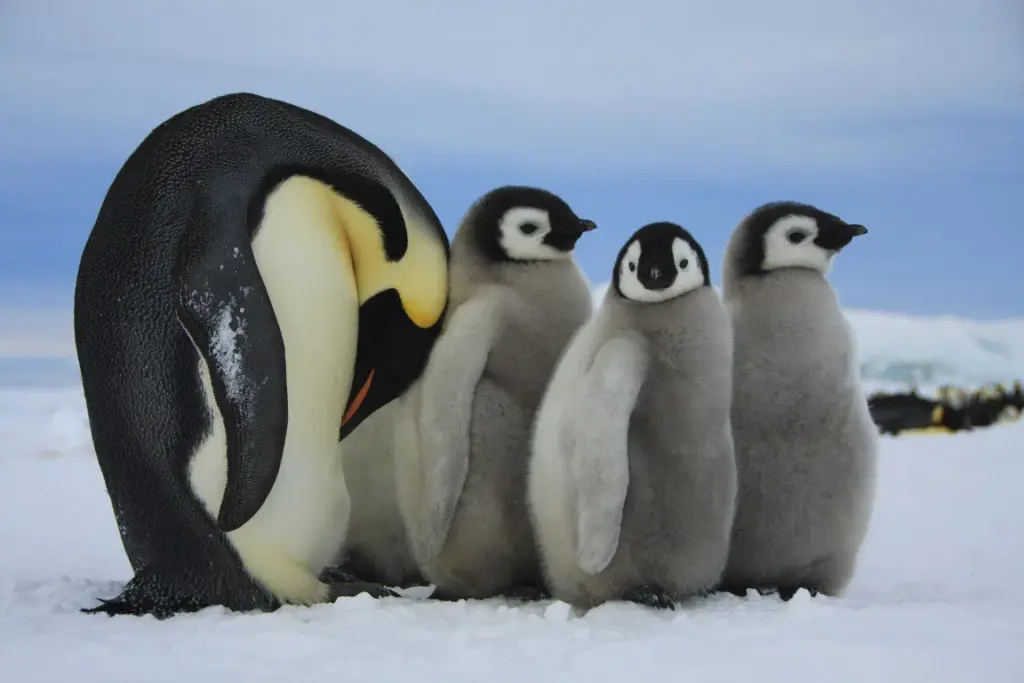
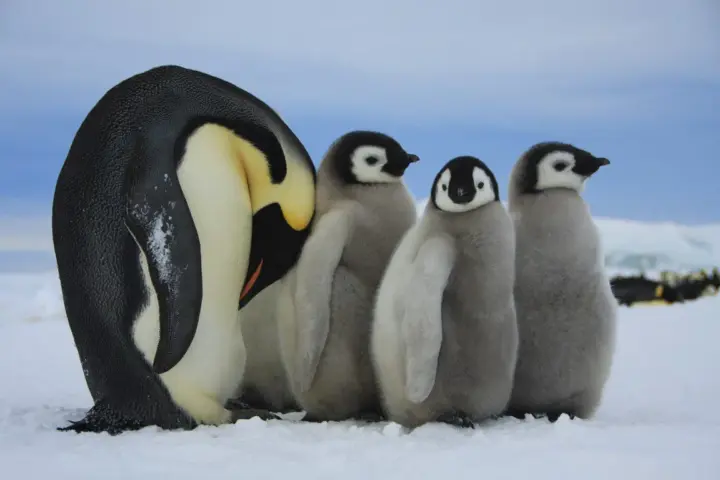
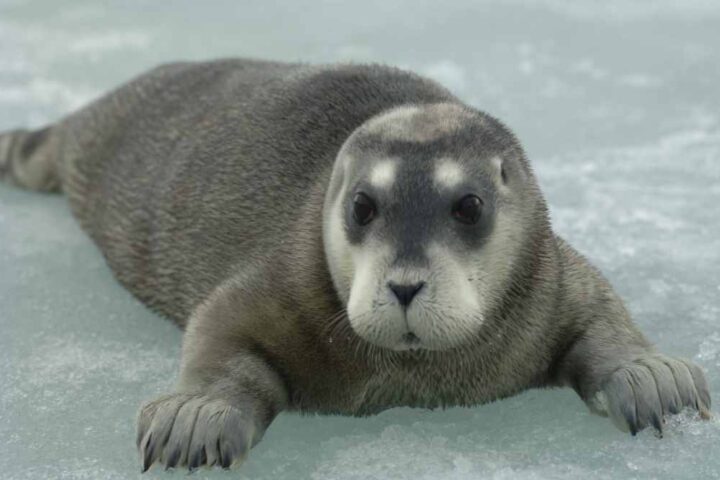
The IUCN Red List update of October 2025 added the hooded seal to Endangered status and moved bearded and harp seals to Near Threatened due to Arctic sea ice loss. The emperor penguin — dependent on sea ice for breeding — is now classified as Endangered. Dr. Grethel Aguilar, IUCN Director General, stated: “Today’s Red List update shines a light on both the urgent challenges and the powerful possibilities before us. The recovery of the green turtle reminds us that conservation works when we act with determination and unity.”
The Great Barrier Reef has lost 50% of its corals across eight bleaching events. Eighty-four percent of global coral reef systems were affected in the most recent mass bleaching event. Marine systems face the compound of warming, acidification, and overexploitation simultaneously — the precise pattern the Science Advances 2026 study identifies as generating faster decline than any single-pressure model predicts.
The WWF Canada 2025 report found a 10% wildlife decline in Canadian populations — a country with significant intact wilderness. Even in regions with lower overall decline rates, no region is showing recovery at a rate that offsets the losses being recorded across Latin America, Africa, and the freshwater systems that underpin every region’s water security.
The WWF Living Planet Report 2024 tracked a 73% average decline across 34,836 population trends spanning 5,495 vertebrate species between 1970 and 2020. The Science Advances study published in February 2026 analyzed 3,129 of those population time series with specific documentation of threat exposure, finding that populations facing multiple simultaneous pressures declined at faster rates than those facing a single threat. The IUCN Red List, as of its 2025-1 update, assessed 172,620 species and listed 48,646 as threatened with extinction. The IPBES Global Assessment placed the broader number of species at extinction risk at approximately one million.
These figures — along with the regional breakdowns, habitat-specific data, and species-level assessments covered across these reports — were discussed in the context of why coordinated multi-threat conservation responses are considered necessary by the researchers involved, and why the policy frameworks currently in place, including the Kunming-Montreal Global Biodiversity Framework’s 30×30 target, have been the subject of calls for more urgent implementation as the 2030 threshold approaches.
Sources: WWF Living Planet Report 2024 · Science Advances 2026 · IUCN Red List 2025 · IPBES Global Assessment · CBD Kunming-Montreal Framework · University of Bristol/Barcelona Press Release · Frontiers in Science April 2026