 Sonali Tiwary
A strong earthquake shook Indonesia’s Flores Island on August 15, 2026, shortly before dawn. The quake struck at 4:58 a.m. local time with a magnitude of 7.7, according to Indonesian officials. The epicenter was located 15 kilometers below the surface, approximately 68 kilometers north-northwest of Ende city in East Nusa Tenggara province, the U.S. Geological Survey confirmed. The tremor was felt across much of Flores island and parts of southern Sulawesi.
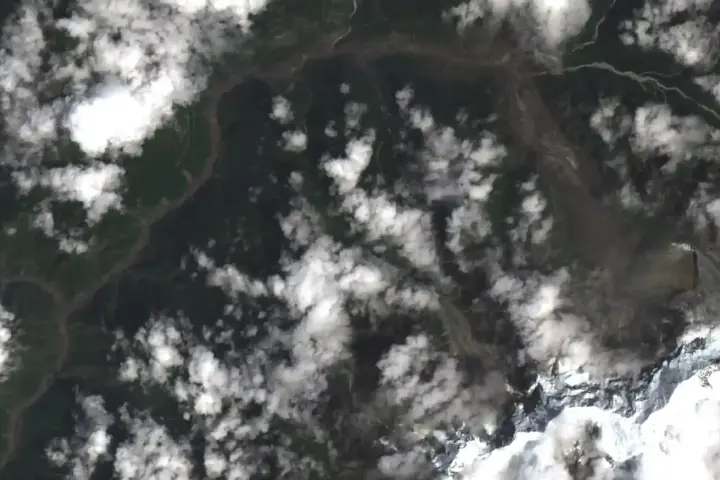
The Indonesian national disaster agency, known as BNPB, confirmed 14 confirmed deaths from the earthquake. International agencies citing field reports from remote areas in the region reported a higher toll, with death counts ranging from 20 to 38 people. The difference reflected the difficulty of reaching remote communities in the affected area, where landslides had cut off key roads.
The earthquake damaged hundreds of buildings across the island. At least 54 homes were destroyed in the initial quake, with another nine homes moderately damaged and 11 lightly damaged, BNPB reported. The tremor also damaged critical facilities, including five health centers, one school, one government food warehouse operated by Bulog, three places of worship, and six government office buildings. In Kabupaten Manggarai alone, 29 homes were completely destroyed, and 23 homes were rubble in Manggarai Timur.
Residents described intense fear during the shaking. Yulian Juita Ekalia, a 37-year-old lecturer in Ruteng, said the motion was alarming. “It felt like we were on a trampoline; it was really scary,” she said. “When I got outside, my son and neighbours were already there, screaming in fear.”
Hospital officials struggled to manage the chaos that followed. Lukas Lotar, a 31-year-old hospital customer service official, described the scene at his facility. “Suddenly it started to shake and I panicked,” Lotar said. “Patients also fled the hospital, the jolt was big. I saw some walls were cracked.”
Residents fled their homes seeking safety. Yohanes Babo, a 56-year-old from Nagekeo, described the evacuation. “The shaking was strong. Thankfully, we were already outside the house,” he said. “People were panicking, running here and there. We’re evacuating for the time being and trying to get to the hills.”
More than 2,000 people were evacuated in Nagekeo regency alone following the initial earthquake. Officials reported that five heads of family units were among those affected by the disaster. Many residents spent the night outdoors as dozens of aftershocks continued rattling the island.
The main earthquake was followed by dozens of aftershocks throughout the day, with the strongest measuring at a magnitude of 6.1, according to Indonesia’s meteorological agency BMKG. A tsunami warning was issued immediately after the earthquake struck. Officials lifted the warning at 7:31 a.m. local time after observing waves that stayed below one meter in height.
Indonesia’s disaster agency rapidly mobilized resources to assist affected areas. Suharyanto, chief of the BNPB, told journalists that rescue teams had identified priority locations for response efforts. “Victims are trapped in several buildings,” Suharyanto said. He noted that the agency was preparing helicopters and a plane to transport rescue personnel and supplies. “These will be the initial targets of the disaster response teams,” he told a news conference, adding that two helicopters and a plane were being readied to assist in rescue operations.
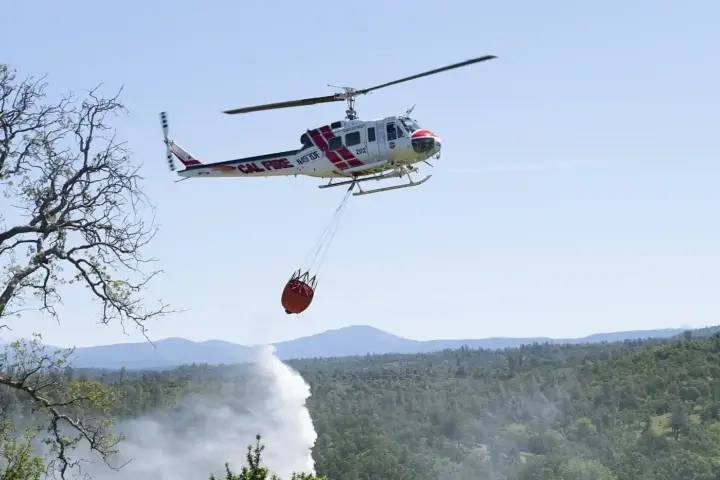
The agency deployed helicopters to the affected areas and began dispatching emergency aid. Search and rescue operations were coordinated by Fathur Rahman, head of the Maumere Search and Rescue Agency, according to officials.
Emergency supplies dispatched included 15 evacuation tents, 12 posko tents, 20 pleton tents, 30 tons of rice, medicine, 1,000 blankets, 1,000 mats, 500 cooking sets, 12 water tanks with 2,200-liter capacity each, 10 generators, 10 radios, and 100 flashlights.
The earthquake recalled a similar disaster in the same region. On August 19, 1992, Flores Island was struck by another earthquake measuring 7.7 in magnitude. That quake triggered a tsunami that killed more than 2,500 people, making it one of the deadliest earthquakes of the twentieth century. The 1992 disaster caused widespread destruction across the island and left the region vulnerable for years.
The affected province sits along Indonesia’s earthquake belt, an area where tectonic plates constantly shift and collide. Flores Island lies in one of the world’s most seismically active regions. Earthquakes are common in this part of Indonesia, though most are smaller and cause little damage.
The quake struck a region that remains relatively remote, with limited road access to some communities. This geography complicates rescue and aid delivery efforts. Many villages depend on helicopters or boats for supply deliveries during emergencies.
Power outages in cities and villages hampered the flow of information and complicated search and rescue efforts, East Nusa Tenggara Police Chief Rudi Darmoko said. Footage on local television showed patients at several hospitals being evacuated from buildings as a precaution following the quake.
Damage assessments continued in the days after the earthquake. Officials worked to account for all residents in remote villages and coordinate medical care for the injured. The scale of destruction suggested recovery would take considerable time, particularly in areas where infrastructure was already limited and where landslides had cut off access routes.
The tourism industry on Flores, which draws visitors to Komodo National Park, faced immediate disruption. Komodo National Park, a UNESCO World Heritage site, was closed to visitors as park authorities assessed landslide and infrastructure damage. The park receives over 200,000 international visitors annually, and the suspension of tourism activities directly affects thousands of local livelihoods dependent on guiding, hospitality, and transportation services.
Local officials urged residents to avoid damaged buildings as aftershocks continued. Governor Emanuel Melkiades Laka Lena of East Nusa Tenggara visited affected areas and announced that emergency funds would be released immediately. The central government pledged additional aid through the Ministry of Social Affairs and BNPB.
The Indonesian Red Cross deployed 500 volunteers to the affected areas, coordinating with local disaster response teams to distribute relief supplies. Temporary evacuation centers were established in public buildings, including the Nagekeo regent’s office, where displaced families received food, water, and basic medicine.
The disaster highlighted the ongoing vulnerability of Flores and the wider Nusra Tenggara region to seismic events. The 2026 earthquake, while devastating, resulted in fewer casualties than the 1992 disaster due to improved early warning systems and evacuation protocols. However, the remote terrain and limited infrastructure continue to pose challenges for emergency response.
Communication challenges hampered initial response efforts. Satellite phones and radio equipment were airlifted to the hardest-hit villages where cellular towers had collapsed. The National Telecommunications Regulator (BTKI) confirmed that three cell towers in the Nagekeo regency were damaged, disrupting communication for approximately 12,000 residents.
Recovery efforts continued as the island began the long process of rebuilding homes, schools, and hospitals. The focus remained on search and rescue operations as teams worked to locate any remaining victims trapped under rubble. BNPB confirmed that the data on casualties and damage remained provisional and subject to change as field verification continued.
The World Bank has pledged emergency funding of $50 million for immediate recovery efforts, conditional on a full assessment being completed by August 25. International search and rescue teams from Australia and Singapore have been placed on standby, though the Indonesian government has not formally requested international assistance at this time.
The earthquake also disrupted marine transportation between Flores and neighboring islands. Ferry services between Labuan Bajo and Trans-Sumba were suspended due to damaged port infrastructure. This isolation affects the supply chain for remote coastal villages that rely on boat transport for food and medicine.
BNPB’s emergency response coordinator, Putu Sumpawan, stated that the agency had pre-positioned 200 metric tons of rice and basic groceries before the earthquake struck, as part of Indonesia’s national disaster preparedness program for seismically active regions. This stockpile, combined with the rapid airlift of additional supplies, allowed for quicker initial distribution compared to past disasters in the region.
The geological survey agency (PVMBG) maintained that the earthquake sequence was consistent with normal tectonic activity along the Flores Sea subduction zone, which last ruptured in a major event in 1992. Scientists noted that while the probability of a larger megathrust earthquake in the region remains elevated, the current sequence posed no indication of an imminent larger event.