Tejal Somvanshi
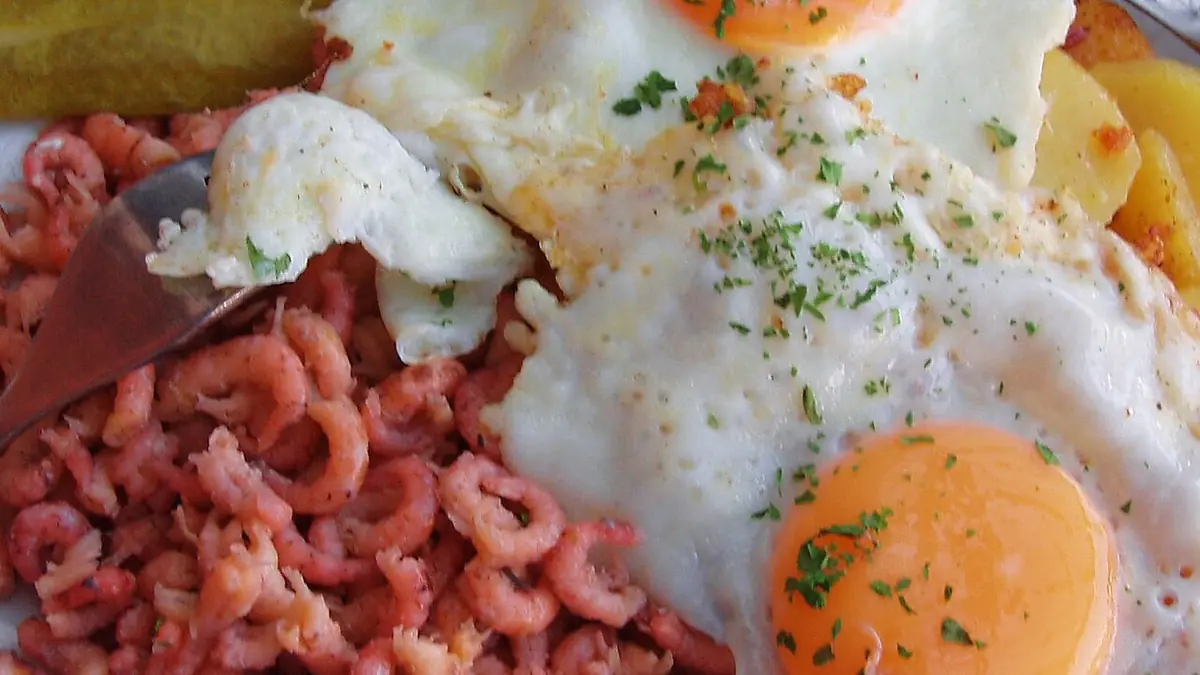
If your go-to dinner egg is fried, nutrition research on eggs suggests you’re leaving protein and brain-supportive nutrients on the table — and the fix takes about ten minutes.
Dietitian Belén Serena recommends a simple swap: hard-boiled eggs stuffed with shrimp and extra virgin olive oil instead of fried eggs with mayonnaise. Boil two eggs for one minute at a rolling boil, then 10 to 12 minutes covered off the heat before cooling under running water. Mash the yolks with about 80 grams of cooked shrimp, olive oil, and a handful of arugula or baby spinach. One large egg provides roughly 6.3 grams of protein and 72 calories; adding the shrimp brings the full plate to roughly 29 to 32 grams of protein, depending on exact portions, for well under 300 calories.
This boiled version swaps out the added cooking oil and mayonnaise of a fried version while roughly doubling the meal’s protein. Keeping the yolk also preserves choline, a nutrient tied to brain health that’s concentrated almost entirely in the yolk rather than the white — healthy adults can generally eat up to seven eggs a week as part of a balanced diet, though anyone managing diabetes or heart disease should get an individualized recommendation from their own clinician rather than follow a fixed weekly yolk count.
Why Protein Portion Size Matters at Dinner
Research on pre-sleep nutrition has tested roughly 40 grams of protein in one sitting for its effect on overnight muscle maintenance in older adults — a two-egg dinner alone falls well short of that amount, and even with shrimp added, this meal (around 29–32 grams) remains below the specific dose that’s been studied for that effect. Separately, a 2008 clinical trial found that adults on a calorie-reduced diet who ate an egg breakfast — not dinner — lost 65% more weight and had greater waist reduction over eight weeks than those eating a bagel breakfast of equal calories; that finding is about breakfast timing specifically and hasn’t been shown to apply the same way at dinner.
A Lower-Carbon Dinner, Too
Based on the widely cited Poore & Nemecek dataset, eggs generate roughly 4.67 kilograms of CO2-equivalent per 100 grams of protein produced, compared with farmed shrimp at about 26.87 kilograms and beef at roughly 99.48 kilograms per 100 grams of protein — meaning this swap cuts the meal’s carbon footprint well below a beef-based dinner, even accounting for the shrimp. (These figures are per 100 grams of protein, not per kilogram of food, which is an important distinction from a separate, lower set of per-kilogram-of-product figures in the same dataset.) Separately, a cohort study associated eating five or more eggs a week with a 27% lower risk of Alzheimer’s disease in older adults — an association, not a proven cause-and-effect relationship.
Why might boiled eggs be a better dinner choice than fried eggs?
Hard-boiling eggs in their shells adds no extra cooking fat, unlike frying. You still get the egg’s protein for about 72 calories per large egg, and pairing two eggs with shrimp brings a dinner plate to roughly 30 grams of protein — a meaningful amount for a meal under 300 calories.
Rotate your dinner eggs through a few versions during the week — shrimp and olive oil, canned tuna and Greek yogurt, or hummus and whole-grain toast — and keep boiled eggs refrigerated for up to seven days, per USDA food-safety guidance.