 Sunita Somvanshi
Durga Tekdi Tree Felling: What PCMC’s Water Tank Notice Actually Means
Paper strips pasted directly onto tree trunks on Durga Tekdi in Nigdi started circulating on social media this week, alongside viral video claims that hundreds of trees had already been cut and that the public hearing was about to be cancelled. If you walk on Durga Tekdi, live in Nigdi Pradhikaran, or have been following those reels — here is what the notices actually say, where the numbers come from, and what your legal options are before December.
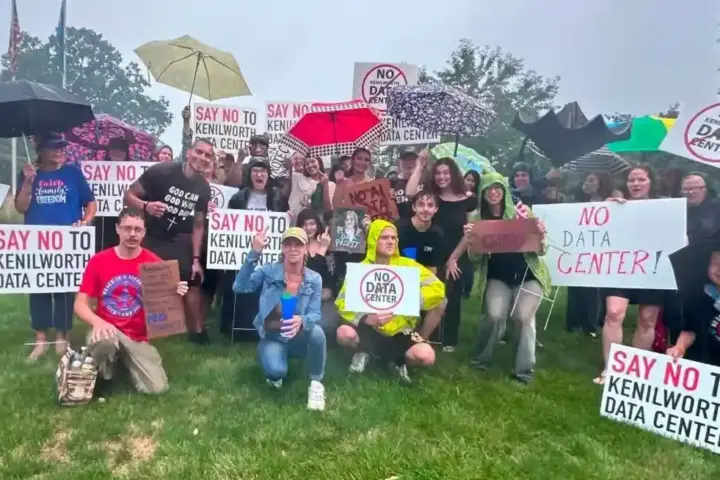
The Pimpri-Chinchwad Municipal Corporation’s Water Supply Department has proposed an underground water reservoir and distribution pipeline network across roughly three acres of Durga Tekdi, also known as Durgadevi Park. To build it, the PCMC Tree Authority issued formal public notices — the strips on the trunks — marking approximately 227 mature trees for felling or transplantation. On the morning of 26 November 2026, morning walkers, senior citizens, and civic activist Maruti Bhapkar responded by physically hugging the trees in a Chipko-style protest between 8:00 AM and 10:00 AM. Protesters are demanding the corporation relocate the reservoir to two available non-forested sites nearby: the defunct water park plot or the boundary of the waste-to-energy project.
If the Pimpri-Chinchwad Municipal Corporation approves the reservoir on Durga Tekdi without altering the project layout, more than 227 mature trees face felling or transplantation — a technique that independent urban audits show suffers severe mortality rates. Under Section 8 of the Maharashtra (Urban Areas) Protection and Preservation of Trees Act, 1975, citizens who lodge formal objections possess an enforceable legal right to a public hearing before permissions are finalized. Missing this statutory objection window permanently forfeits residents’ primary legal mechanism to compel the civic body toward alternative, non-forested project sites.
Transplantation Claims vs. Field Survival
The viral figures circulating — 708 trees, 252 cut, 456 transplanted, 69 applicants — are real numbers, but they do not describe what is happening on Durga Tekdi right now. Activists cite PCMC Tree Authority records from September to November 2021, covering 69 separate applications across PCMC limits, to argue that the corporation has no verifiable survival audit proving its transplanted trees lived. The current water reservoir proposal targets 227 trees on this hill, not 708. Conflating the two makes it harder for residents to track what is actually at stake.
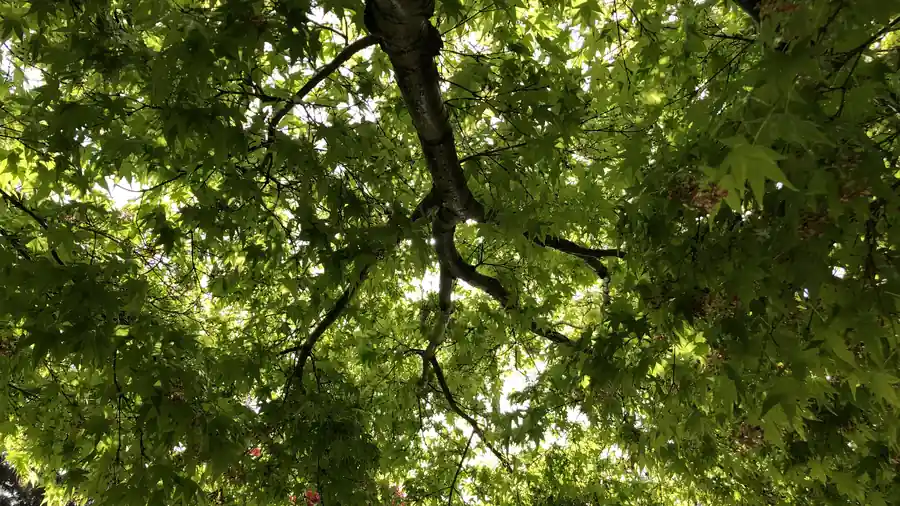
On the ecology side, Durga Tekdi spans over 75 hectares and holds more than 160,000 trees developed since the 1980s — it functions as the primary green buffer and air quality anchor for the Nigdi and Pimpri-Chinchwad areas. PCMC’s own compensatory plantation regulations require five new saplings for every felled or transplanted tree, plus a security deposit of ₹10,000 per tree held for three years, refunded only after verified survival. That deposit mechanism is telling: it exists precisely because mature urban tree transplantation routinely fails. Independent ecological surveys across Pune record survival rates of under 30 to 40 percent for relocated mature trees, with activists arguing field survival drops far lower without intensive root care and irrigation in the months after the move. The five-to-one sapling ratio addresses canopy in the distant future; it does nothing for the soil stability and microclimate that mature trees currently provide on the hill slope.
PCMC’s requirement that applicants deposit ₹10,000 per tree for a mandatory three-year survival audit is the civic body’s own quiet acknowledgment of how often transplantation fails. When a government regulation builds in a three-year insurance window, it is not expressing confidence in the outcome — it is managing the expectation that a large share of relocated trees will not survive. That is precisely why the public hearing process exists: not as a formality, but as the one mechanism where citizens can require the planning authority to justify why a non-forested alternative was not used instead.
Residents concerned about similar cases elsewhere in India can find useful context in how statutory environmental targets that need contextual verification routinely look stronger on paper than in practice, and in the documented difficulties of mature tree relocation projects even when developers commit resources to them.
Can the PCMC Tree Authority cancel or postpone a scheduled public hearing?
No. Under Section 8 of the Maharashtra (Urban Areas) Protection and Preservation of Trees Act, 1975, once citizens file formal objections within the statutory seven-day notice window, the Tree Authority is legally obligated to hold a public hearing before any felling or transplantation permissions are granted. Bombay High Court rulings — including the judgment in Abhijeet Mohan Anturkar v. Tree Authority, Pune Municipal Corporation — have held that public notices cannot be vague or perfunctory and that consultation is a non-discretionary legal right. Any postponement requires fresh public notification; granting permissions without conducting the hearing renders those permissions legally invalid.
How many trees are actually being marked on Durga Tekdi?
PCMC’s Tree Authority notices mark approximately 227 mature trees across roughly three acres for the proposed underground water reservoir. Some early activist estimates put the total as high as 272 when adjacent supply line infrastructure is included. The figure of 708 trees frequently cited in social media reels comes from a 2021 PCMC-wide audit across 69 separate applications — it is historical context, not the current notice count.
What is the success rate of transplanted trees in Pune and PCMC?
PCMC does not publish a verified post-transplantation survival audit. Independent ecological surveys across Pune report that mature urban trees — those with established root systems — survive relocation at rates of 30 to 40 percent under good conditions. Activists contend the real field figure is lower without sustained post-operative irrigation and root care. PCMC’s own three-year security deposit requirement implicitly reflects this uncertainty.
The objection at Durga Tekdi is not a campaign against drinking water infrastructure. Residents and activists are asking why a three-acre water reservoir needs to sit on an urban forest hillside when two non-forested alternative sites — the defunct water park and the waste-to-energy project boundary — are within the same precinct. The PCMC Tree Authority public hearing is expected in December 2026. Citizens with filed objections have a legal right to attend and present alternatives on the record. Check back here after the hearing date is confirmed for the municipal administration’s formal response on the alternative sites.