 Sunita Somvanshi
Electricity-Related CO₂ From 403 U.S. Data Centers vs. Denmark
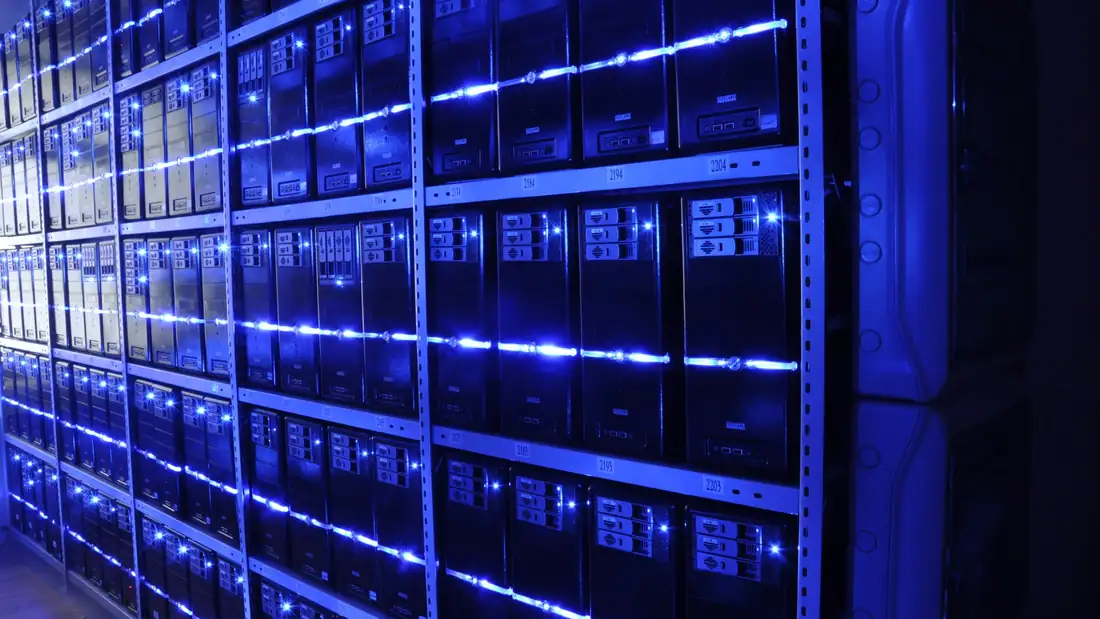
If a data center is proposed near you, where it gets its electricity helps determine the carbon footprint of its power use. Harvard-led researchers estimated that electricity use at 403 U.S. hyperscale data centers was associated with 25.7 million metric tons of carbon dioxide (CO₂) from May 2024 through April 2025 under their central scenario. That’s comparable in scale to Denmark’s annual fossil CO₂ emissions.
Gianluca Guidi, Francesca Dominici and colleagues published the study in Nature Sustainability on November 16, 2026. The team examined hyperscale data centers, large facilities built to handle computing at scale, that operated during the study period. The central estimate of electricity consumption was 81.8 terawatt-hours, about 1.8% of U.S. electricity use during that period. Fossil fuels accounted for about 54% of the electricity generation the model attributed to those sites.
With different assumptions about how heavily the facilities ran, the CO₂ estimate ranged from 21.3 to 31.0 million metric tons. The researchers modeled electricity demand and applied annual average CO₂ rates from the U.S. Environmental Protection Agency’s eGRID2023 data for each grid balancing authority. Those grid averages show the generation mix and emissions attributed to the facilities’ electricity use. The estimate covers power generation and excludes direct emissions from on-site fuel use and emissions from construction. In its study summary, Harvard said the central CO₂ estimate was two to three times an earlier estimate for 2018.
If your county is weighing a hyperscale data center, ask the developer and utility how much electricity it would use. Ask where the power would come from and who would pay for new grid equipment. Ask for the cooling system’s projected water use, too. Check available project filings and ask the developer and utility for figures the filings leave open.
What the Antalya AI Pledge Asks of Governments and Other Endorsers
Türkiye’s COP31 Presidency and the International Telecommunication Union formally launched the Antalya Artificial Intelligence Pledge on November 16, 2026, as part of COP31’s Action Agenda. The pledge says its objectives are “voluntary and non-prescriptive” and “create no new obligations.” Endorsers choose at least one voluntary commitment from the annex that applies to them. Options include setting a target for the share of AI infrastructure operations powered by zero- and low-emission energy and adopting measures to improve cooling and water efficiency.
The pledge text and annexes encourage environmental reporting and water efficiency through voluntary commitments. The pledge sets no project-level requirement to publish projected cooling-water demand. In an October 27 statement on the released text, the World Resources Institute called for stronger accountability, community participation and safeguards for water and air quality.
The regional grids averaged 314 grams of CO₂ per kilowatt-hour when weighted by the sample’s modeled electricity use. The comparable U.S. grid average was 348 grams per kilowatt-hour. Total emissions were still substantial because the centers used so much electricity. For a proposed facility, a grid request in megawatts tells you how much power it wants available at once. Annual electricity use depends on how much power it draws over time.
How does electricity-related CO₂ from the 403 data centers compare with Denmark’s fossil CO₂ emissions? The central estimate of 25.7 million metric tons for May 2024 through April 2025 exceeded Denmark’s 23.67 million metric tons of fossil CO₂ in calendar year 2024, according to the 2026 IEA–EDGAR release. The study’s 21.3–31.0 million metric ton range spans Denmark’s figure. Separately, Denmark’s national inventory reported 36.75 million metric tons of CO₂ equivalent in 2024. That broader measure includes other greenhouse gases and excludes land use, land-use change and forestry.
Local electricity and water questions still come down to the project’s own figures. The Antalya pledge invites signatories to take stock of collective progress at each UN climate conference through 2030, starting at COP32.