 Sunita Somvanshi
Alberta Data Centre 74.9 MW Requests: What the 75 MW Grid Threshold Means for Power Bills
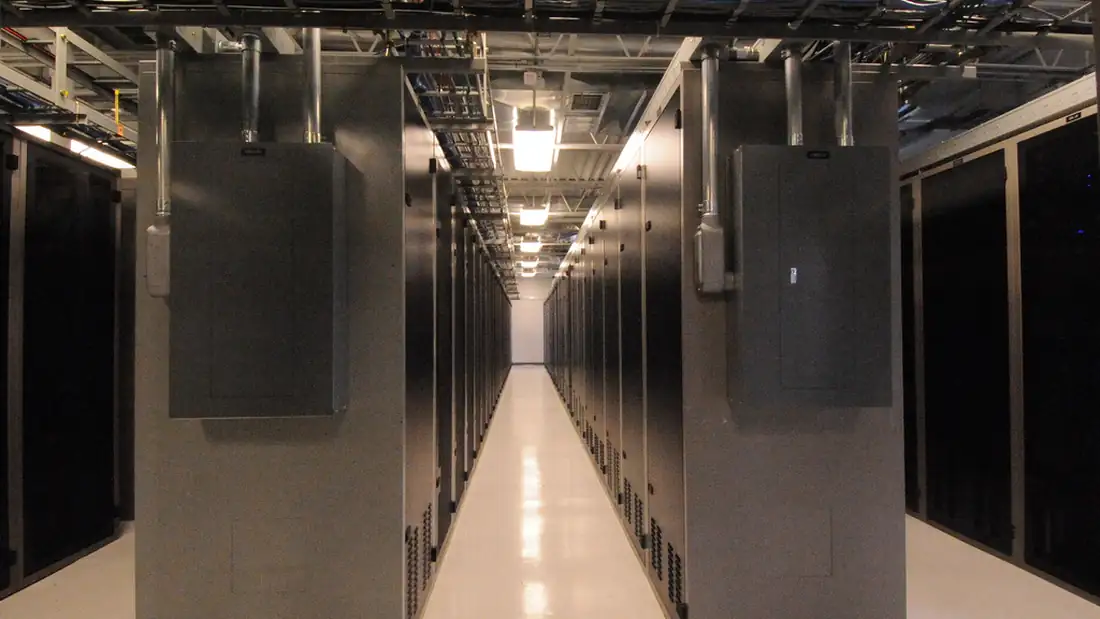
If you pay a floating electricity rate in Alberta, new data centres could affect what you pay for power once they start drawing from the grid. Alberta data centre requests for 74.9 MW sit just below the standard threshold for maximum demand directly from the province’s transmission system under the Data Centre Regulation. A request shows how much power a developer is seeking. The effect on bills depends on how much power the projects draw from the grid, when they draw it, what supply is available and how the retail contract is priced.
In its Nov. 19, 2026 investigation, Canada’s National Observer reported 20 requests below 75 megawatts, with 11 seeking exactly 74.9 MW. Together, the 20 requests represented more than 1,200 MW of requested capacity. A megawatt measures how much power a facility can draw at a given moment. Actual electricity use depends on how much power the facility draws over time.
On Nov. 23, Edmonton-South West MLA Nathan Ip made a member’s statement in Alberta’s legislature about government policy on proposed AI data centres. The Alberta Electric System Operator, or AESO, lists projects after accepting their requests for grid service. Projects can still be under review at that point. The operator assesses whether and how each facility can connect.
If several data centres draw power around the clock and supply fails to keep pace, Alberta may need to call on higher-priced generators. In Alberta’s wholesale market, a higher-priced offer can raise the price for a given minute. The hourly pool price averages those minute-by-minute prices. A higher pool price can raise the energy charge on floating contracts. The approved energy rate under Alberta’s default Rate of Last Resort generally stays fixed for two years, subject to regulatory review. Household bills can still vary with electricity use and other charges.
How Alberta’s 75 MW threshold applies to 74.9 MW data centre requests
Alberta’s Data Centre Regulation generally classifies a facility as large if its maximum demand directly from the transmission system is 75 MW or more. The AESO can set a lower threshold if it determines that one is needed for safe, reliable and economic operation or to maintain system reliability and adequacy. Bill 8 enabled the framework. The regulation directs the AESO to prioritize large data centres that bring their own generation. A separate levy introduced through Bill 12 can reach 2 per cent of the value of computing equipment at qualifying facilities. Alberta’s 2026 amendments clarify that the levy rate depends on actual electricity consumption from the broader grid.
Section 3 lets the AESO treat multiple centres as one when it determines that they are or will be physically or operationally integrated and located on the same or adjacent parcels, and at least one further condition applies. One example is when the same person or an affiliate of that person receives system access service for the centres. Separate queue entries identify separate requests. Project names and locations alone leave the relationships between applicants unresolved.
The power source matters for emissions, too. If gas plants run more often to meet added demand, they burn more fuel and release more carbon dioxide. Dedicated gas generation also produces emissions. Matching output to demand is a practical issue when adding wind and solar power to the grid. In Spartanburg County, South Carolina, projected water demand at the Valara data centre illustrates how cooling can add to a local utility’s expected demand.
The requests below 75 MW reported by Canada’s National Observer together exceed the 1,200 MW the AESO set aside for its first round of large-load connections through 2028. The AESO allocated all 1,200 MW to two projects, with 970 MW for GLDC Load and 230 MW for Keephills Data Centre Phase I. In announcing the limit, AESO chief executive Aaron Engen said, “we established a limit that preserves system integrity while enabling timely data centre development in Alberta.”
Why are data centres in Alberta requesting 74.9 MW?
A request for 74.9 MW sits one-tenth of a megawatt below Alberta’s usual threshold for large data centres. That can affect which connection rules apply. The number on a request leaves the developer’s reasons open. The AESO can apply a lower threshold or assess qualifying facilities together.
Will AI data centres increase household electricity bills in Alberta?
They could put upward pressure on wholesale prices if added demand outpaces available supply. Households on floating contracts are more exposed to those changes. The effect depends on how much power the centres actually draw, when they use it and which generators supply it.
One question is whether the AESO will assess together any of the neighbouring projects east of Calgary identified in the Observer’s investigation. Projects that proceed still have to go through the connection process. For households watching their bills, the figures that will matter are how much demand the AESO clears to connect and how that demand will be supplied.