 Sunita Somvanshi
What Is the BAAJA Bill? Fact-Checking Viral Claims on Energy, Data Centers, and Lawsuits
Millions of people have watched reels urging them to call their senators to stop a bill called “BAJA” before a November 16 deadline. The bill is real. The name is slightly wrong—it’s BAAJA—and both the deadline and the target chamber are out of date. The U.S. Senate already passed it. Here is what the actual over-400-page legislation does and doesn’t do, based on its statutory text.
What the BAAJA Permitting Bill Actually Is
S. 5653 / H.R. 2347, the Bipartisan American Affordability and Jobs Act of 2026, cleared the U.S. Senate on November 19, 2026, by a vote of 62–33—a margin wide enough to signal genuine cross-party support. Both bill numbers appear because S. 5653 was merged onto H.R. 2347 as a Senate substitute amendment, the standard procedural vehicle for House-originated legislation. The bill was co-authored by four senators spanning the political spectrum: Shelley Moore Capito (R-WV), Sheldon Whitehouse (D-RI), Mike Lee (R-UT), and Martin Heinrich (D-NM). The White House issued a formal Statement of Administration Policy backing it, citing grid reliability, domestic job creation, and lower energy costs.
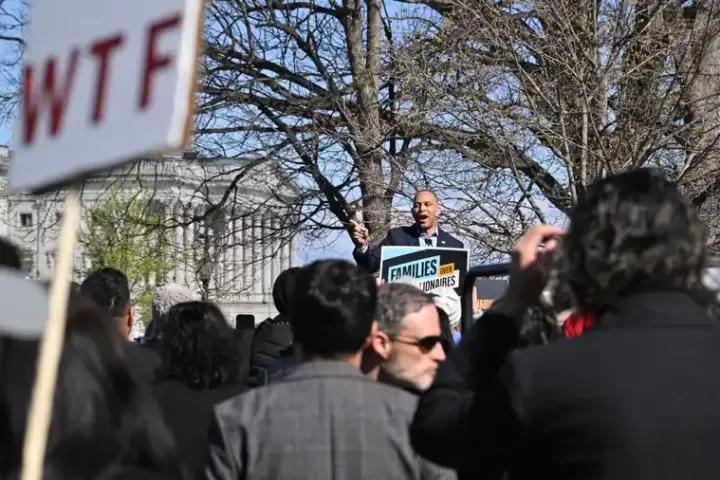
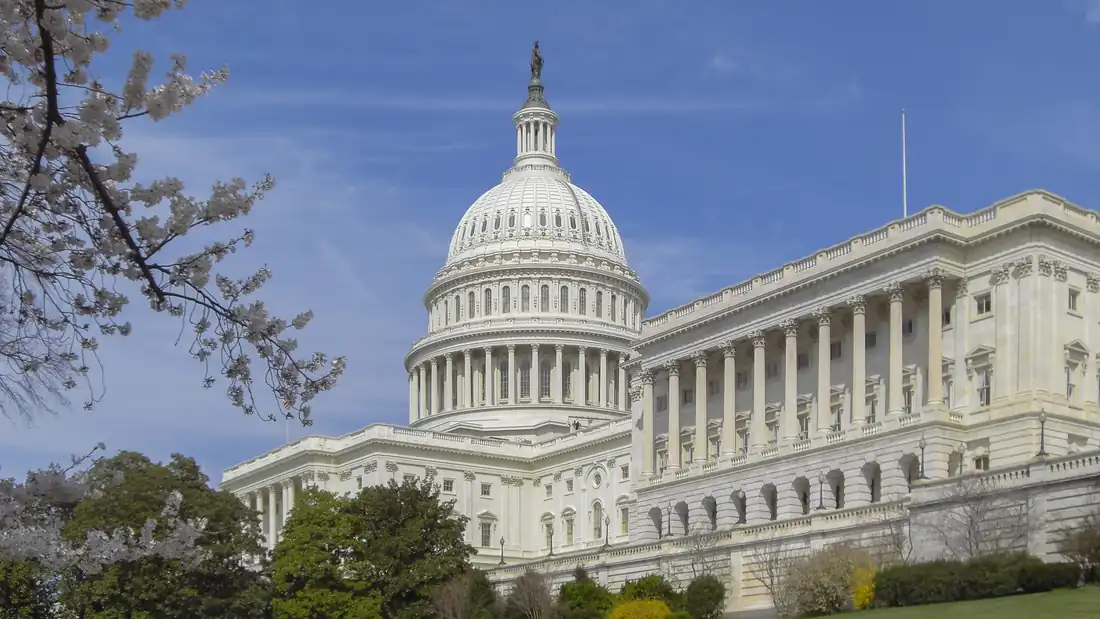
The legislation now sits in the U.S. House of Representatives, where it will be debated during the post-Thanksgiving lame-duck session. Calling a senator about this bill accomplishes nothing at this stage. The pressure point, for anyone who wants to influence the outcome, is House members.
Supporters include solar, wind, and battery storage trade associations, construction labor unions, and federal energy planners who say hundreds of gigawatts of approved clean energy projects are stuck in interconnection queues. Critics include Earthjustice, NRDC, the Sierra Club, more than 120 climate scientists and researchers, and progressive House Democrats. The TerraPower Natrium reactor approval earlier this year showed how long federal energy permitting can take under existing rules—BAAJA’s supporters say that speed problem runs across every project type, not just nuclear.
If the House passes BAAJA into law, communities lose their primary legal tool to halt construction while courts review industrial projects. Under Section 1110, even if a federal court agrees that an agency broke environmental laws approving a pipeline, mine, or power line, judges cannot halt construction while paperwork is corrected. Furthermore, while the bill forces massive data centers to pay for electric grid upgrades, it leaves on-site gas generators unregulated—meaning tech hubs can bypass grid queues by burning fossil fuels in nearby neighborhoods.
What the Bill’s Text Actually Says on Six Viral Claims
Claim: “You can sue, win, and developers can still build.”
This one is accurate. Section 1110 of BAAJA eliminates what lawyers call “equitable vacatur”—the judge’s traditional power to cancel a permit when an agency has broken environmental law. Instead, the statute mandates “remand without vacatur” as the default remedy for violations of the National Environmental Policy Act (NEPA) and the National Historic Preservation Act (NHPA). The statutory text states explicitly that upon remand, the covered authorization “may, notwithstanding that remand, be carried out.” The agency gets 180 days to fix its paperwork. Construction does not stop. There is also a 150-day window from the time a project is approved to file a legal challenge, after which suits are barred. Under current law, federal judges can and regularly do halt construction while agencies correct their errors; under BAAJA, that power is gone.
Claim: “It strips Indigenous protest rights and destroys sacred sites.”
Partly distorted. First Amendment protest rights are not affected by any section of this bill—that claim is legally incorrect. What the bill does do is compress the federal consultation process under Section 106 of the National Historic Preservation Act. Tribal advocates, including the National Congress of American Indians and the Native American Rights Fund, characterize the new consultation window as effectively 60–90 days, regardless of how complex or contested the site review is. Those organizations have analyzed the bill and concluded that by simultaneously removing the ability to seek preliminary injunctions, the compressed timeline leaves tribal nations with no functional mechanism to pause bulldozers on sacred landscapes while litigation proceeds. The right to sue survives. The ability to win a temporary halt does not. For many sacred sites, that distinction is the difference between preservation and irreversible loss. This context connects to international standards the Nairobi Declaration on Indigenous-led conservation addressed—standards the BAAJA tribal consultation timelines fall well short of.
Claim: “It lets data centers install massive gas generators and pollute communities.”
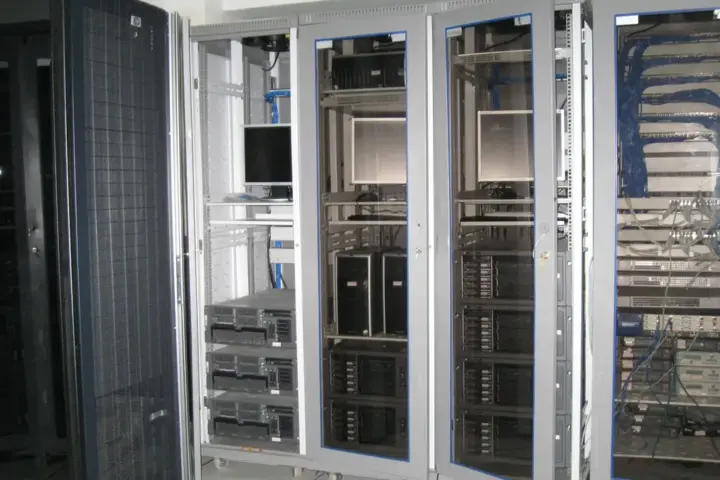
Nuanced reality, not a clean yes or no. Section 2107 directs the Federal Energy Regulatory Commission (FERC) to enforce what is called “and” pricing for data centers—referred to in the bill as “computational loads” over 20 megawatts. This means tech companies connecting to the grid must pay both the embedded system costs everyone shares and the full cost of any new transmission capacity their load requires. That part protects ratepayers from subsidizing data center power line builds. What Section 2107 does not address is off-grid generation. A tech company can install modular natural gas turbines on private land, operate them behind the utility meter, and bypass grid interconnection queues entirely. BAAJA contains zero restrictions on that path. Local air quality, regional gas pricing, and neighbors living near those turbines get no protection from this bill. Those same behind-the-meter installations would also bypass the state and tribal water quality certification reviews that apply to grid-connected projects under the Clean Water Act—reviews that BAAJA separately compresses, as described below.
Claim: “It expands unlimited mining on public lands.”
Accurate. Section 2215 overturns a judicial ruling known as the Rosemont decision. Under that precedent, courts had placed limits on how many 5-acre “mill site” claims a mining operator could stake on federal public land for waste rock disposal, tailings piles, and processing facilities. BAAJA removes those limits. As long as a mining company’s approved plan of operations deems additional mill sites “reasonably necessary,” operators can stake an uncapped number of them on public lands. The practical effect is a larger physical footprint for mine waste across Western federal lands. The scale of federal land involved in energy and industrial decisions makes this provision one of the quieter but more geographically consequential parts of the bill.
Claim: “It locks in oil and gas leases.”
Accurate as a statutory matter. Section 1401 prohibits federal agencies from revoking, altering, or suspending validly issued permits and leases for non-federally funded infrastructure unless specific statutory conditions are met. Combined with Section 1110’s bar on vacatur, even if a court finds that an offshore or onshore oil and gas leasing review violated NEPA, the court cannot cancel the lease during the 180-day remand period. The legal result is that existing energy authorizations—including oil and gas leases—are substantially insulated from judicial cancellation while agencies make retroactive paperwork corrections.
Claim: “This is a clean energy bill in disguise / This is Project 2025.”
Neither is fully accurate. BAAJA is not an official Heritage Foundation document, and clean energy developers including solar and wind trade groups actively backed it because it would accelerate interstate high-voltage transmission approvals and create geothermal categorical exclusions. Those are real clean energy provisions with real support from real renewable energy companies. At the same time, the bill’s wholesale rollbacks of NEPA judicial remedies, its elimination of preliminary injunctions, and the expansion of mining footprints match long-standing conservative deregulatory policy goals that predate and parallel Project 2025’s energy chapter. It is not accurate to call it a pure clean energy bill. It is not accurate to call it a Project 2025 proxy. It is accurately described as a bill that trades clean energy infrastructure gains against environmental law enforcement losses—and reasonable people disagree about whether that trade is worth making.
The bill’s most consequential shift does not appear in any viral reel: Section 1110’s “remand without vacatur” language rewrites the administrative law relationship between federal courts and federal agencies. For decades, judges halting irreversible harm while agencies corrected their environmental reviews was the system’s safety valve. BAAJA closes that valve. Agencies get 180 days to retroactively fix unlawful environmental reviews while construction continues on the project those reviews were supposed to evaluate. The legal asymmetry is striking: a court can agree an agency acted unlawfully and order a fix, but the law explicitly forbids the court from stopping any physical consequences of that unlawful act.
A related but underreported provision tightens the Clean Water Act Section 401 framework. BAAJA compresses state and tribal water quality certification reviews to a strict one-year deadline, limits the scope of those reviews to point-source water quality discharges only, imposes a clear-and-convincing-evidence standard on any agency or state seeking to deny a certification, and extends general nationwide permits from five to ten years. The practical effect is to narrow one of the remaining independent legal pathways—separate from NEPA and NHPA—through which states and tribes could previously slow or halt federally permitted projects on water quality grounds.
Frequently Asked Questions
Can a developer keep building if you sue and win under BAAJA?
Yes. Under Section 1110, BAAJA establishes “remand without vacatur” as the mandatory default remedy for NEPA and NHPA violations. If a judge finds an environmental review unlawful, the court cannot cancel the permit or halt construction. The law explicitly permits building to continue while the agency corrects its paperwork within 180 days.
What is the BAAJA bill and did the Senate pass it?
BAAJA is the Bipartisan American Affordability and Jobs Act, S. 5653 / H.R. 2347. The U.S. Senate passed it on November 19, 2026, by a 62–33 vote. It now awaits a House vote during the December 2026 lame-duck session. It rewrites federal permitting timelines for energy projects, data centers, tribal consultation, mining, and water quality certification.
How does BAAJA affect data centers and electricity bills?
Section 2107 requires data centers over 20 MW to pay the full cost of any new transmission infrastructure they need, shielding other ratepayers from those bills. It does not restrict tech companies from bypassing the grid entirely by installing on-site natural gas generators on private land—a path that BAAJA leaves completely unregulated at the federal level.
The House vote on H.R. 2347 is expected before the lame-duck session closes in December 2026. The bill will either pass to the President for signature, return to the Senate with amendments, or fail on the floor. Any of those outcomes will change the legal landscape for permitting, tribal consultation, mining on public lands, and water quality reviews. Check back here for updates as the House vote is scheduled.