 Sonali Tiwary
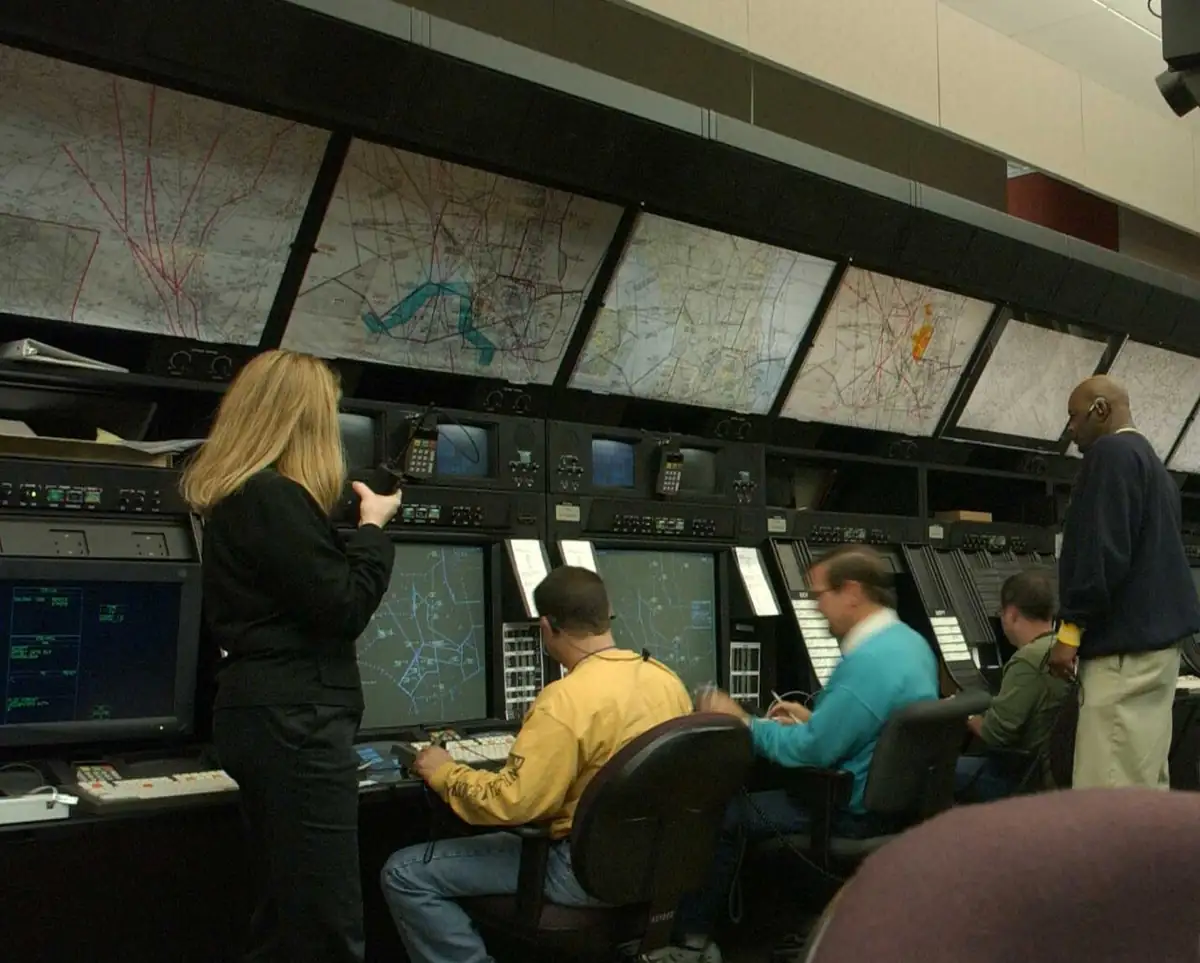
If your flight sat on the ground on November 13, the cause was a problem in the FAA’s network. It reached multiple Air Route Traffic Control Centers.
Now the Transportation Department and the Federal Aviation Administration want Congress to approve $50.1 billion in air traffic control funding. The request also covers airports and terminals.
The request was sent on November 17, 2026. Transportation Secretary Sean Duffy and FAA Administrator Bryan Bedford wrote to appropriators in the House and Senate. White House Office of Management and Budget Director Russ Vought signed it with them. The department calls the overhaul the Brand New Air Traffic Control System, or BNATCS.
The request came days after a nationwide ground stop on November 13 that lasted more than four hours. It began around 3:30 p.m. ET, and air traffic resumed at 8:15 p.m., according to the FAA.
The agency said data began flooding its network at 1,000 connection attempts every four to five seconds. That destabilized legacy equipment and disrupted aircraft communications and radar feeds.
Its initial investigation points to two possible sources of the flooding. One is a radar site in Amarillo, Texas. The other is a radio communications site in El Dorado, Arkansas.
Instability began at 17 of the FAA’s 22 Air Route Traffic Control Centers and spread to several terminal radar facilities. Operators canceled about 12,462 flights that day, including 9,082 by major airlines. Roughly 3,500 aircraft landed safely during the stop. The FAA and L3Harris, its network service provider, are still investigating the root cause.
The agency said it has no indication the outage was a cyberattack. It also said none of the upgraded towers went down, and that the disruption came from the legacy system rather than the modernization work.
For travelers, the practical effect is that the same equipment stays in service until Congress acts. The FAA has told passengers to check flight status and real-time airport updates at nasstatus.faa.gov. Modernization work already paid for continues in the meantime.
How the $50.1 billion would be spent
The request covers five categories. Digital architecture and resilient telecommunications would get $10.1 billion. Building five new consolidated Air Route Traffic Control Centers to replace the current 22 would get $10 billion.
USDOT says the last of those 22 centers was built in 1969. Building and improving up to 140 air traffic control towers would get $10 billion. Overhauling airport infrastructure would get $10 billion, and fully modernizing aging airport terminals would get another $10 billion.
USDOT says the $12.5 billion from the Working Families Tax Cut, passed in July 2025, is already funding upgrades. All of that money is allocated and on track to be fully implemented by the end of 2028. The department reports that 70% of copper telecommunications lines have been replaced with high-speed fiber, 5G wireless or low-earth-orbit connectivity.
It also lists 143 control towers with Surface Awareness Initiative technology, 469 converted radio sites and 224 IP Voice Switch systems. Five facilities are transitioning from floppy disks to a 21st century information system, the department says.
USDOT says Congress placed parameters on how the $12.5 billion can be spent. The department does not have the legal flexibility to move funds from one workstream to another.
Congress has not voted on the new request. Work funded by the $12.5 billion continues, and none of the $50.1 billion is available unless Congress approves it.