Sunita Somvanshi
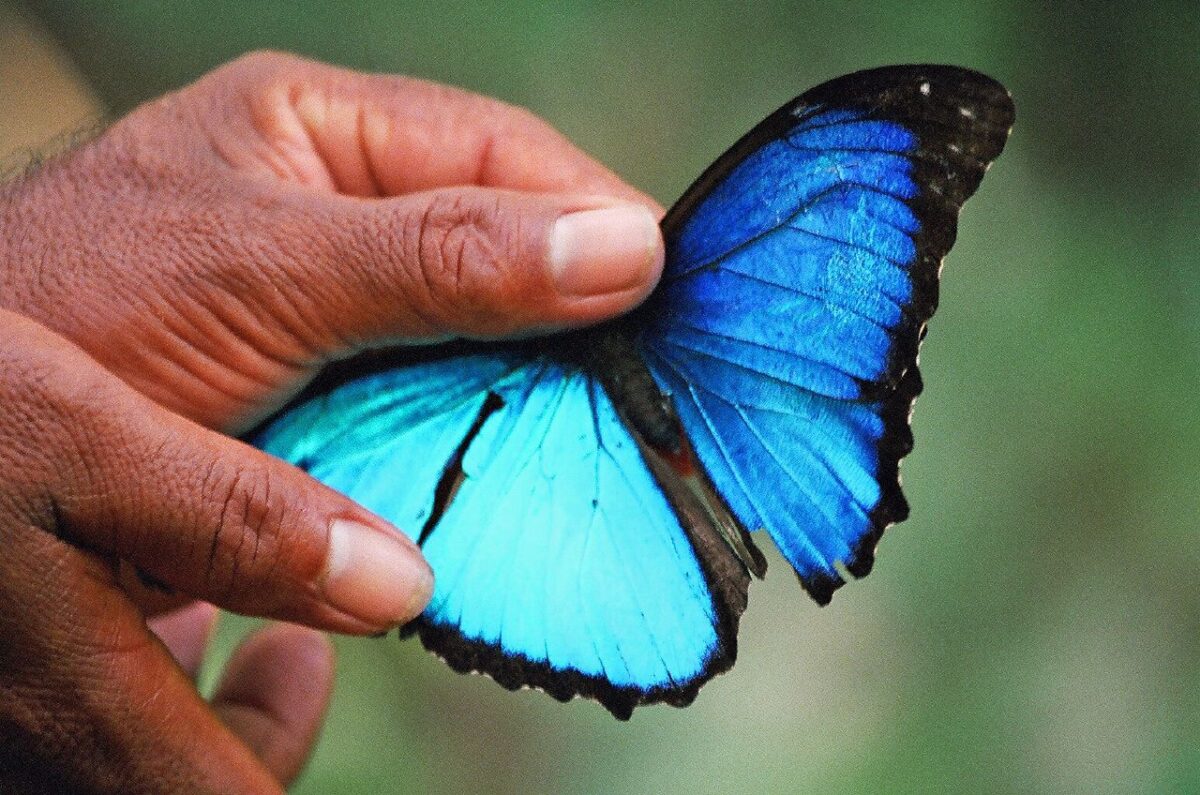
Deforestation Is Linked to Duller Butterfly Colours in Amazon Research — and Early Signs of a Similar Pattern in Brazilian Plantations
A 2020 peer-reviewed study of fruit-feeding butterflies in the Brazilian Amazon found that assemblages living in continuous primary forest and in older secondary forest were more colourful, on average, than those in small forest fragments and very young regrowth. The research, published in the journal Biodiversity and Conservation, is the main scientific evidence behind recent news coverage suggesting that forest loss may be dulling butterfly colour patterns in parts of the tropics.
What the 2020 Amazon Study Actually Measured
The study, led by Ricardo Luis Spaniol and colleagues, is titled “Discolouring the Amazon Rainforest: how deforestation is affecting butterfly coloration” (DOI: 10.1007/s10531-020-01999-3). The researchers sampled 220 individual fruit-feeding butterflies across 60 species in the Brazilian Amazon, comparing six habitat types that represent different stages and intensities of forest disturbance: continuous primary forest, three sizes of isolated forest fragments (1, 10 and 100 hectares), 30-year-old secondary forest, and very young, 3-year-old early-succession vegetation.
For each individual, the team quantified wing colour properties — hue, saturation, brightness, contrast, and overall colour diversity — using image analysis rather than subjective description. When these measurements were aggregated by habitat type, assemblages in continuous primary forest and in the older secondary forest showed greater colour diversity than those in the small fragments and the 3-year early-succession habitat. In other words, the disturbed and more recently cleared sites supported butterfly communities with a narrower range of wing colours, on average, compared with intact or long-recovered forest.
It is important to be precise about what this means. The study did not find that any individual butterfly changed colour over its lifetime, nor that butterflies in disturbed habitats are physically paler versions of the same animals found in intact forest. Instead, the pattern reflects differences between species assemblages: which species, with which colour traits, are present in a given habitat. A fragment with fewer colourful species, or a shift toward species with more muted wing patterns, produces a less colourful assemblage without any single butterfly altering its own pigmentation.
The study’s design also allows only correlational, not strictly causal, conclusions. Fragment size, forest age, and time since clearing are all associated with the colour patterns observed, but the paper does not establish deforestation as the sole mechanism driving every colour difference — other factors tied to fragment isolation, microclimate, or species turnover could also play a role. The basic metadata for the paper, including authorship and journal details, is also available through the Crossref record.
A Separate, Preliminary Signal from Espírito Santo
In October 2025, the Guardian reported on newer, as-yet-unpublished field observations from Brazil’s Espírito Santo state, describing work that compares butterfly communities in natural forest with those found in eucalyptus plantations. According to the Guardian article, researchers working in this region have observed a similar tendency toward less colourful butterfly communities in plantation settings compared with intact forest.
This Espírito Santo work is distinct from the 2020 Amazon paper in several important ways. It has not yet gone through peer review or been published in a scientific journal, it concerns a different region of Brazil, and it compares natural forest against commercial eucalyptus plantations rather than the primary forest, fragments, and secondary-forest succession examined in the Amazon study. It should be treated as preliminary field observation rather than confirmed scientific findings, and its specific numbers and methods are not yet available for independent scrutiny the way the 2020 paper’s are.
What Can — and Can’t — Be Concluded
Together, the two sources point to a consistent question that researchers are investigating in more than one part of Brazil: whether forest disturbance and conversion are associated with reduced colour diversity among tropical butterfly communities. The published Amazon evidence supports this association within the specific fragments, forest ages, and species sampled in that study. The Espírito Santo observations suggest a related pattern may exist in plantation landscapes, but as unpublished preliminary work, those findings await formal peer review before they can be considered established science.
Neither source supports broader claims about individual animals losing colour over time or about tropical forests, landscapes, or the planet as a whole becoming less colourful. The evidence concerns measurable differences between butterfly assemblages in different habitat types, documented through standardized colour analysis in one published Amazon study and through early-stage fieldwork in Espírito Santo that has not yet been published.