 Rahul Somvanshi
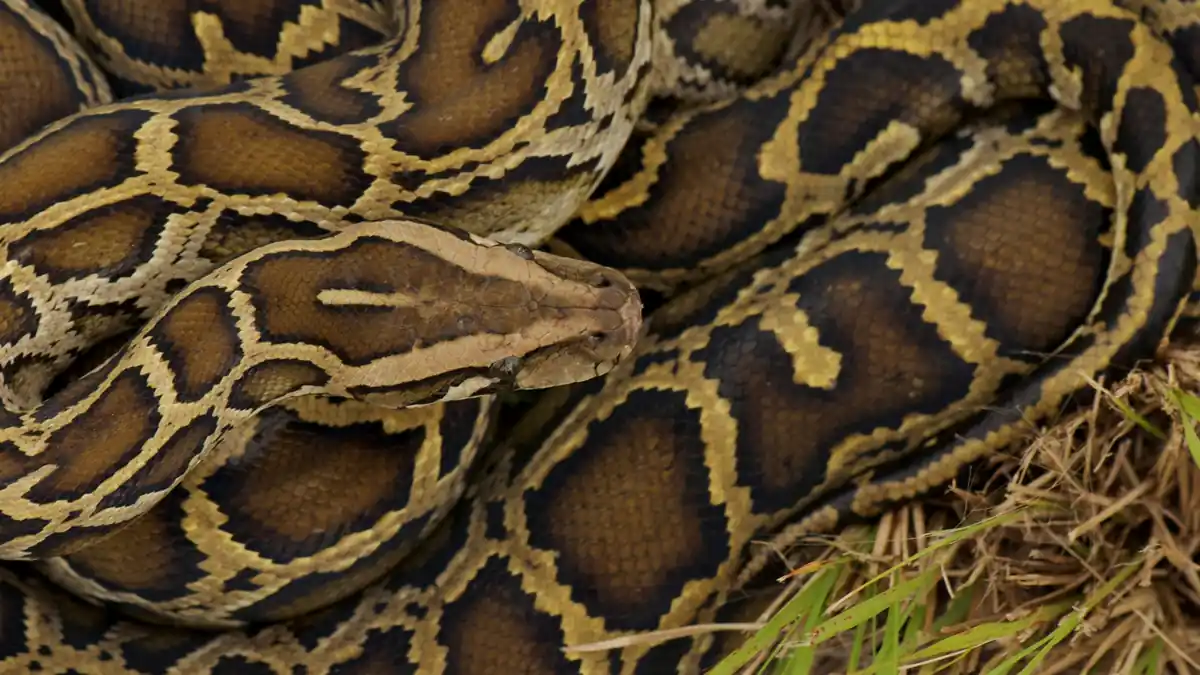
Florida wildlife officials and federal researchers say that removing large female Burmese pythons from the Everglades has more conservation impact than capturing any number of smaller males. The 2026 Florida Python Challenge demonstrated the gap: 907 participants removed 280 invasive snakes across 10 days, with top competitor Tom Rahill logging a single-competition record of 96 snakes. Biologists say the raw count matters far less than the size and sex of each snake removed.
The Florida Everglades python challenge 2026 results confirmed what prior field research had predicted. Most snakes caught in competitive hunting events are smaller males or juveniles found near canal roads, where pythons are easiest to spot from vehicles. Female Burmese pythons in South Florida reach up to 16 feet or more in length and can weigh over 150 pounds. A single mature female can carry up to 100 viable eggs per clutch and nests deep in sawgrass and dense mangrove habitat inaccessible to most hunters. U.S. Geological Survey research has documented local declines of more than 90% in some mesomammal populations in the Greater Everglades, in research linking those declines to the presence of invasive Burmese pythons.
For conservationists and outdoor enthusiasts in Florida, this research shifts the priority from raw body counts to targeted ecological management. If you encounter a non-native reptile in South Florida, reporting it to the FWC IveGot1 hotline allows biologists to track and intercept mature breeding females rather than just record opportunistic roadside catches. Targeted removals protect remaining populations of native deer, wading birds, and endangered marsh rabbits.
The “Judas Snake” Technique and Reproductive Ecology
Wildlife biologists use a method called the Judas snake approach to locate breeding females in remote areas. Researchers implant a radio transmitter in a captured male python, then release and track him remotely. Adult males seek out females during breeding season, leading scientists toward large reproductive animals that would otherwise be nearly impossible to find.
Competition-style events create public engagement and remove some animals. Targeted female-focused removal changes the long-term population trajectory. Population modeling shows that removing reproductive females has an outsized impact on future population growth compared to removing equivalent numbers of smaller males.
Large female Burmese pythons play a central role in the species’ invasive expansion in Florida. A single mature female over 12 feet can produce 50 to 100 eggs per clutch and hunts large native wildlife, including deer and wading birds, causing far greater ecological damage per animal than smaller males.
More than 19,000 Burmese pythons have been removed by FWC contractors since 2017. The invasive species threats database tracks ongoing eradication programs across the U.S., and the Everglades restoration milestones overview covers longer-term habitat recovery progress.