 Govind Tekale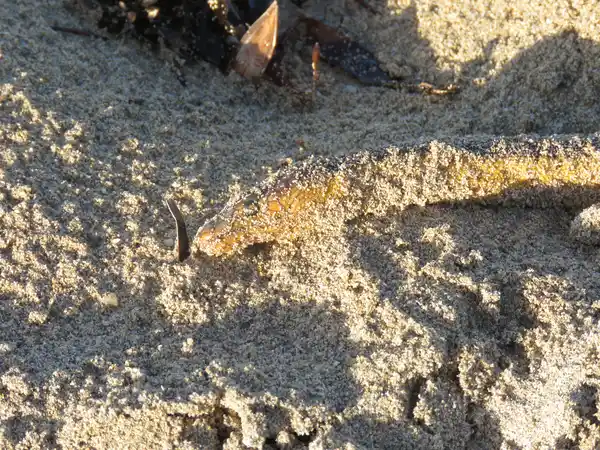
A yellow-bellied sea snake washed up at Crystal Cove in Orange County, California — the first confirmed sighting of the species in the state since 2018. The encounter was accidental: Jackie Aguilar, walking on the beach on the night of September 11, used a palm frond to guide the snake back into the water, and only later discovered what she had been handling.
Yellow-bellied sea snakes (Hydrophis platurus) are one of the most widely distributed sea snake species in the world, found throughout the Indo-Pacific. They are also highly venomous. But the detail that matters most if you’re a Southern California beachgoer: experts say they generally pose no danger to people who leave them alone.
What Happened at Crystal Cove
Aguilar used a palm frond to guide the snake back into the ocean before she knew what species it was. The encounter ended without incident. Video of the snake circulated on social media after the fact.
The Los Angeles Times confirmed the sighting was the first in California since 2018, when two separate Orange County sightings were recorded. Outside those years, documented California sightings are rare enough to be individually newsworthy.
Why It’s Appearing Here
Yellow-bellied sea snakes don’t normally reach California’s cooler Pacific waters in significant numbers. Some marine biologists connect rare tropical species sightings on Southern California beaches to periods of unusually warm ocean surface temperatures — conditions that can push warm-water species further north and east than their typical range.
It would be an overreach to call this single sighting proof of climate-driven range expansion. It is accurate to say that ecologists note this pattern in Southern California encounters with tropical marine species and that ocean temperature anomalies in the Pacific are part of what gets studied when such sightings occur.
What to Do If You See One
Sea snakes that wash ashore are typically disoriented, not aggressive. However:
- Do not handle the snake. Yellow-bellied sea snakes are venomous, and a disoriented or distressed animal can bite if grabbed.
- Keep distance and keep others back, particularly children and dogs.
- Alert lifeguards or local animal control if the snake is on a populated beach.
- Do not return it to the water yourself. Without knowing whether the snake is sick, injured, or simply temporarily stranded, returning it may not be the right intervention.
Q: Is the yellow-bellied sea snake dangerous?
Yellow-bellied sea snakes are highly venomous but are not considered a danger to people who leave them alone. The California sightings have not involved bites. Experts advise against handling any unfamiliar or stranded sea snake — alert lifeguards or animal control instead.
Crystal Cove’s sighting is notable precisely because it’s rare. If you’re a regular beach-goer in Southern California, the chances of encountering one remain very low. If you do, the safest response is distance and a call to authorities.
Sources: Los Angeles Times; People.com