 Rahul Somvanshi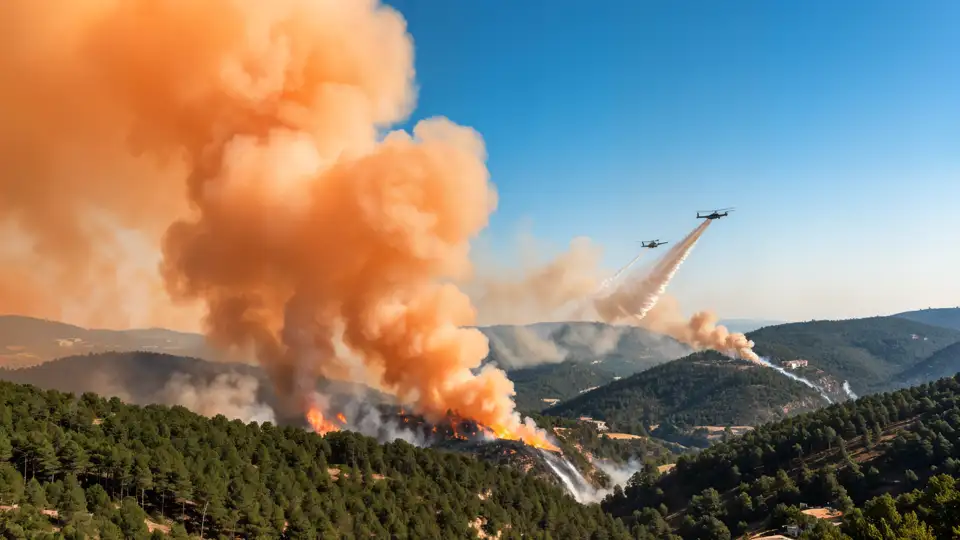
In July 2026, Spain and France faced their fiercest wildfire season in recent memory, with massive blazes consuming hundreds of thousands of hectares and forcing evacuations of over 100,000 people. The fires came as Europe gripped a historic heat wave and severe drought, with water levels in major rivers plummeting and energy shortages looming.
The most destructive fire erupted in Spain’s Ávila region, consuming 50,000 hectares and becoming the largest wildfire on record for the country, according to RTVE. In France, a massive fire near Bordeaux charred more than 42,000 hectares and devastated the village of Le Porge. By early August, the European Union had recorded 505,683 hectares burned — a 33 percent increase from the same period in 2025, which itself was the worst year on record at 1,034,552 hectares burned for the entire year.
Spain’s Prime Minister Pedro Sanchez said at one point during the crisis: “There are currently 10 active wildfires in Spain”. Authorities evacuated 116,000 people from threatened areas. The rapid spread and intensity of the fires caught attention across Europe, where officials recognized the pattern of escalating danger.
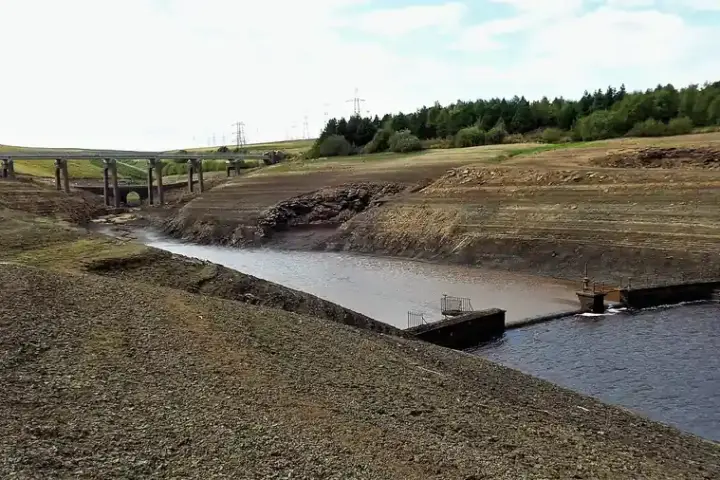
The conditions fueling these fires stretched across the continent. Half of the European Union and United Kingdom faced drought conditions, with 9 percent of the region at alert level. Major rivers — the Rhine, Po, Loire, and Danube — all hit record low water levels. The Rhine measured just 74 centimeters at Cologne, a level that hampers shipping and raises concerns about water for agriculture and industry.
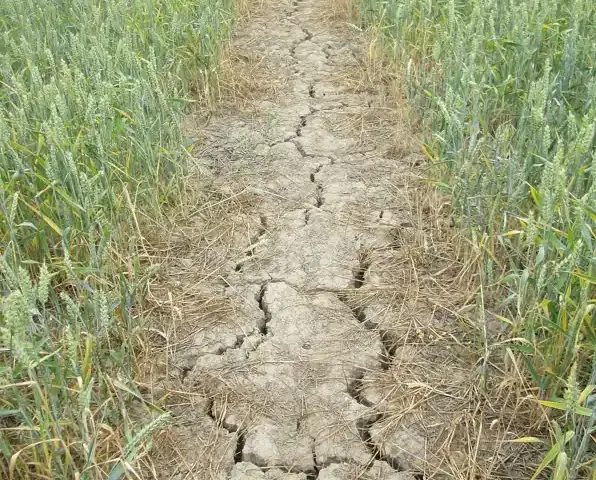
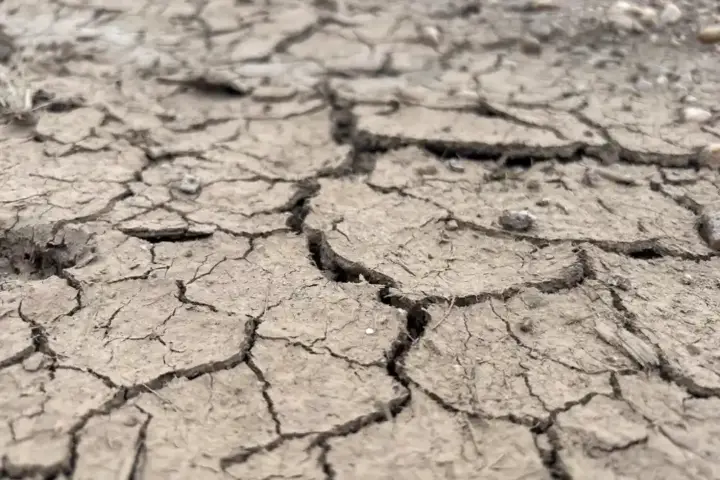
Heat waves swept across Europe in sequence. Climatologist Mounia Mostefaoui explained the mechanism: “These heat waves, they create drought conditions. It’s exactly what we have currently in France — where we had three heat waves. We are only in July, August has not even started.” The multiple heat waves left soil parched and vegetation tinder-dry, creating ideal conditions for rapid fire spread.
One striking feature of the French fires was the formation of a pyrocumulonimbus cloud on July 25, 2026 — the first time such a phenomenon had been documented over France. A pyrocumulonimbus is a rare type of thunderstorm that forms when extreme heat from a wildfire’s convection columns can push moisture high enough into the atmosphere to create its own weather system. Jean-Baptiste Filippi, a fire-weather forecasting specialist at the French National Centre for Scientific Research (CNRS), was among researchers tracking this occurrence. The cloud’s formation marked a notable shift in fire behavior, potentially allowing flames to spread faster and ignite new areas at greater distances.
The International Federation of Red Cross and Red Crescent Societies warned that the crisis was becoming the norm. Maria Alcazar Castilla, IFRC Deputy Regional Director for Europe, said: “This is the pattern we are seeing more and more across Europe: heatwaves, drought and wildfires feeding into one another.” Each phenomenon intensified the others. Heat dried the landscape. Drought eliminated moisture that could resist combustion. Wildfires released heat and particulates that affected weather patterns.
The human toll from heat alone was severe. The World Health Organization reported more than 10,000 excess deaths in five European countries during the July heat waves. Bloomberg reported a separate estimate of 25,000 excess deaths from heat across the region during this period. These figures reflected direct heat illness as well as increased deaths from heart attacks, respiratory problems, and other conditions triggered or worsened by extreme temperatures.
Health systems in affected countries faced strain from both wildfire-related injuries and heat-related illness. Air quality degraded to hazardous levels as smoke from the fires blanketed cities hundreds of kilometers away, forcing people indoors, limiting outdoor activity, and exacerbating respiratory problems for vulnerable populations including children, the elderly, and those with pre-existing lung conditions.
France’s nuclear power generation faced constraints because nuclear plants rely on river water for cooling, and low river levels meant less available cooling water. The Électricité de France utility reduced nuclear output, forcing the country to purchase power on international markets at elevated prices. This ripple effect touched neighboring nations as Europe’s interconnected power grid shifted to compensate.
Agriculture suffered as well. The severe drought meant crops consumed limited water supplies, competing with human consumption and industry. Early harvests of some crops came in below expectations, poor quality in others, and uncertainty over future production raised food prices across the region. Farmers faced potential losses from both fire damage to land and reduced yields from moisture stress.
Water scarcity also threatened shipping on major rivers. The Rhine’s reduced depth meant barges could carry smaller loads or could not operate at all, increasing transportation costs for goods moving between inland manufacturing centers and ports. The Loire and other waterways faced similar restrictions. These constraints created bottlenecks in supply chains and raised costs for businesses reliant on barge transport.
In response to the scale of the crisis, the European Union activated its civil protection mechanism through the rescEU program. The EU had launched 7 civil protection activations since the beginning of June. Separately, the Copernicus emergency management service supported authorities responding to wildfire events through 30 emergency mapping activations across Portugal, Greece, Spain, France, the United Kingdom, Germany, Croatia, Tunisia, Serbia, Albania, and Greenland.
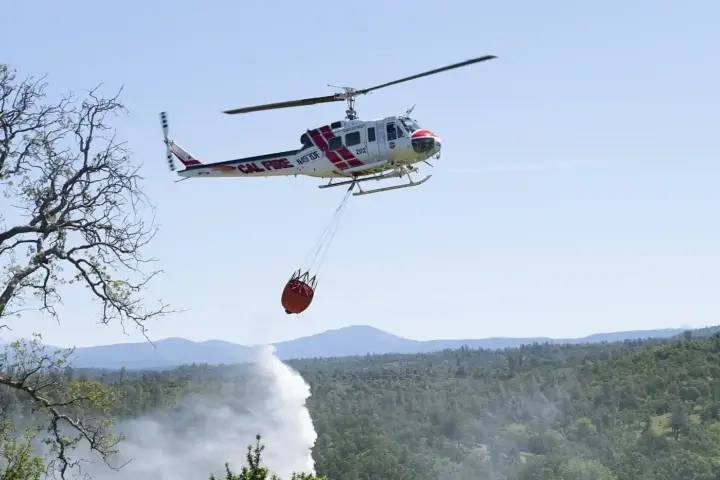
The rescEU program deployed 22 firefighting aircraft — 14 amphibious planes and 8 light aircraft — along with 5 helicopters to assist Spain and France. These aircraft came from multiple EU nations, demonstrating a coordinated multinational response to a crisis that individual countries could not manage alone. Ground crews from various EU nations also deployed to support local firefighting efforts.
Despite these efforts, the fires continued spreading. Weather forecasts pointed to continued dry conditions through September, with periodic spikes in temperature. Long-term climate patterns suggested that an El Niño effect could persist into 2027, potentially maintaining warmer and drier conditions across Europe.
Scientists and officials discussed whether the 2026 wildfire season represented a new baseline. The 2025 record of over 1 million hectares burned in a single year already pointed toward large wildfire seasons becoming more routine. The pattern of heat, drought, and wildfires reinforcing one another appeared to be settling into European seasonal cycles.
By the second week of August, the most intense phase of the Spanish and French fires had passed, with flames gradually brought under increasing control. Evacuated residents began returning to assess damage. Governments launched recovery planning. Insurance companies began tallying losses. Across Europe, officials and scientists acknowledged that suppressing individual fires did not address the underlying shift in climate conditions that had enabled them to occur.
The economic impact extended beyond immediate firefighting costs. Insurance industry analysts estimated preliminary claims at approximately 2.3 billion euros, with crop insurance accounting for the largest share. The European Investment Bank announced emergency financing of 500 million euros for recovery in the most severely affected regions, to be distributed through national governments for rebuilding infrastructure, replanting forests, and supporting displaced agricultural workers.
Municipal water supplies in several coastal towns were disrupted as wildfires damaged treatment facilities and intake pipelines. In southwestern France, approximately 23,000 residents faced temporary water restrictions as authorities worked to restore access. The French Environment Ministry confirmed that six watershed protection zones had been designated temporary conservation areas, restricting access to preserve water quality during the emergency response.
Air quality monitoring stations across Southern France and Northeastern Spain recorded PM2.5 concentrations exceeding 300 micrograms per cubic meter during peak fire activity on July 28 and 29. The European Environment Agency classified this as hazardous, triggering public health alerts across six regions. Schools in Barcelona and Marseille cancelled outdoor activities for three consecutive days as particulate levels remained elevated.
Tourism in the Dordogne and Gironde regions, which typically peak in August, saw a sharp decline as evacuation zones expanded. Hotel occupancy rates in coastal resort towns dropped to approximately 20 percent of normal August levels. The French Tourism Ministry estimated revenue losses of approximately 890 million euros from canceled bookings in the fire-affected departments.
The fire season also disrupted rail transport. SNCF suspended services on the Bordeaux to Lyon line for five days as fires approached tracks near Villegoût. The railway operator deployed alternative bus services to maintain connections, but travelers faced delays of up to eight hours. Similar disruptions occurred on regional lines in Spain’s Catalonia region.
Forestry services deployed 3,200 firefighters at the peak of the emergency, supported by 450 firefighting vehicles and 18 aircraft including water bombers. Spain’s military deployed 800 additional personnel to assist civil protection authorities. The European Space Agency provided satellite imagery to track fire perimeters in real time, with the first operational use of Copernicus emergency data for wildfire response coordination.
The agricultural sector faced cascading losses. Approximately 45,000 hectares of vineyards in the Gironde region suffered partial or complete crop loss. The wine industry association projected that the 2026 vintage would produce approximately 30 percent less wine than 2025, with an estimated revenue shortfall of 420 million euros. Livestock farmers lost approximately 12,000 head of cattle and 8,000 sheep in fires that swept through grazing lands.
Energy markets responded to the crisis. European benchmark electricity prices rose to 187 euros per megawatt-hour on July 29, up from approximately 89 euros the previous week. The price spike was attributed to reduced nuclear output in France and increased demand for air conditioning across Southern Europe. Gas-fired power plants in Italy and Spain ramped up production to compensate for the shortfall.
The IFRC launched an emergency appeal for 12 million Swiss francs to support response and recovery efforts across the hardest-hit regions. The appeal covers emergency shelter, medical supplies, and cash assistance for families displaced by the fires. The European Commission contributed an initial 3.5 million euros from its emergency response reserve.
Recovery efforts began as soon as fires were contained. The French National Forest Inventory estimated that approximately 150,000 hectares of forest ecosystem sustained damage requiring active restoration. Reforestation efforts will require approximately three years and an estimated 280 million euros in public and private funding. The ecological impact assessment is expected to be completed by October 2026.
By September 1, 2026, the total area burned across the EU reached 687,000 hectares, compared to 441,000 hectares during the same period in 2025 — an increase of 56 percent. The rise reflects the cumulative impact of record temperatures, extended drought conditions, and strong winds that carried embers across long distances.