 Rahul Somvanshi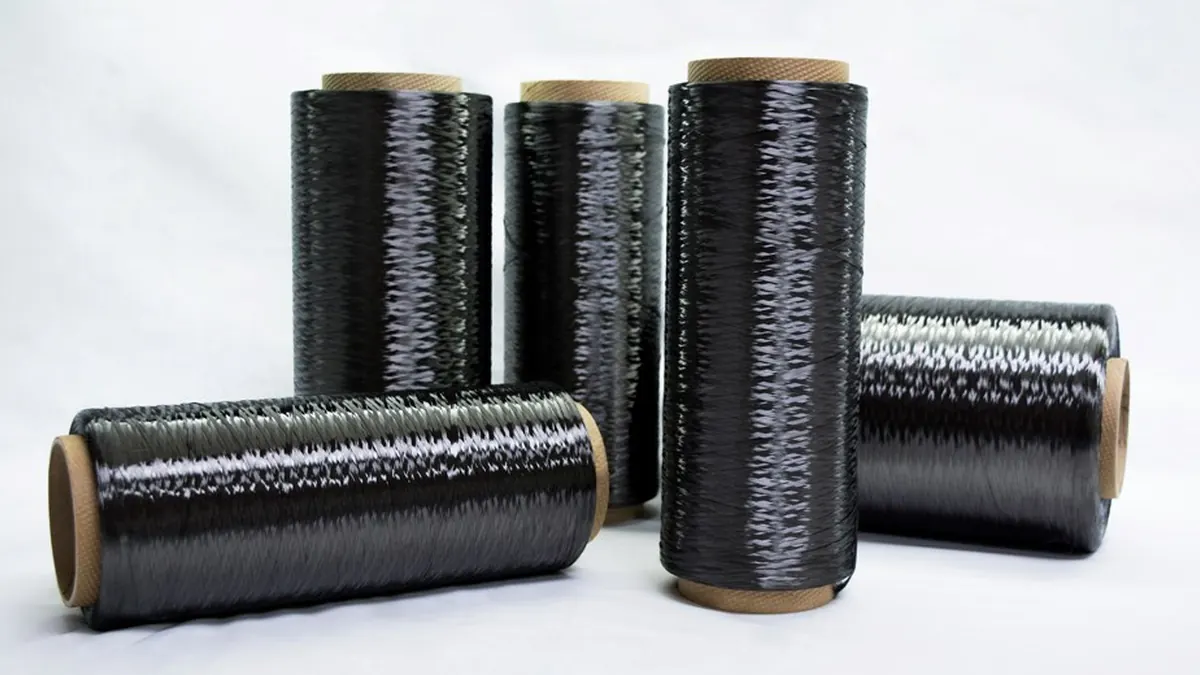
New Chemistry Breaks Down Tough-to-Recycle pDCPD Plastic With Less Waste
Much conventional mechanical recycling relies on melting, but that approach cannot simply remelt cured pDCPD because its cross-linked thermoset network does not flow back into a meltable polymer. pDCPD — used in products including vehicle bumpers, construction equipment and chemical storage tanks — cures into a rigid structure that resists heat, impact and chemicals. That has left pDCPD products with limited recycling options, with incineration among the disposal routes used.
Researchers at the University of Texas at Austin and Sandia National Laboratories have developed a chemical process for pDCPD recycling that breaks the plastic down and recovers reusable material from it. Their paper appeared in the peer-reviewed journal Science Advances on September 11, 2026, with UT Austin’s research office releasing details on September 14. The process uses a ruthenium-based catalyst and an eco-friendly solvent to deconstruct the polymer network, recovering both reusable polymer material and reinforcement fibers — carbon and glass fibers — that can re-enter manufacturing.
pDCPD is used in products that require durability and resistance to impact, including vehicle bumpers, construction equipment and chemical storage tanks. pDCPD composites have had limited practical recycling options because their permanent cross-links are difficult to reverse. If this process can be scaled economically, manufacturers could recover high-value carbon and glass fibers instead of incinerating entire assemblies — reducing disposal costs and the energy required to produce virgin fibers from scratch.
Why pDCPD Has Been Difficult to Recycle Until Now
Thermoset plastics cure through an irreversible chemical reaction. Once set, the molecular chains lock into a three-dimensional network — like bread that cannot be turned back into dough. Unlike thermoplastics, thermosets cannot simply be melted and remoulded after curing.
The UT Austin and Sandia approach works at the molecular level. The ruthenium catalyst breaks specific bonds in the pDCPD network without destroying the embedded fibers. The solvent used is described by the researchers as eco-friendly, and the university says the approach uses less energy and produces less waste than incineration.
Recovered carbon or glass fibers retain enough structural integrity to be reused in new composite manufacturing. Both fiber types are energy-intensive to produce from raw materials, so their recovery amounts to real material value.
The study is clear about what remains unresolved: whether the ruthenium catalyst can be recovered and reused economically after each cycle. Ruthenium is a platinum-group metal, and catalyst cost will directly affect viability at commercial scale. The researchers flag this as an open question. The paper describes a proof of concept, not a production-ready industrial system.
Chemical recycling methods for difficult plastics have advanced across several fronts, but thermoset composites have lagged behind thermoplastics in recyclability research. This work targets a material class used across aerospace, automotive, and industrial sectors that are under pressure to reduce composite waste.
No timeline for commercial deployment has been announced. Further development depends on addressing catalyst recovery and scaling the chemistry beyond laboratory conditions.
The Science Advances paper is available through PubMed. Check back as the catalyst-recovery question and scale-up research advance.
———————————————————————————————–
———————————————————————————————–
## How to Log Into WordPress REST API — Step by Step
### What We Used: **Application Password Authentication**
—
### Step 1: Get the Credentials
From the Pipeline file (`Karmactive Pipeline.md`), the credentials are:
– **Username**: `Sunita Somvanshi`
– **Application Password**: `Tw8QKhc98KxU5L4O3Q0s0w6J` (remove spaces → `Tw8QKhc98KxU5L4O3Q0s0w6J`)
> Application Passwords are created in WordPress Admin → **Users → Profile → Application Passwords** section. They’re separate from the login password and designed for API access.
—
### Step 2: Test the Login (Verify It Works)
“`bash
curl -s -u “Sunita Somvanshi:Tw8QKhc98KxU5L4O3Q0s0w6J” \
“https://www.karmactive.com/wp-json/wp/v2/users/me?_fields=id,name”
“`
**Expected response**: `{“id”:57,”name”:”Sunita Somvanshi”}` ✅
—
### Step 3: Make Authenticated API Calls
**GET a post** (read):
“`bash
curl -s -u “Sunita Somvanshi:Tw8QKhc98KxU5L4O3Q0s0w6J” \
“https://www.karmactive.com/wp-json/wp/v2/posts/1779?_fields=id,title,author”
“`
**PATCH/UPDATE a post** (write):
“`bash
curl -s -X POST \
-u “Sunita Somvanshi:Tw8QKhc98KxU5L4O3Q0s0w6J” \
-H “Content-Type: application/json” \
-d ‘{“meta”:{“_yoast_wpseo_focuskw”:”your keyword here”}}’ \
“https://www.karmactive.com/wp-json/wp/v2/posts/1779”
“`
> Note: WordPress REST API uses `POST` for updates (not `PATCH`), even when editing existing posts.
—
### Step 4: Check the HTTP Response Code
– **200** = Success ✅
– **401** = Auth failed (wrong credentials)
– **403** = Forbidden (user doesn’t have permission)
– **404** = Post not found
—
### How It Works Under the Hood
“`
curl -u “username:app_password”
↓
WordPress sees Basic Auth header
↓
Checks Application Password table (not login password)
↓
Grants API access with that user’s role/capabilities
↓
Sunita = Editor role → can edit any post ✅
“`
—
### Why This Works Now (But Failed Before)
The previous sessions used:
– ❌ Regular WP login password → blocked by Cloudflare WAF
– ❌ Programmatic browser login → WAF blocks `POST /wp-login.php`
– ✅ **Application Password** → bypasses WAF, goes directly to REST API endpoint, which Cloudflare allows through
—