Rahul Somvanshi
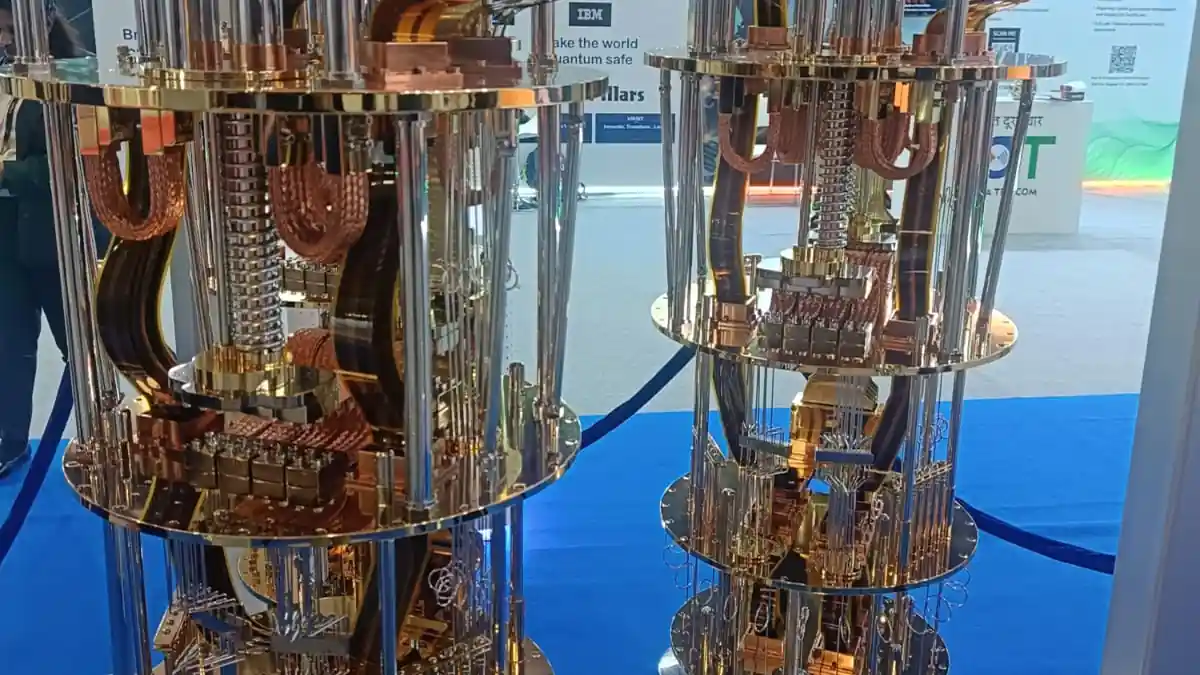
IBM Quantum Nighthawk r3 Processor Delivers 520 Qubits and 10,000 Operations, Targets 1,040-Qubit System in 2027
IBM unveiled the Quantum Nighthawk r3 processor on November 11, built to execute 10,000 quantum operations on 520 programmable qubits (with 2,034 total physical qubits). In 2027, IBM will connect two Nighthawk r3 processors via 10 chip-to-chip l-couplers into a single 1,040-qubit system, scaling beyond the 1,000-qubit threshold for the first time.
The Nighthawk r3 builds on Nighthawk r2 (September 2026, 120 qubits, 7,500+ operations, up to 100,000 samples/second), where E.ON, Algorithmiq, and Q-CTRL ran 34 billion circuits with speedups up to 19x. Active qubit reset cuts idle wait times between circuit runs from ~200 milliseconds down to ~25 nanoseconds. Demonstrated l-couplers on Nighthawk r1 achieved 99.3% state transfer fidelity (targeting 99.9%), and dual cryogenic modules cooled below 15 millikelvin in under 5 days. Nighthawk is co-located with Oak Ridge National Laboratory’s Umbra HPC system powered by AMD Instinct MI355X GPUs and 5th Gen AMD EPYC CPUs.
For enterprise developers and national labs running hybrid quantum-classical workloads, IBM’s Nighthawk architecture shifts the bottleneck from raw qubit counts to sampling speed — delivering up to 100,000 samples per second today on Nighthawk r2 and scaling to 10,000 quantum operations across 520 programmable qubits on Nighthawk r3. Researchers can now access pulse-level error control and integrate classical HPC — including AMD Instinct MI355X GPUs — directly inside the unified IBM Quantum Platform ahead of 2027’s dual-chip 1,040-qubit system.
E.ON 15x Grid Speedup, Algorithmiq 240x Memory Barrier, and 15mK Dual-Cryo Link
European utility E.ON achieved a 15x speedup on Nighthawk r2 in quantum machine learning for energy grid optimization over IBM Quantum Heron. Algorithmiq’s Nighthawk r2 material simulation would require 240x more memory on classical tensor-network supercomputers. Cleveland Clinic and RIKEN processed 608 million samples 33x faster via workflow automation (SiliconANGLE cites 2.6 million samples 3x faster). IBM + RIKEN SQD workflow delivered 5x faster performance with 100x more computations. The Nighthawk r3 silicon houses 2,034 total physical qubits — meaning nearly three out of every four quantum devices on the die are dedicated not to storing logical state, but to square-lattice couplers and active reset hardware that cut between-circuit idle times eight-million-fold from 200ms to 25ns.
Why does IBM Quantum Nighthawk r3 have 2,034 physical qubits if only 520 are programmable? Nighthawk r3 contains 520 programmable qubits that actively store and measure quantum data, supported by 1,514 additional physical quantum components — bringing the chip’s total to 2,034 physical qubits. Those extra physical components act as square-lattice couplers and high-speed reset elements that cut qubit reset times from 200 milliseconds down to roughly 25 nanoseconds.