Rahul Somvanshi
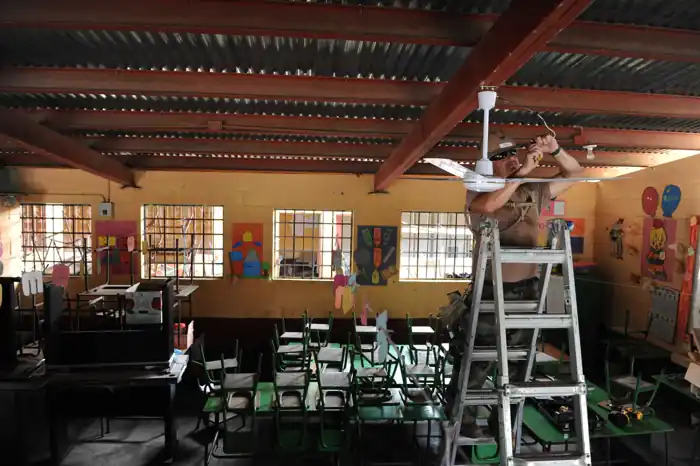
Project Vayu, a Delhi initiative that adapts existing classroom fans for air filtration, has received recognition in the Diana Award’s 2026 Roll of Honour. The award organisation says Krish Aggarwal co-founded the project to make cleaner air more accessible in schools with limited resources.
The project’s approach is simple: instead of asking a school to buy a standalone air purifier, it adds a filter to an existing fan. Project Vayu says it provides Delhi schools with free air-filtration systems, while reports on the initiative put the cost of a retrofit filter at about ₹140 and say it has reached more than 10,000 students. Those figures are attributed to the project and reporting on it, rather than an independently published performance study.
A low-cost approach, but not a substitute for evidence
Indoor air pollution is a serious concern for children in Delhi, particularly during periods of poor outdoor air quality. A fan-and-filter retrofit may offer a lower-cost route to filtration in classrooms that cannot afford conventional equipment. But whether it works well in a particular room depends on the filter used, fan airflow, the size and layout of the classroom, installation, maintenance and the amount of polluted outdoor air entering the space.
That means the project should not be treated as a proven replacement for every commercial air purifier, or as a guarantee of a specific reduction in particulate pollution. Karmactive did not locate independent test data establishing a standard PM2.5 reduction or a health outcome for Project Vayu’s installations.
Project Vayu identifies Krish Aggarwal and Samarth Meattle as its founders and says its aim is to make high-performance filtration available to Delhi schools at no cost. Its work highlights a practical question for schools facing high pollution: whether existing equipment can be adapted safely and maintained consistently, rather than relying only on expensive new devices.
The Diana Award recognition confirms the initiative’s social-impact profile. The next evidence to watch is independently reported installation data, filter specifications, classroom air-quality measurements and maintenance results. Those details would help schools and policymakers judge where a low-cost retrofit can make a reliable difference.