 Sonali Tiwary
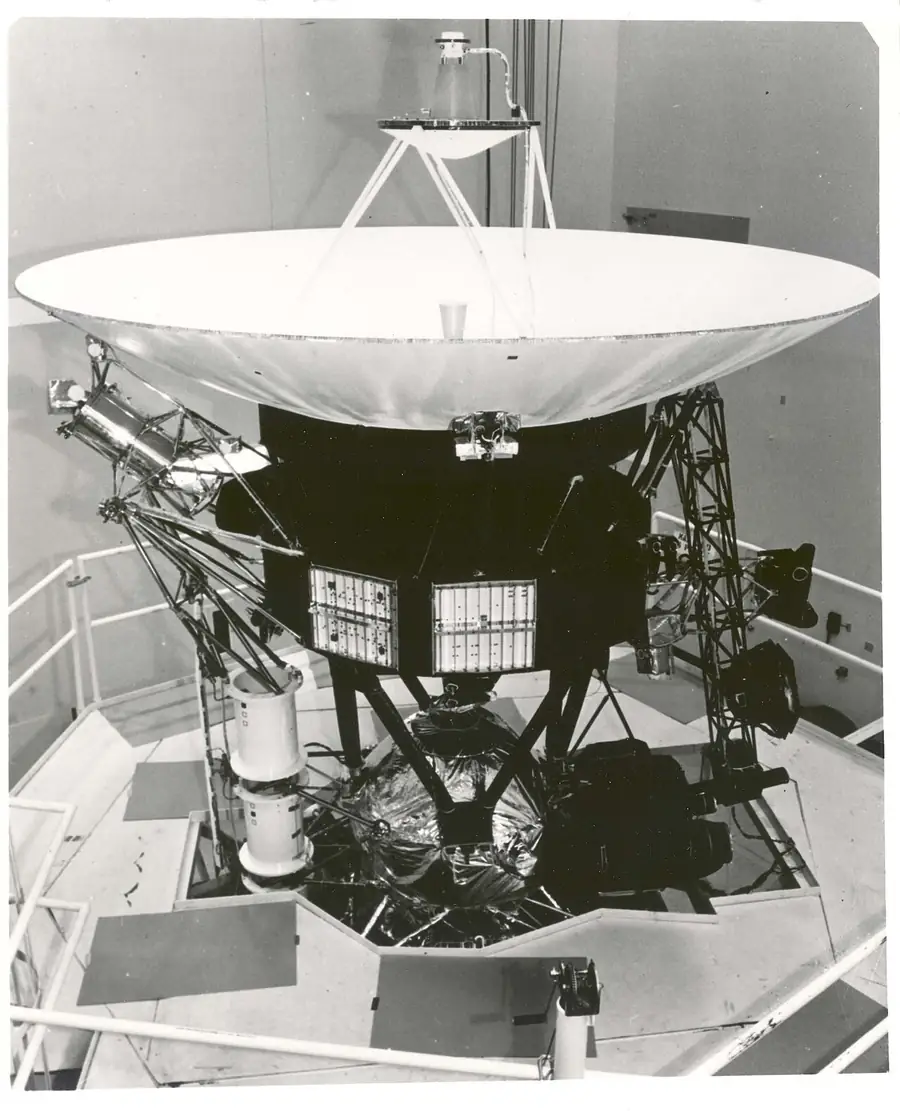
How far is Voyager 1 from Earth? On Nov. 18, 2026, NASA’s probe reached one light-day from Earth, roughly 16.094 billion miles away. Light needs a full 24 hours to cover that distance. Any radio command sent from Earth takes about 24 hours to reach the spacecraft.
Voyager 1 crossed the one light-day mark at 10:16:07 UTC on Nov. 18, 2026. In U.S. Eastern Time, that was 5:16 a.m. For readers in the UK and Australia, it was 10:16 a.m. in London and 9:16 p.m. in Sydney. NASA says Voyager 1 is the first human-made object to reach this distance.
A light-day is the distance light travels in 24 hours. At about 186,282 miles per second, that works out to about 16.094 billion miles, or about 25.902 billion kilometers. Voyager 1 launched in 1977, so the milestone came more than 49 years into its flight.
What One Light-Day From Earth Means
Light covers the distance from the Sun to Earth in about 8.3 minutes. It reaches the Moon in about 1.3 seconds. Light takes about four hours to reach Neptune, the most distant planet.
Measured by light-travel time from Earth, Voyager 1 is about six times farther away than Neptune. The nearest star beyond our solar system, Proxima Centauri, is 4.24 light-years away. That is more than 1,500 times farther than one light-day.
Communication Delays Across Missions
What this means for you: Voyager 1 cannot be checked on in real time. Any change NASA makes takes about 24 hours to reach the spacecraft, and its answer takes another 24 hours to return. The roughly 48-hour round trip creates long delays in diagnosis and commands.
Sudden problems are harder to diagnose and fix quickly. Deep-space missions face similar limits. NASA is preparing Dragonfly, a nuclear-powered drone set to launch in 2028 to explore Saturn’s moon Titan. Its operators will also have to plan around communication delays.
The Rubin Observatory has identified 2026 ED138, a dwarf-planet candidate beyond Pluto. It is a reminder that the outer solar system still holds many unexplored objects.
Voyager 1’s Data Issue and Remaining Instruments
NASA reported on Nov. 18 that Voyager 1 was not returning science or engineering data. The spacecraft stopped returning data on Nov. 14, while engineers investigated a data issue. NASA had not declared the mission over.
Before that issue, the two science instruments still operating were the magnetometer, which measures magnetic fields, and the plasma-wave instrument.
NASA said Voyager 1 was still transmitting a carrier signal. That signal helped engineers confirm the milestone using trajectory calculations. NASA said the carrier signal indicated the spacecraft remained pointed toward Earth and its antenna and broadcast equipment still worked.
Voyager 1 is running on limited power. NASA turned off its Cosmic Ray Subsystem in late February 2025. It then shut down the Low-Energy Charged Particles instrument on April 17, 2026.
Future Path of Voyager 1 and Voyager 2
Voyager 1 is traveling in the general direction of the star Gliese 445. It is projected to pass that star in roughly 40,000 years.
Voyager 2 was also launched in 1977, but it follows a different trajectory. Voyager 1 entered interstellar space in 2012, and Voyager 2 followed in 2018. Voyager 2 is projected to reach one light-day in November 2035.
Voyager 1 reached one light-day from Earth on Nov. 18, 2026, after more than 49 years in flight. Each message still takes about a day in each direction. Voyager 2 is projected to reach the same mark in November 2035. The radio delay will increase as Voyager 1 travels farther from Earth.
How far is one light-day in miles and kilometers?
One light-day is the distance light or a radio transmission travels in 24 hours. That is about 16.094 billion miles, or about 25.902 billion kilometers. For comparison, the Moon is about 1.3 light-seconds away, and the Sun is about 8.3 light-minutes away.
How long does a radio message take to reach Voyager 1?
A radio message takes about 24 hours to reach Voyager 1 from Earth. The spacecraft’s reply needs another 24 hours to return, so a full exchange takes about 48 hours. This delay will keep growing as the probe moves farther out.