 Rahul Somvanshi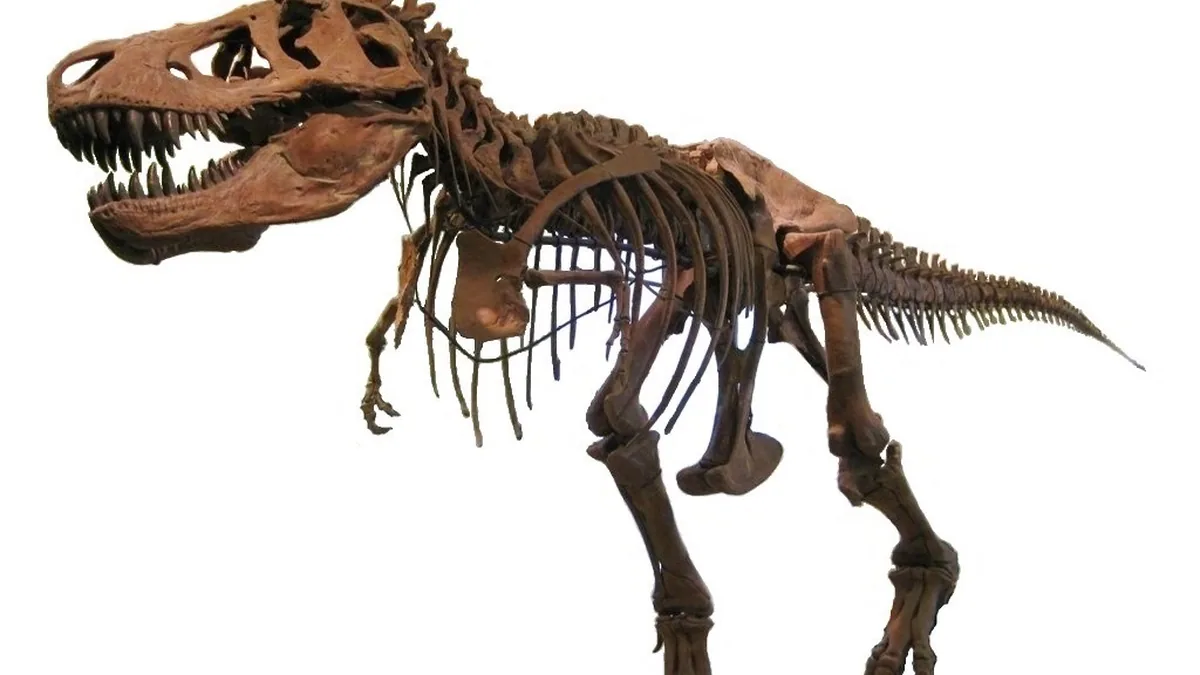
Researchers have worked out T. rex’s body temperature by analysing the chemistry locked inside fossil teeth—and the number they landed on is close to a human’s.
A team at UCLA used three fossilized T. rex teeth to estimate the dinosaur’s body temperature at approximately 36.3°C, or about 97°F, with an uncertainty of approximately ±2.5°C. The research was published in the journal Science Advances and represents one of the clearest measurements yet of how T. rex regulated heat internally. The result is consistent with a warm-blooded metabolism rather than the cold-blooded biology associated with modern reptiles.
The finding puts T. rex in a thermal range that overlaps with living mammals and birds, not with crocodiles or lizards. A crocodile’s body temperature tracks the environment around it. T. rex, if this measurement holds, maintained an internally regulated body temperature consistent with warm-blooded metabolism—which has implications for how it moved, hunted, and functioned as an animal.
The practical weight of this research is what it tells us about T. rex as a living animal. A warm-blooded T. rex would have had higher energy needs than a cold-blooded one, suggesting it required more food and likely had a faster metabolism—though these are biological inferences from the temperature finding, not direct measurements.
How a fossil tooth becomes a thermometer
The technique behind this measurement is called clumped isotope thermometry. It works on a specific chemical property of tooth enamel: the way certain isotopes of carbon and oxygen bond together inside the mineral as it forms. The ratio of those bonded pairs changes with temperature—when enamel forms at higher temperatures, the ratio shifts in a predictable direction.
Tooth enamel is relatively resistant to alteration, allowing researchers to recover chemical information from some fossil specimens. It survives fossilisation better than bone, which means the chemical signals inside it can survive tens of millions of years. The researchers were able to read those signals from three T. rex teeth and calculate the temperature at which the enamel originally formed inside the living animal.
The method has been validated against modern animals with known body temperatures. It has also been used on other fossil species. Applying it to T. rex teeth gave a result of approximately 97°F, which the team at UCLA says is consistent with other lines of evidence pointing toward warm-blooded biology in large theropod dinosaurs. The study used three teeth, which is a small sample. The researchers acknowledge this, and the technique’s consistency with other evidence adds context to the measurement.
This finding applies to T. rex specifically. It does not establish the body temperature of all dinosaurs, and it does not prove every dinosaur species operated the same way. The diversity of the dinosaur family tree means generalising from T. rex to Triceratops, or to small feathered dinosaurs, requires separate evidence.
How did scientists determine T. rex’s body temperature?
Researchers analysed chemical patterns preserved in fossilized tooth enamel. The technique—clumped isotope thermometry—uses the ratio of certain bonded carbon-oxygen pairs in enamel, which varies with temperature. That ratio was measured in three T. rex teeth, allowing the team to calculate the temperature at which the enamel originally formed inside the living animal. UCLA’s result: approximately 97°F (±2.5°C), consistent with a warm-blooded metabolism.
The Science Advances paper is available for researchers and interested readers who want to examine the methodology and sample details. Further work with additional specimens would strengthen the finding. For now, the three teeth have put T. rex’s temperature on the record at roughly human body heat.